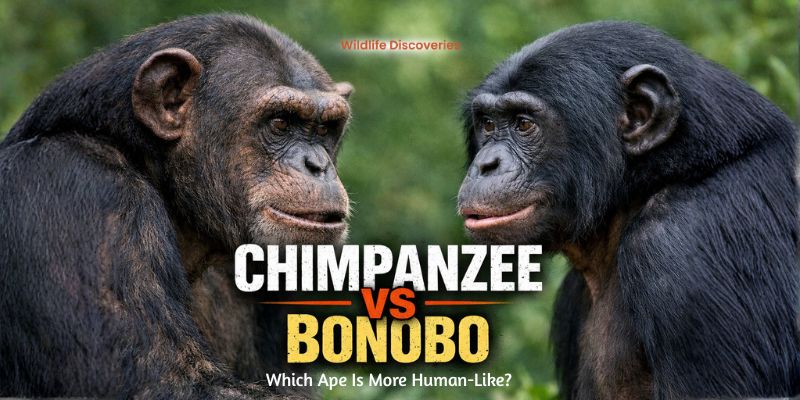
Chimpanzee and bonobos stand as our closest living relatives, sharing a remarkable genetic bond that started to branch off just five to seven million years ago. These fascinating apes serve as a mirror that reflects different aspects of our evolutionary past. The genetic connection runs deep – both species share a closer relationship with humans than orangutans or gorillas do, yet they show striking differences in how they look and behave.
Chimpanzees sport a robust build and their faces darken as they age. Bonobos, in contrast, have a more slender, gracile physique and are born with dark faces and distinctive pink lips. The differences go beyond looks – male bonobos display more aggressive behaviour than chimpanzees, yet people often call them the more peaceful species. The genetic picture gets even more interesting. More than three percent of the human genome shares a closer connection to either the bonobo or chimpanzee genome than these two apes share with each other. On top of that, bonobos are unique among non-human animals – they engage in tongue kissing, an action many people see as exclusively human.
Genetic and Evolutionary Background
The genetic makeup of chimpanzees and bonobos opens a fascinating window into our shared past. Their DNA tells us about our connection to these apes and shows how these sister species connect to each other.
Genomic Similarity: 98.7% Human vs 99.6% Chimpanzee-Bonobo
Bonobos and chimpanzees share an amazing genetic bond. These great apes share about 99.6% of their DNA with each other, while both species share around 98.7% of their genetic material with humans. This small difference represents millions of genetic variations. A human cell contains roughly three billion base pairs, and even a 1.2% difference equals about 35 million differences. These variations explain why humans and our ape relatives look and behave so differently.
Divergence Timeline: 1 Million Years Ago
The split between bonobos and chimpanzees happened not long ago in evolutionary terms. Research points to a split about one million years ago, though some studies suggest dates from 890,000 to 1.8 million years ago. The Congo River’s formation created a geographic barrier that split these populations. This separation came much later than our split from the Pan lineage, which happened around five to seven million years ago.
Hybridisation and Gene Flow: Chimpanzee and Bonobo Interbreeding Evidence
Genetic evidence reveals unexpected interbreeding between these species, despite the river barrier. Scientists have found at least two instances where bonobos and chimpanzees shared genes. Central and eastern chimpanzees share more genetic material with bonobos than other chimpanzee subspecies, with at least 1% of their genomes coming from bonobos. This interbreeding took place about 200,000-550,000 years ago, which suggests the Congo River wasn’t always impossible to cross.
Human Genome Overlap: 3% Closer to Bonobo or Chimpanzee
The sort of thing I love is that more than 3% of the human genome is closer to either bonobos or chimpanzees than these apes are to each other. About 2.52% of our genome is closer to bonobos, while 2.55% matches more with chimpanzees. This unique genetic relationship helps us learn about human evolution and highlights the complex history we share with our closest living relatives.
Physical and Anatomical Differences
Physical characteristics of our closest ape relatives show remarkable adaptations that go beyond their genetic differences.
Body Build: Robust Chimpanzees vs Slender Bonobos
These species display immediate physical differences. Chimpanzees have a stockier, more muscular build with broader chests and shoulders. Bonobos feature a more slender, gracile physique. Male bonobos weigh around 100 pounds while male chimpanzees reach 132 pounds. Female bonobos average 74 pounds compared to female chimpanzees at 93 pounds.
Facial Features: Darkening with Age vs Constant Dark Face
Each species has distinct facial characteristics. Chimpanzees start life with lighter faces that develop freckles and darken as they age. Bonobos maintain darker faces from birth and display distinctive pink lips along with a unique “middle-parted” hairstyle.
Sexual Dimorphism: High in Chimpanzees vs Low in Bonobos
Chimpanzees display significant male-female differences, with males weighing about 30% more than females. Some studies suggest that bonobos show similar levels of sexual dimorphism.
Locomotion: Knuckle-Walking vs More Frequent Bipedalism
Movement patterns set these species apart significantly. Bonobos prefer walking on two legs and spend more time in trees than chimpanzees. Male bonobos demonstrate increased suspensory behaviour. Wild bonobos spend less than 1% of their ground time walking on two legs. This percentage jumps to nearly 19% in captivity when they have easy access to food.
Social Behaviour and Group Dynamics
The social structures of chimpanzee and bonobo communities show remarkable differences in how they organise their groups. Their distinct societies gave an explanation about primate social development.
Dominance Structure: Patriarchal Chimpanzees vs Matriarchal Bonobos
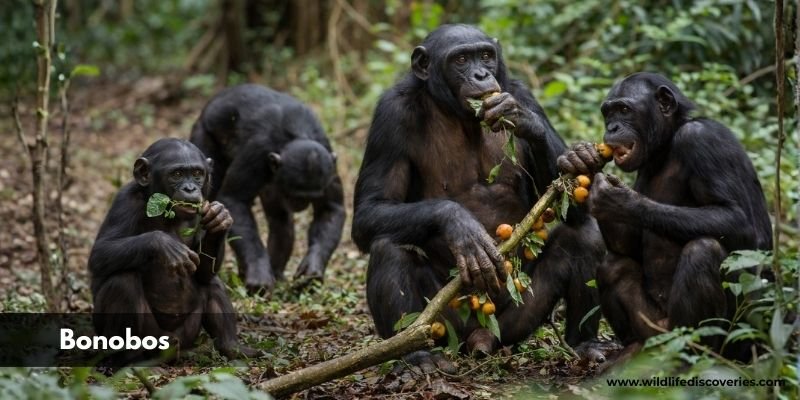
Male chimpanzees dominate every female in their society, and they form their strongest social bonds with other males. Bonobo societies work differently – older females lead the group and hold the highest rank. Female bonobos achieve dominance despite their smaller size by creating coalitions with other females.
Aggression Levels: Coalitionary Violence vs Female-Led Peacekeeping
Chimpanzees often participate in group violence, and they sometimes attack and kill adults and infants from their own and neighbouring groups. Bonobo females handle male aggression differently – they work together to chase, attack, and bite any male who misbehaves until he runs away. These slightly smaller females protect themselves and keep social order through teamwork.
Sexual Behaviour: Reproductive vs Sociosexual Functions
Bonobos stand out because they use sex for social purposes beyond reproduction. They practise genital-genital rubbing or “gg rubbing” to reduce tensions and build stronger social bonds. Female bonobos differ from chimpanzees because they become sexually receptive during both fertile and infertile periods. This behaviour reduces competition among males for mates.
Parenting and Kinship: Male Status via Mothers in Bonobos
Bonobo mother-son bonds stay strong throughout their lives. A son’s rank depends on his mother’s status – sons of high-ranking females become dominant males, even if they’re smaller than their rivals. This status gives them better mating chances and more reproductive success.
Cognition and Human-Like Traits
The cognitive capabilities of chimpanzees and bonobos show remarkable differences in their environmental interactions and social behaviours.
Tool Use and Problem Solving: Chimpanzee Innovation vs Bonobo Caution
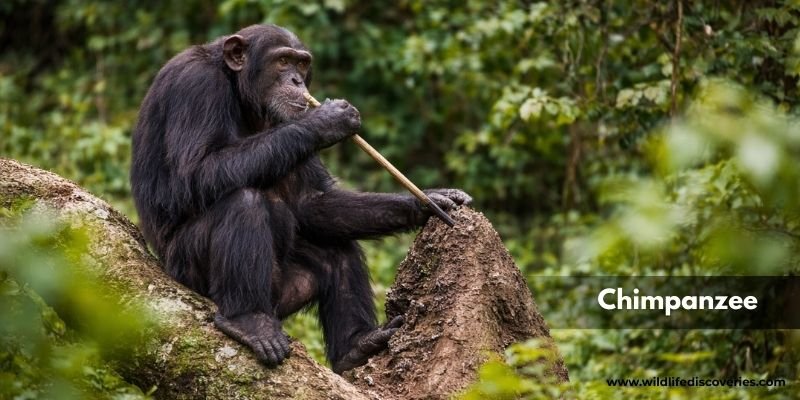
Chimpanzees show exceptional skills in physical problem-solving and tool use, performing better than bonobos in tasks that require understanding physical cause-and-effect relationships. Their natural behaviour reflects this talent, as wild chimpanzees rely heavily on tools for extractive foraging. Captive bonobos possess equally diverse tool-using abilities, yet they express these skills differently. These gentle apes use tools primarily during play, regardless of their age.
Empathy and Consolation: Bonobo Spontaneous Comforting
Bonobos excel at showing empathy through their natural comforting behaviour. These remarkable apes reach out to console distressed victims after conflicts. The comfort they offer becomes more frequent between close friends and helps reduce the victim’s distress. Young bonobos between ages 3 and 7 show more comforting behaviour than their adult counterparts.
Language and Symbol Use: Lexigram Use in Bonobos
Bonobos like Kanzi demonstrate remarkable communication abilities with symbols. These intelligent apes use lexigrams that represent hundreds of English words to express complex desires and understand spoken language. Recent studies reveal that bonobo vocalisations combine different calls to create more complex meanings – a feature scientists once thought unique to human language.
Theory of Mind: Recognising Human Knowledge States
Both species show an understanding of others’ mental states, particularly in recognising knowledge gaps. Bonobos help human experimenters by pointing to hidden treats they haven’t seen. Great apes can also predict human actions based on what humans know, which suggests they understand other beings’ perspectives.
Comparison Table
| Characteristic | Chimpanzee | Bonobo |
|---|---|---|
| Genetic & Evolution | ||
| DNA shared with humans | 98.7% | 98.7% |
| DNA shared with each other | 99.6% | 99.6% |
| Divergence from each other | Approximately 1 million years ago | Approximately 1 million years ago |
| Physical Characteristics | ||
| Body build | Stockier, more muscular | More slender, gracile |
| Average male weight | 132 pounds | 100 pounds |
| Average female weight | 93 pounds | 74 pounds |
| Facial features | Light face at birth, darkens with age | Dark face from birth, pink lips |
| Sexual dimorphism | High (males 30% heavier than females) | Lower than chimpanzees |
| Movement patterns | Knuckle-walking | More bipedal walking, tree dwelling |
| Social Behaviour | ||
| Social structure | Patriarchal (male-dominated) | Matriarchal (female-dominated) |
| Aggression patterns | Regular group violence | Lower overall, females control male aggression |
| Sexual behaviour | Mainly reproductive | Both reproductive and social bonding |
| Group dynamics | Strong male-male bonds | Strong female coalitions |
| Cognitive Traits | ||
| Tool use | Excellent physical problem-solving skills | More cautious, tools mainly used in play |
| Empathy | Not specifically mentioned | Strong consolation behaviour |
| Communication | Not specifically mentioned | Complex symbolic communication using lexigrams |
| Theory of mind | Present | Present |
Conclusion
Our study of chimpanzees and bonobos reveals striking similarities and differences between these closest living relatives. These species share an amazing 98.7% of their DNA with humans, but they express this shared genetic heritage in completely different ways.
Chimpanzees are built tough and smart. Their problem-solving skills and tool-making abilities match human innovation in many ways. Their societies show complex political manoeuvring that mirrors human social structures, despite being violent and male-dominated. These strong and adaptable creatures thrive in various African habitats.
Bonobos tell an equally fascinating story about human similarity. We see familiar traits in their matriarchal societies and their unique way of resolving conflicts through sex instead of violence. Their spontaneous consolation behaviours show emotional intelligence that feels very close to home. The way they walk upright and use symbols to communicate points to cognitive abilities similar to human development.
The question of which ape is “more human-like” has a surprising answer – it depends on which human traits we value most. Chimpanzees might seem closer to us when we look at physical problem-solving, technological innovation, and hierarchical social structures. But bonobos appear more human-like if we focus on emotional intelligence, peaceful conflict resolution, and cooperative social bonds.
This comparison shows that neither ape species is more human-like overall. Instead, humans represent a unique blend of traits found in both relatives. We have the chimpanzee’s creative spirit and the bonobo’s capacity for empathy. This mixed heritage explains the wide range of human behaviour, from our worst destructive impulses to our greatest compassionate achievements.
These magnificent apes give us more than just knowledge about our evolutionary past. They help us understand our complex human nature better. Though millions of years of evolution separate us, these remarkable creatures still teach us important lessons about ourselves.
Key Takeaways
Understanding our closest evolutionary relatives reveals fascinating insights about human nature and our shared primate heritage.
• Both chimpanzees and bonobos share 98.7% DNA with humans, yet express remarkably different social behaviours and cognitive abilities
• Chimpanzees excel at tool use and physical problem-solving, whilst bonobos demonstrate superior empathy and conflict resolution skills
• Chimpanzee societies are male-dominated and violent, whereas bonobo communities are matriarchal with females controlling aggression through coalitions
• More than 3% of human genome is closer to either bonobo or chimpanzee than these apes are to each other
• Neither species is definitively “more human-like” – humans represent an evolutionary blend of traits from both our closest relatives
The question of which ape resembles humans more depends entirely on which human characteristics we choose to emphasise. Chimpanzees mirror our innovative and hierarchical tendencies, whilst bonobos reflect our capacity for empathy and peaceful cooperation. This comparison ultimately reveals that human complexity stems from inheriting diverse traits from both lineages.
FAQs
Q1. How genetically similar are humans to chimpanzees and bonobos?
Humans share approximately 98.7% of their DNA with both chimpanzees and bonobos. This high genetic similarity reflects our close evolutionary relationship with these great apes.
Q2. Which ape species is considered more human-like?
Neither chimpanzees nor bonobos are definitively more human-like. Each species exhibits traits that resemble different aspects of human behaviour. Chimpanzees excel in tool use and problem-solving, while bonobos demonstrate greater empathy and social bonding.
Q3. How do chimpanzee and bonobo social structures differ?
Chimpanzee societies are patriarchal with male dominance, while bonobo communities are matriarchal. Bonobos use female coalitions to control male aggression, resulting in generally more peaceful interactions compared to the often violent chimpanzee groups.
Q4. Do bonobos and chimpanzees use tools similarly to humans?
Chimpanzees are more adept at using tools for problem-solving, similar to human innovation. Bonobos, while capable of tool use, primarily employ tools in play contexts rather than for practical problem-solving.
Q5. How do bonobos and chimpanzees differ in their communication abilities?
Both species demonstrate complex communication, but bonobos have shown remarkable abilities in symbolic communication using lexigrams. They can understand spoken language and communicate complex desires, showcasing language skills previously thought unique to humans.