The story of the pink pigeon is one of the most compelling narratives in modern wildlife conservation, standing as a powerful testament to what can be achieved through dedicated human effort. This uniquely beautiful bird, an endemic species of Mauritius, was once perilously close to vanishing forever, mirroring the tragic fate of its more famous island-mate, the Dodo. Over the last four decades, however, an intensive, international effort spearheaded by conservationists and zoological institutions has transformed its outlook from almost certain extinction to cautious recovery.
The recent transport of pink pigeons from Jersey Zoo back to Mauritius is a major milestone in this long-running project, specifically designed to address one of the most complex challenges faced by severely bottlenecked populations: genetic impoverishment.
This incredible success story, which has seen the wild population increase dramatically from a mere handful of individuals to an estimated 600 birds, offers crucial lessons for protecting biodiversity worldwide. It demonstrates the essential role of captive breeding programmes in creating a genetic safety net and highlights the advanced scientific management required to sustain a fragile population in a heavily impacted ecosystem. The ongoing work for the pink pigeon is not just about increasing numbers; it is about securing a healthy, genetically diverse future for this treasured jewel of Mauritian wildlife.
Near Extinction: The Plight of the Pink Pigeon
The decline of the Mauritian pink pigeon is a classic and heartbreaking example of human impact on an isolated island ecosystem, leading to a profound population collapse. For centuries, this gentle bird flourished in the dense native forests of Mauritius, free from the major terrestrial predators that exist elsewhere. This natural environment was completely disrupted following the arrival of human settlers, who began the large-scale deforestation that destroyed the pigeon’s primary habitat and food sources.
The species’ future was further jeopardised by the introduction of non-native, invasive predators brought to the island, including rats, cats, and the crab-eating macaque. These new threats preyed upon the slow-moving, naive pink pigeons, destroying their eggs and killing the young in their nests, driving the population downward at an alarming rate. By the late 1970s and early 1990s, the species reached a catastrophic low point, with fewer than 12 pink pigeons remaining in the wild, classifying it as Critically Endangered and placing it on the very edge of extinction.
The Legacy of Durrell
Recognizing the dire threat, a crucial intervention was initiated by the famous author and naturalist, Gerald Durrell, through his pioneering Durrell Wildlife Conservation Trust, based at Jersey Zoo. Durrell understood that with so few individuals remaining, the entire wild population could be wiped out by a single disease outbreak or a major cyclone. His vision was to establish an ‘insurance’ population through an ex-situ, or captive, breeding programme, ensuring that the pink pigeon had a chance to survive regardless of the immediate threats in Mauritius.
This initiative involved carefully capturing some of the last remaining birds and transporting them to Jersey Zoo, where they formed the foundation of the international captive breeding effort. Alongside partners like the Mauritian Wildlife Foundation, this action laid the groundwork for one of the world’s longest-running and most successful species recovery programmes. The legacy of Durrell is the establishment of a robust captive gene pool that today is proving indispensable for the species’ long-term survival, moving the pink pigeon away from the fate of the Dodo.
The pink pigeon crisis was driven by habitat destruction and invasive alien predators.
The population plummeted to a critically low number, creating a severe bottleneck.
Gerald Durrell’s foresight established a vital captive ‘insurance’ population at Jersey Zoo.
A Genetic Lifeline: Repatriation to Mauritius
While the successful breeding programmes increased the overall numbers of pink pigeons in Mauritius, a new, hidden threat emerged from the population’s history: low genetic diversity. Because all the surviving wild birds descended from such a small group of ancestors, their gene pool became restricted, leading to high levels of inbreeding. This condition, known as inbreeding depression, makes the birds weaker, less fertile, and far more susceptible to diseases, potentially halting the population’s recovery despite a rise in total numbers.
To combat this severe genetic challenge, conservation biologists turned to the healthy, genetically distinct captive population that had been managed for decades in zoos like Jersey Zoo across Europe and North America. Scientific studies of the pigeon’s genome confirmed that the European captive population retained valuable genes that had been lost from the Mauritian wild population during the bottleneck. The repatriation of these captive-bred pink pigeons to their native island is therefore a strategic and highly advanced form of ‘genetic rescue’.
Four Pigeons, Big Impact
The recent transport of pink pigeons from Jersey Zoo to Mauritius is a tangible, high-stakes conservation action aimed at immediately injecting new genetic material into the wild and in-country captive populations. These four individuals are not just an increase in bird count; they represent an entirely new set of genes, which are meticulously tracked through studbooks and molecular analysis. Once in Mauritius, these repatriated birds enter a quarantine phase and are then paired with wild-caught birds in the local captive breeding facilities.
The resulting offspring, carrying the newly introduced, diverse genes, are then the candidates for release back into the protected areas of Mauritius. This careful process ensures that the wild population becomes healthier, more resilient to disease, and better equipped to adapt to environmental changes. The four pink pigeons serve as genetic founders, and the success of their breeding is critical to securing the long-term viability of the entire species, making them some of the most important birds in the world.
Low genetic diversity in the wild population created a serious risk of inbreeding depression.
The captive population in zoos like Jersey Zoo retains critical genetic variation lost in the wild.
Repatriation is a strategic ‘genetic rescue’ mission to strengthen the resilience of the pink pigeon.
The Power of Conservation: A 40-Year Success Story
The quantitative results of the pink pigeon recovery programme are truly exceptional and widely celebrated as one of the world’s most impressive conservation turnarounds. Starting from a low point of around 10 to 12 birds in the early 1990s, the combined efforts of captive breeding, reintroduction, and intensive in-situ management have produced a remarkable population surge. The wild numbers have now increased to approximately 600 individuals, a monumental achievement spanning over 40 years of sustained effort.
This massive leap in numbers has not only secured the species from immediate extinction but has also allowed its threat status to be officially revised. The pink pigeon has been downlisted twice on the International Union for Conservation of Nature (IUCN) Red List of Threatened Species, first from Critically Endangered to Endangered, and most recently to Vulnerable. This reclassification reflects the growing stability and success of the conservation programme, demonstrating that dedicated, long-term interventions can effectively reverse the damage of previous decades.
Ongoing Efforts
The success of the pink pigeon recovery extends far beyond the simple increase in bird numbers and is underpinned by complex, multifaceted conservation activities. These efforts include the intensive management of released populations, which involves supplementary feeding during lean seasons to boost breeding success, and controlling non-native predators like rats and macaques within the pigeon’s protected forest habitats. Habitat restoration, where native Mauritian forest is actively cleared of invasive plants and replanted with endemic species, is also a critical component.
Furthermore, conservationists employ intensive monitoring techniques, including tracking and banding, to gather detailed data on survival rates, breeding success, and movements of individual pink pigeons. This continuous scientific oversight allows the Mauritian Wildlife Foundation and its international partners to make data-driven decisions, fine-tuning management strategies as new challenges emerge. The stability of the current population is a result of this constant, adaptive management, which moves far beyond a simple one-off release of birds.
The population has increased from around 10 birds to over 600 in the last 40 years.
This success led to the downlisting of the pink pigeon on the IUCN Red List to ‘Vulnerable’.
Ongoing efforts include supplementary feeding, intensive predator control, and habitat restoration.
What Makes the Pink Pigeon Unique?
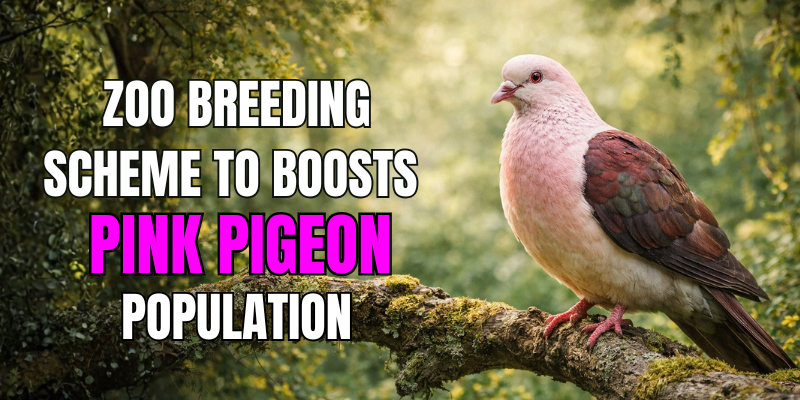
The pink pigeon is instantly recognizable and a stunning example of the unique biodiversity found on oceanic islands. Its common name is derived from the soft, pale pink plumage that adorns its head, neck, and breast, contrasting beautifully with its dark pinkish-brown wings and reddish-brown tail. This delicate coloration is unlike any other pigeon species, making it a true spectacle of nature and an easy flagship species for conservation awareness.
Beyond its striking feathers, the pink pigeon possesses a large, robust build, with a bright red ring around its eye and a hooked, light-colored bill. Observing these birds in the wild is a rare privilege, as they move quietly through the native forest canopy, foraging for food. This unique and gentle appearance makes the pink pigeon not only a biological treasure but also a compelling symbol of hope that captures the imagination and encourages public support for conservation initiatives.
Ecological Role
As an endemic species of Mauritius, the pink pigeon plays a subtle but vital role within its native ecosystem. Its diet consists primarily of the fruits, seeds, buds, and leaves of native plants, making it a key element in the natural process of seed dispersal. By consuming fruits and passing the seeds intact in their droppings, the pigeons effectively plant new trees across the forest floor, helping to regenerate and maintain the diversity of the native Mauritian forest.
In an ecosystem where many of the original seed dispersers, like the Dodo and the giant tortoises, have been lost, the pink pigeon‘s role is critically important for the long-term health of the remaining forest fragments. Their survival is therefore intrinsically linked to the survival of the forest itself, making the pink pigeon an “umbrella species” – by saving the pigeon, conservationists are also protecting the entire web of life and the various plant species that rely on it.
The pink pigeon is distinguished by its pale pink plumage, dark wings, and distinct eye-ring.
Its unique appearance makes it an important ambassador for Mauritian wildlife.
Ecologically, the pigeon is a crucial native seed disperser, aiding forest regeneration.
Challenges Ahead: Maintaining the Momentum
Despite the remarkable recovery in population numbers, the pink pigeon still faces persistent and evolving threats that require constant vigilance from conservation teams. The core issues of habitat loss and degradation, resulting from invasive alien plants and development, remain a continuous challenge, restricting the pigeon’s range to a few protected areas. The introduced mammalian predators, especially the crab-eating macaque and the black rat, continue to pose a significant danger by raiding nests and preying on eggs and young squabs.
Furthermore, the threat of disease is an ever-present risk, which is often exacerbated by the population’s reduced genetic diversity and contact with other introduced bird species. Outbreaks of avian diseases, such as the protozoan parasite Trichomonas gallinae, have caused significant mortality events in the past, highlighting the need for continuous health monitoring and intervention strategies. The occasional but devastating tropical cyclones that hit Mauritius also present a major threat, capable of wiping out a large percentage of the population in a single weather event.
The Role of International Cooperation
The long-term security of the pink pigeon is entirely dependent on the continuity of strong international cooperation and funding. No single organization can sustain the decades-long, intensive management required for this species. Partnerships between the Mauritian Wildlife Foundation, the Government of Mauritius’s National Parks and Conservation Service, and international bodies like the Durrell Wildlife Conservation Trust are essential for coordinating efforts.
This cooperation ensures the smooth functioning of the captive breeding programme, the strategic release of genetically diverse birds, the sharing of scientific expertise, and the continuous flow of financial resources. The international zoo community, through the European and North American breeding programmes, plays a vital role by maintaining the genetic ‘safety net’ population outside of Mauritius, ready to provide new genetic material when needed. This global collaboration is the single most important factor in securing the pink pigeon‘s future against new threats.
The pink pigeon is still threatened by invasive predators, habitat loss, and disease.
Severe weather events like cyclones also pose an existential risk to the small, confined population.
Sustained international cooperation is crucial for funding, genetic management, and sharing expertise.
A Beacon of Hope for Wildlife Recovery
The pink pigeon project offers invaluable lessons for conservationists tackling species recovery challenges worldwide, particularly for those working with small, isolated populations on islands. The first key lesson is the absolute necessity of establishing a genetically managed ex-situ, or captive, population as an insurance policy against disaster. This provides a source for ‘genetic rescue,’ proving that simply increasing numbers is insufficient if genetic health is ignored.
Secondly, the project underscores the importance of a holistic, multi-decade commitment, recognizing that recovering a species from a severe bottleneck is a marathon, not a sprint. The success has been built on long-term partnerships, intensive hands-on management, and adaptive strategies that evolve based on continuous scientific monitoring. The story of the pink pigeon demonstrates that with sufficient resources and collaboration, even the most critically endangered species can be brought back from the edge.
How You Can Help
Securing the long-term survival of the pink pigeon is an ongoing mission that requires global support from people who care about biodiversity. Students and individuals can make a direct contribution by supporting the conservation organizations involved in the programme, such as the Durrell Wildlife Conservation Trust and the Mauritian Wildlife Foundation. Donations help fund the daily costs of predator control, supplementary feeding, and habitat restoration in Mauritius.
Furthermore, raising awareness about the importance of genetic diversity and the challenges faced by island species is a powerful form of assistance. By learning and sharing the remarkable story of the pink pigeon, individuals become advocates for conservation science. Every person who contributes to or promotes the work ensures that this beautiful, pink pigeon continues to fly free in the Mauritian forests for generations to come, a vibrant symbol of conservation success.
The pink pigeon project teaches the critical need for genetic management and long-term commitment.
Its recovery demonstrates that sustained, science-based intervention can reverse extinction trends.
Individuals can help by supporting the Mauritian Wildlife Foundation and by raising conservation awareness.