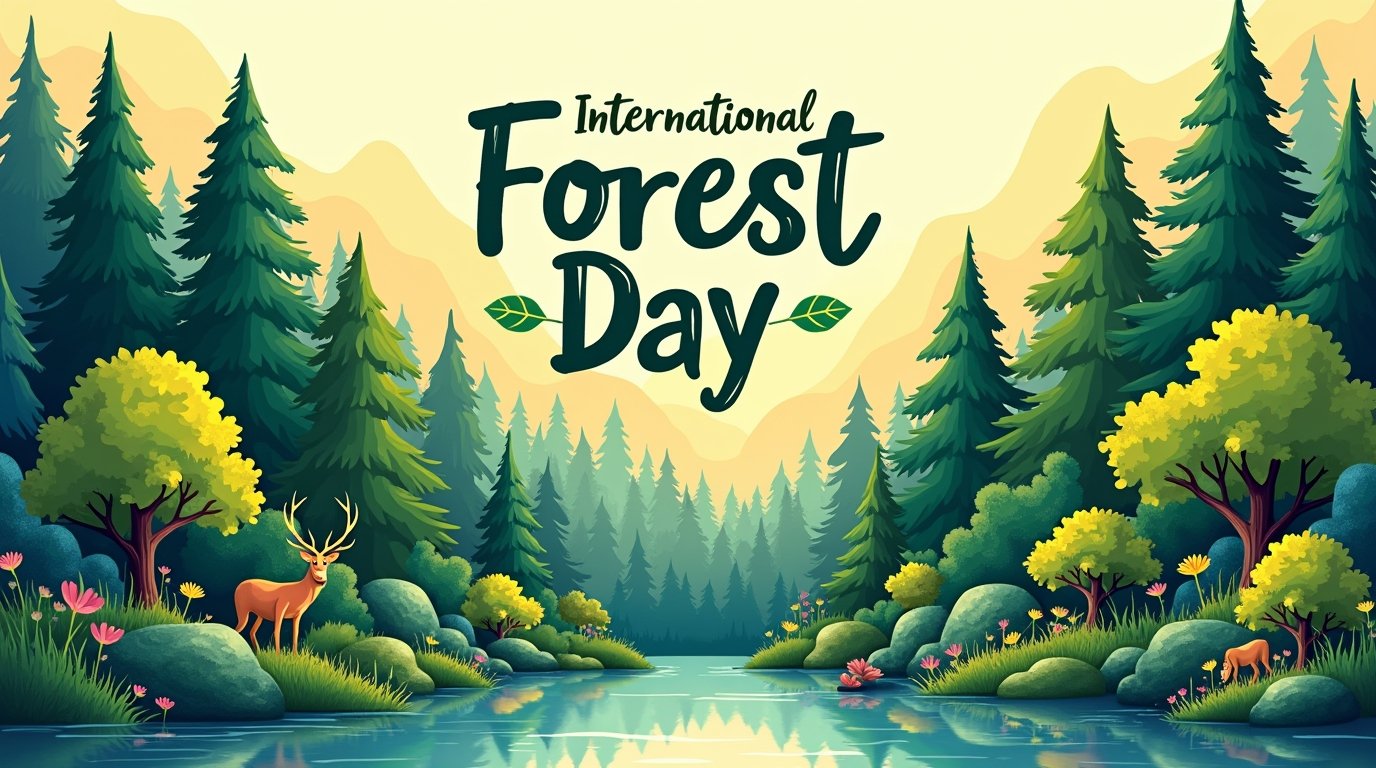
The arrival of Forest Day 2026, officially known as the International Day of Forests, marks a critical junction in the global effort to harmonize industrial growth with environmental preservation. Observed every year on March 21st, this day serves as a global platform to raise awareness about the paramount importance of all types of woodlands and trees outside forests. As the world navigates the complexities of the 21st century, the role of forests has shifted from being a mere backdrop of nature to becoming the central pillar of a resilient and green global economy. This observance highlights that protecting our trees is not just an ethical choice but an economic necessity for the survival of human civilization.
As the international community observes Forest Day 2026, the focus is increasingly on the “Green Backbone” that forests provide to the planet’s infrastructure. Forests cover nearly one-third of the Earth’s land mass, performing vital functions such as carbon sequestration, water filtration, and soil stabilization. However, beyond these ecological services, they are the source of raw materials that fuel multi-billion dollar industries, from pharmaceuticals to sustainable construction. By dedicating a specific day to these ecosystems, global leaders and citizens reaffirm their commitment to ensuring that the wealth of the woods is managed sustainably for the benefit of all living beings.
Forests are home to over 80% of the world’s terrestrial biodiversity, including plants, animals, and insects.
The observance of Forest Day 2026 helps mobilize resources for large-scale reforestation and conservation projects.
Woodland ecosystems act as the world’s largest carbon sinks, absorbing roughly 2.6 billion tonnes of carbon dioxide annually.
Healthy forests are essential for mitigating the impact of extreme weather events like floods and droughts.5
The Green Backbone: International Day of Forests 2026
The celebration of Forest Day 2026 is more than just a ceremonial event; it is a strategic call to action for governments and corporations to rethink their relationship with nature. Established by the United Nations General Assembly, this day invites countries to engage in local, national, and international efforts to organize activities involving forests and trees. The year 2026 is particularly significant as it marks the midway point for several global reforestation targets, making the data shared on this day vital for measuring progress. It is a time to celebrate the silent work that forests do in providing the air we breathe and the resources we use.
The 2026 Vision: Forests and Economies
The central vision for Forest Day 2026 is the integration of forest health into the core of global economic planning. In previous decades, forests were often seen as obstacles to development, but the 2026 perspective views them as the engine of a circular bio-economy. This vision promotes the idea that a standing forest can be more valuable than a cleared one when its ecosystem services are properly accounted for. By valuing the carbon storage and water regulation provided by trees, Forest Day 2026 aims to shift the financial incentives toward conservation rather than exploitation.
A Global Mandate: The History and Purpose of March 21st
The International Day of Forests was established on November 28, 2012, and has since grown into a massive global movement involving thousands of organizations. The primary purpose of choosing March 21st was to create a recurring moment where the world can assess the health of its “Green Lung.” On Forest Day 2026, the global mandate focuses on transparency in the supply chain and the elimination of deforestation from international trade. This historical mandate ensures that the protection of forests remains a permanent fixture on the global political agenda.
| Feature | Forest Day 2026 Focus Area |
| Primary Theme | Forests and Sustainable Economies |
| Key Objective | Promoting Wood-based Innovations for a Green Planet |
| Global Target | Increasing Forest Cover by 3% by 2030 |
| Participant Role | Encouraging Community-led Tree Planting Drives |
Beyond the Trees: How Forests Power Global Markets
While the visual beauty of a forest is undeniable, Forest Day 2026 seeks to educate the public on the massive industrial power hidden within the canopy. Forests are the foundation of several global markets, providing everything from the timber used in our homes to the ingredients in life-saving medicines. The economic value of these resources is staggering, contributing trillions of dollars to the global Gross Domestic Product (GDP). Recognizing the economic weight of forests is essential for securing the high-level investment needed to save the wildlife and restore degraded landscapes.
The Billion-Dollar Ecosystem: GDP and Industrial Contributions
The forest sector contributes directly and indirectly to the global economy through timber, non-timber forest products (NTFPs), and environmental tourism. Industries such as paper, furniture, and textiles rely heavily on sustainable forest management to ensure a steady supply of raw materials. During Forest Day 2026, economists emphasize that the “Bio-GDP” generated by healthy forests is a more sustainable indicator of wealth than traditional extractive industries. This industrial contribution is vital for the economic stability of many developing nations that rely on forest exports.
Livelihoods in the Leaves: Supporting 1.6 Billion People
Forests provide a safety net for roughly 25% of the world’s population, including some of the most vulnerable and marginalized communities. These ecosystems offer food, fuel, fodder, and medicine to over 1.6 billion people, including more than 2,000 indigenous cultures. Forest Day 2026 highlights the role of forests in poverty alleviation and the importance of securing land rights for those who live within the woods. Protecting these livelihoods is a core component of the sustainable development goals and a priority for forest conservation.
Forests provide the raw materials for over 5,000 different types of wood-based products.
Approximately 40% of the world’s renewable energy comes from forest-based wood fuel.
Indigenous peoples manage roughly 25% of the Earth’s land, which contains 80% of its biodiversity.
Sustainable forestry creates millions of green jobs in rural areas across the globe.
Nature’s Infrastructure: The Hidden Economic Services
Beyond the products we can touch and sell, forests provide “invisible” services that are the literal infrastructure of the planet. These ecosystem services, such as water purification and climate regulation, have a massive financial value that is often overlooked in traditional accounting. Forest Day 2026 aims to bring these hidden services to the forefront of the conversation, showing that forests are the world’s most efficient utility providers. By investing in nature’s infrastructure, cities and countries can save billions in water treatment and disaster recovery costs.
Clean Water & Cost Savings: Forested Watersheds
Forested watersheds provide a staggering 75% of the world’s accessible freshwater for domestic, agricultural, and industrial use. These trees act as natural filters, removing pollutants and sediment before the water reaches human populations. On Forest Day 2026, urban planners discuss how maintaining forests around cities can reduce the need for expensive water treatment plants. This natural infrastructure is the most cost-effective way to ensure water security for the world’s growing urban populations.
Agriculture’s Foundation: Supporting Global Food Security
Forests are the silent partners of the agricultural industry, providing the pollination and pest control services that crops depend on. Birds and insects that live in forests are responsible for pollinating a third of the world’s food crops, a service valued at hundreds of billions of dollars. During Forest Day 2026, the link between forest health and food security is a major theme, especially in the face of climate change. Without the shelter and biological services provided by nearby woods, many of the world’s most productive farms would fail.
| Service Category | Economic Benefit | Impact on Society |
| Carbon Storage | Mitigates Climate Change Costs | Reduces extreme weather damage |
| Water Filtration | Lowers Water Treatment Costs | Provides clean drinking water to billions |
| Soil Protection | Prevents Agricultural Land Loss | Ensures long-term food security |
| Air Purification | Reduces Respiratory Health Costs | Lowers healthcare spending in urban areas |
The Price of Loss: The Economic Reality of Deforestation
While forests provide immense wealth, the cost of losing them is even more staggering and carries a heavy financial burden for future generations. Deforestation is not just an environmental tragedy; it is an economic disaster that erodes the natural capital of the planet. Forest Day 2026 provides a somber reminder that the “short-term gain” of clearing land often leads to “long-term pain” in the form of lost resources and increased vulnerability. Calculating these losses is a vital part of convincing decision-makers to move toward a zero-deforestation future.
Shrinking Wealth: Calculating the Financial Impact
When a forest is cleared, the immediate value of the timber is often far less than the long-term value of the ecosystem services that are destroyed. Loss of biodiversity, soil erosion, and the release of stored carbon contribute to a “natural capital deficit” that is difficult to reverse. On Forest Day 2026, financial institutions are increasingly incorporating forest-related risks into their investment portfolios. They recognize that a world without healthy forests is a world with unstable markets and increased financial risk for everyone.
Climate Risk Management: The Rising Costs of Degradation
Forest degradation contributes significantly to global warming, which in turn leads to more frequent and costly natural disasters. The insurance industry is seeing a sharp rise in claims related to floods and wildfires, many of which could be mitigated by healthy forest buffers. During Forest Day 2026, the conversation centers on the “Cost of Inaction”—the idea that it is much cheaper to protect a forest today than to deal with a climate catastrophe tomorrow. Managing forest health is now seen as a critical component of national security and economic risk management.
Deforestation accounts for roughly 12% to 20% of global greenhouse gas emissions.
The global economy loses up to $4.5 trillion annually due to the loss of ecosystem services.
Degraded lands are more prone to wildfires, which cost billions in suppression and recovery.
Loss of forest cover leads to increased pandemic risks as humans come into closer contact with wildlife.
The Future of Forestry: Innovation and the Circular Economy
As the world moves toward Forest Day 2026, technology is playing an increasingly vital role in how we monitor, protect, and utilize our wood resources. The future of forestry is being written by scientists and innovators who are finding new ways to make the forest sector more sustainable. From using artificial intelligence to track illegal logging to developing new wood-based materials that replace plastic, the possibilities are endless. These innovations are transforming the forest industry into a high-tech, carbon-neutral sector that is fit for the challenges of the future.
Forest Tech: AI, Drones, and Modern Reforestation
Modern reforestation efforts are being supercharged by the use of drones that can plant thousands of seeds in a single day. On Forest Day 2026, technology companies showcase AI platforms that use satellite imagery to detect deforestation in real-time, allowing authorities to take immediate action. This “Digital Forest” approach ensures that protection efforts are data-driven and highly efficient. By combining ancient ecological wisdom with 21st-century tech, we are getting better at helping nature heal itself at a much faster pace.
Sustainable Substitutes: Wood-based Textiles and Construction
The circular economy is finding new ways to use wood fibers to create everything from biodegradable clothing to high-rise “mass timber” buildings. These wood-based alternatives have a much lower carbon footprint than traditional materials like polyester, steel, or concrete. During Forest Day 2026, architects and designers celebrate the “Timber Revolution” as a key strategy for decarbonizing the building industry. Using wood as a long-term carbon storage solution allows us to build the cities of the future without destroying the environment.
| Innovation | Potential Impact | Environmental Goal |
| Mass Timber | Replacing steel in construction | Storing carbon in urban buildings |
| Lyocell Fabrics | Replacing synthetic textiles | Reducing microplastic pollution |
| Bio-Plastics | Replacing petroleum-based plastics | Creating a biodegradable waste stream |
| Satellite Monitoring | Ending illegal logging | Ensuring 100% legal timber sources |
Planting the Seeds of Change: Taking Action in 2026
The ultimate success of Forest Day 2026 depends on the participation of individuals and local communities in the global conservation movement. While high-level policies are important, the cumulative effect of small, everyday choices can drive the market toward sustainability. This day is a call for everyone to become an active participant in the protection of our “Green Backbone.” By changing how we consume and how we advocate, we can ensure that the forests of 2026 are even healthier by the time we reach 2030.
Ethical Consumption: Supporting Certified Sustainable Sources
One of the most powerful things an individual can do is to look for certification labels like FSC (Forest Stewardship Council) on paper and wood products. These labels ensure that the product was harvested in a way that protects the rights of indigenous people and the health of the ecosystem. On Forest Day 2026, consumers are encouraged to demand transparency from the brands they buy. By choosing sustainable products, we send a clear message to corporations that the protection of forests is a requirement for doing business.
Advocacy and Local Impact: From Community Roots to Global Hashtags
Spreading awareness on social media using the #ForestDay2026 hashtag is a simple yet effective way to amplify the voice of conservation. Local impact is equally important, whether it is participating in a community tree-planting event or advocating for the protection of a local park. During Forest Day 2026, many schools and community centers host “Forest Dialogues” to discuss local environmental issues. These grassroots efforts are the foundation of the global movement, proving that every tree planted and every voice raised makes a tangible difference.
Learn about the native tree species in your region and their ecological roles.
Reduce your paper consumption and always recycle wood-based products.
Support organizations that work on the ground to save the wildlife and restore forests.
Share facts about forest conservation on your digital platforms to inspire others.