The natural history of the Indian subcontinent is a magnificent tapestry woven with diverse landscapes, from the snow-capped Himalayas to the dense tropical rainforests of the south. For centuries, these ecosystems supported a breathtaking array of wildlife that defined the cultural and biological identity of the nation. However, the relentless march of human civilization, habitat destruction, and unregulated hunting have led to a heartbreaking silence in many parts of the jungle. Today, several species that once reigned supreme have vanished completely, becoming recognized as the tragic Extinct Animals of India.
Understanding the loss of these species is vital for modern conservation efforts. When an animal is declared extinct within a specific geographic region, it signifies a profound failure in the ecological balance of that area. These Extinct Animals of India serve as a somber reminder of what happens when the delicate relationship between nature and humanity is severed. By looking back at the creatures we have lost, we can better appreciate the urgency required to protect the “10 UNESCO Sites with Hidden Wildlife” that still exist today.
The disappearance of these animals did not happen overnight. It was a gradual process fueled by the expansion of agriculture, the diversion of water bodies, and a historical lack of stringent wildlife protection laws. As we explore the stories of these five specific creatures, it becomes clear that their “roar” was silenced by a combination of factors that we are still battling to control in the 21st century. The legacy of the Extinct Animals of India lives on only in museum archives, old sketches, and the collective memory of naturalists who refuse to let their stories be forgotten.
I. The Indian/Asiatic Cheetah
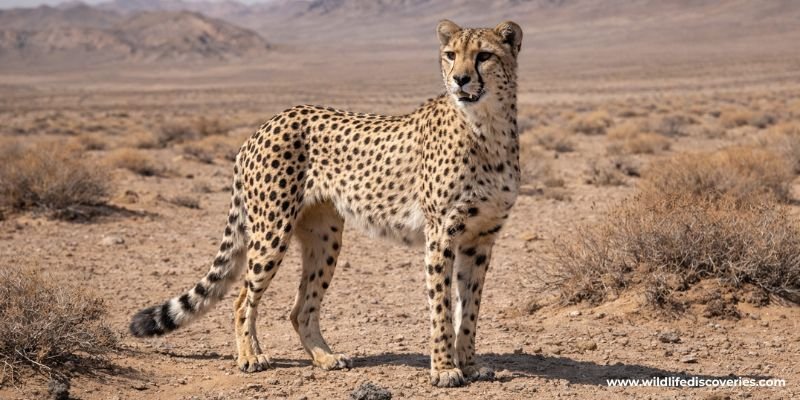
The Cheetah is perhaps the most famous member of the Extinct Animals of India. This sleek, spotted feline was once a common sight across the semi-arid grasslands and scrub forests of central and southern India. Unlike the forest-dwelling tiger, the Cheetah required vast, open spaces to utilize its incredible speed, making it a unique predator in the Indian landscape.
A. The Fastest Hunter of the Plains
The Indian Cheetah was an evolutionary marvel, specifically adapted to hunt swift prey like the blackbuck and chinkara. Its presence was essential for maintaining the health of the grassland ecosystems by keeping herbivore populations in check. These animals were not just predators; they were symbols of the raw power and agility that defined the Indian plains for millennia.
Unique Physique: Built with a slender body and long legs, it was the only cat in India that could hit speeds of over 100 km/h.
Specialized Habitat: It preferred open grasslands and stony hills rather than dense jungles, which made it easily visible to humans.
Daytime Hunter: Unlike many other big cats, the Cheetah hunted primarily during the day, relying on its keen eyesight to spot prey from a distance.
Ecological Role: By preying on the fastest herbivores, it ensured that only the healthiest individuals survived to reproduce.
B. From Royal Courtyards to Extinction
The downfall of the Cheetah in India is a tragic tale of over-exploitation. For centuries, Indian royalty used Cheetahs for “coursing”—the practice of catching wild Cheetahs, taming them, and using them to hunt blackbucks. Because Cheetahs rarely bred in captivity, every royal hunting cat had to be trapped from the wild, which decimated the breeding population over time.
Royal Obsession: Records show that Emperor Akbar once kept over 1,000 Cheetahs in his menagerie, most of which were taken from the wild.
The Final Blow: The last three Asiatic Cheetahs in India were reportedly shot by the Maharaja of Surguja in 1947.
Official Declaration: In 1952, the government officially declared the Cheetah as one of the Extinct Animals of India, marking a dark milestone in conservation history.
Habitat Loss: As grasslands were converted into farmland, the Cheetah lost its hunting grounds and its primary food sources, making survival impossible.
II. The Javan Rhinoceros
While India is currently famous for the One-Horned Rhinoceros, it was once home to three distinct species of rhinos. The Javan Rhinoceros was a prominent member of this group, inhabiting the lush, swampy jungles of the Northeast and the Sundarbans. Its disappearance represents a massive loss of megafauna diversity within the country.
A. The Lost Giant of the Northeast
The Javan Rhinoceros (specifically the subspecies Rhinoceros sondaicus inermis) was once widely distributed across the Brahmaputra valley and the dense riverine forests of Bengal. It was smaller than the Great Indian Rhin
and had a distinct skin-fold pattern that resembled a suit of armor. These giants played a crucial role in the ecosystem as “landscape engineers,” clearing paths through thick vegetation.
Distinct Appearance: It possessed a single horn, usually smaller than other species, and a highly prehistoric look.
Aquatic Affinity: These rhinos were excellent swimmers and spent a significant amount of time in muddy wallows and riverbanks.
Dietary Habits: As browsers, they fed on a wide variety of leaves, shoots, and fallen fruits found in the deep jungle.
Geographic Range: Their territory stretched from the foothills of the Himalayas down to the mangrove swamps of the coast.
B. The Cost of High Demand
The primary reason the Javan Rhinoceros joined the list of Extinct Animals of India was the relentless demand for its horn. Used in traditional medicines and as a status symbol, the rhino horn became its death warrant. Because this species inhabited areas that were easily accessible by boat along major rivers, they were sitting ducks for colonial hunters and local poachers.
Intensive Poaching: During the 19th century, thousands of these rhinos were killed specifically for their horns and hides.
Agricultural Encroachment: The conversion of swamps into rice paddies robbed the rhino of the specific muddy habitats it needed to thrive.
Fragile Population: Unlike the more resilient One-Horned Rhino, the Javan species had a lower reproductive rate, making it harder for the population to recover.
The End of an Era: By the early 20th century, the Javan Rhinoceros vanished from India, with the last remnants of the species now found only in a single national park in Indonesia.
III. The Pink-Headed Duck

Extinction is not limited to large mammals; India has also lost unique avian species that once graced its wetlands. The Pink-Headed Duck was an extraordinarily beautiful bird, characterized by its bright pink head and neck. Its disappearance is one of the most puzzling and tragic events in Indian ornithology.
A. A Splash of Color in the Wetlands
This bird was primarily found in the tall grass jungles and swampy lowlands of the Gangetic plains, particularly in Bihar and West Bengal. It was a shy, secretive bird that preferred secluded ponds surrounded by heavy vegetation. Its striking appearance made it a coveted prize for bird collectors and hunters during the British Raj.
Unique Coloring: The male boasted a deep pink head that contrasted sharply with its dark chocolate-colored body.
Secluded Lifestyle: Unlike common ducks, it did not congregate in large flocks, making it difficult to track and study.
Nesting Habits: It built its nests deep within tall grasses, protecting its eggs from many ground predators.
Feeding Style: It was a diving duck, feeding on aquatic plants and small mollusks in the quiet corners of the marsh.
B. The Mystery of the Last Sighting
The Pink-Headed Duck is currently classified as “Critically Endangered (Possibly Extinct),” but for all practical purposes, it is considered one of the Extinct Animals of India. The last reliable sighting in the wild occurred in 1935. Despite numerous expeditions into the deep marshes of the Northeast and Myanmar, no living individual has been found in nearly a century.
Wetland Drainage: The widespread drainage of swamps for agriculture destroyed the specific secluded environments this duck required.
Over-Hunting: Its beautiful plumage made it a target for trophy hunters, who decimated the already small and scattered populations.
Invasive Species: The introduction of predatory fish and the loss of native aquatic plants further stressed the remaining birds.
The Search Continues: While officially listed among the Extinct Animals of India, many naturalists still hope that a small population might exist in the unexplored wetlands of the Indo-Myanmar border.
IV. The Sumatran Rhinoceros

The Sumatran Rhinoceros was the third rhino species to vanish from the Indian landscape. As the smallest and most primitive of all living rhinoceroses, its loss was a major blow to the evolutionary heritage of the region. It once roamed the dense, hilly forests of Northeast India, particularly in Assam and Nagaland.
A. The Smallest and Hairiest Rhino
Known for its reddish-brown hair and two horns, the Sumatran Rhino was a unique creature that looked like a relic from the Ice Age. It was a forest-dwelling specialist, preferring high altitudes and steep terrain that other rhinos avoided. This helped it stay hidden for a long time, but it could not escape the changes brought about by human expansion.
Double Horned: It was the only rhino in India to possess two horns, a larger front horn and a smaller posterior one.
Vocal Animals: They were known to be surprisingly “talkative,” making various whistling and humming sounds to communicate in the thick forest.
Compact Size: Being smaller allowed them to navigate the dense, tangled undergrowth of the Himalayan foothills with ease.
Historical Presence: They were once found as far west as the Bhutan border and across the hills of Manipur.
B. Agricultural Expansion and Its Toll
The Sumatran Rhino became one of the Extinct Animals of India primarily due to the massive transformation of the Northeastern landscape during the colonial era. The establishment of vast tea plantations and timber logging operations destroyed the ancient forests that these rhinos called home.
Habitat Fragmentation: Logging roads split the forest into small “islands,” preventing rhinos from finding mates and leading to a genetic decline.
Targeted Poaching: Like its Javan cousin, the Sumatran Rhino was hunted for its horns, which were valued even more due to their rarity.
Conflict with Farmers: As their habitat shrank, rhinos often wandered into agricultural lands, where they were viewed as pests and killed.
Extinction Timeline: The species was effectively wiped out from India by the late 1920s, leaving a void in the hilly ecosystems of the East.
V. The Malabar Civet
The Malabar Civet is a mysterious and elusive carnivore that was once endemic to the Western Ghats of India. While there are occasional unconfirmed reports of its existence, most experts believe it is one of the Extinct Animals of India, or at the very least, “Functionally Extinct” in the wild.
A. The Ghost of the Western Ghats
This civet was a nocturnal hunter, living in the lowland coastal marshes and forests of Kerala and Karnataka. It was distinguished by its large size and a series of dark spots and stripes on its coat. Because it was so secretive and lived in thick cover, very little was ever known about its daily life before it began to disappear.
Nocturnal Predator: It fed on small mammals, reptiles, and large insects, hunting primarily under the cover of darkness.
Coastal Specialist: Unlike other civets, it was specifically adapted to the humid, marshy environments of the Malabar coast.
Unique Markings: Its coat featured a prominent crest of black hair that ran down its back, which it could raise when threatened.
Limited Range: It was never a widespread species, found only in a narrow strip of land between the mountains and the sea.
B. Is it Truly Gone?
The Malabar Civet’s journey toward becoming one of the Extinct Animals of India was accelerated by the total destruction of the coastal marshes. These areas were among the first to be cleared for coconut plantations, rubber estates, and human settlements. With no place to hide or hunt, the population collapsed.
Total Habitat Loss: Over 90% of the natural vegetation in its historical range has been replaced by human-dominated landscapes.
Predation by Domestics: Stray dogs and cats in human settlements likely preyed on the few remaining civets or competed with them for food.
Failed Surveys: Intensive camera-trapping surveys in the Western Ghats have failed to produce a single clear photograph of a living Malabar Civet in decades.
A Lesson in Vigilance: The story of the Malabar Civet highlights how even small, lesser-known animals can vanish if their specific niche is destroyed.
Summary of India’s Lost Wildlife
From the vanished roar of the Indian cheetah to the silent disappearance of the pink-headed duck, India’s lost wildlife serves as a somber reminder of the fragility of our natural heritage. For centuries, habitat destruction and unregulated hunting have systematically erased iconic species that once thrived across the subcontinent’s diverse landscapes. Today, as we face the mounting threats of climate change and rapid urbanization, it becomes our collective responsibility to save the wildlife by protecting the remaining corridors of biodiversity. By preserving the delicate balance of our ecosystems now, we can ensure that the shadows of the past do not become the future for our surviving majestic creatures.
| Animal Name | Last Reliable Sighting | Primary Reason for Extinction | Former Indian Habitat |
| Indian Cheetah | 1947 | Over-hunting and Courting practices | Central & Southern Grasslands |
| Javan Rhinoceros | Early 1900s | Poaching for horns and hide | Bengal & Assam Swamps |
| Pink-Headed Duck | 1935 | Habitat loss and Trophy hunting | Gangetic Plain Wetlands |
| Sumatran Rhinoceros | 1920s | Logging and Tea plantation expansion | Northeastern Hilly Forests |
| Malabar Civet | Late 20th Century | Extreme habitat fragmentation | Kerala & Karnataka Coasts |