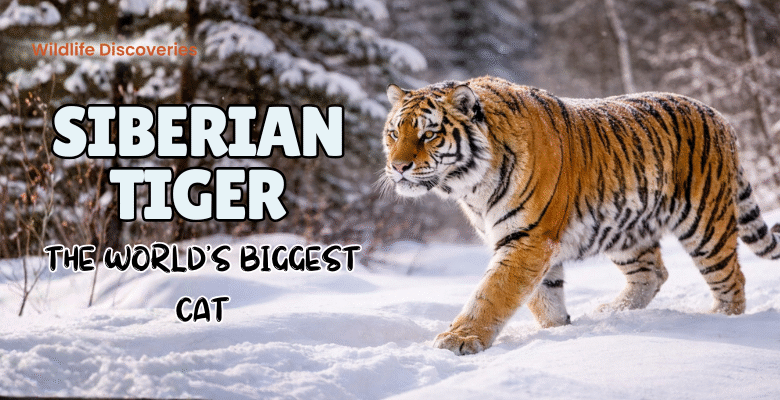
The Siberian Tiger, often called the Amur Tiger, is not just another big cat; it is the world’s largest feline predator, a true monarch of the snowy, frozen forests of the Russian Far East. This magnificent animal embodies raw strength, resilience, and a wild spirit, yet its existence today hangs by a thread. Its unique adaptations to survive the brutal, sub-zero winters are a marvel of evolution, demanding respect and a closer look at the life it leads. The continued survival of the Siberian Tiger acts as a crucial barometer for the health of its entire, vast, and challenging ecosystem.
Who Are They?
The Siberian Tiger (Panthera tigris altaica) is the pinnacle of the cat family, a breathtaking symbol of the wild. It holds the title of the largest tiger subspecies and, indeed, the largest cat species on Earth. Unlike its cousins that roam the tropical jungles of India or Southeast Asia, the Siberian Tiger has evolved to thrive in a world of deep snow and bitter cold. Its scientific name, Panthera tigris altaica, connects it to the vast, cold Altaic mountains and surrounding forests, giving it a powerful, legendary status.
This tiger’s coat is distinctively paler than others, with fewer, wider-spaced dark stripes, a perfect camouflage against the snow and leafless trees of winter. They are an apex predator, meaning they sit at the very top of their food chain with no natural enemies—only humans pose a threat to their survival. The incredible power and stealth of the Siberian Tiger allow it to take down prey many times its own size, securing its position as the king of its rugged domain.
Where They Call Home?
The historic range of the Siberian Tiger once stretched across the Korean Peninsula, northeastern China, and the Russian Far East. Tragically, this vast territory has shrunk dramatically due to human activity. Today, the tiger’s primary stronghold is the Sikhote-Alin mountain range in Primorye and Khabarovsk Provinces in the Russian Far East, particularly near the Amur River, which is why it is also known as the Amur Tiger.
A small number of individuals are known to roam across the border into northeastern China, and there may be a few in North Korea, though this is uncertain. Their habitat is characterised by mixed forests of coniferous and deciduous trees, where winter temperatures can plummet to below −40°C. This challenging environment dictates their size, their coat, and their solitary habits, ensuring only the strongest and most adaptable survive the relentless cold.
Built for the Cold: Giant Size and Super Fur
The immense size of the Siberian Tiger is one of its most critical adaptations to the frigid climate. Being larger means they have a smaller surface area-to-volume ratio, which is essential for retaining body heat in the extreme cold. A male Siberian Tiger can weigh between 160 and 190 kilograms (350 to 420 pounds) on average, with truly massive individuals exceeding 300 kilograms (660 pounds), making them absolute powerhouses.
Their coat is another marvel of evolution. It is incredibly thick, dense, and long, especially around the neck, forming a protective ruff, and on the belly and legs. This dense fur provides outstanding insulation. Furthermore, they develop a thick layer of subcutaneous fat (fat right under the skin) along their flanks and belly. This fat layer acts like a natural thermal blanket, a vital defense against the crippling cold of the Siberian winter.
Hunting in the Snow
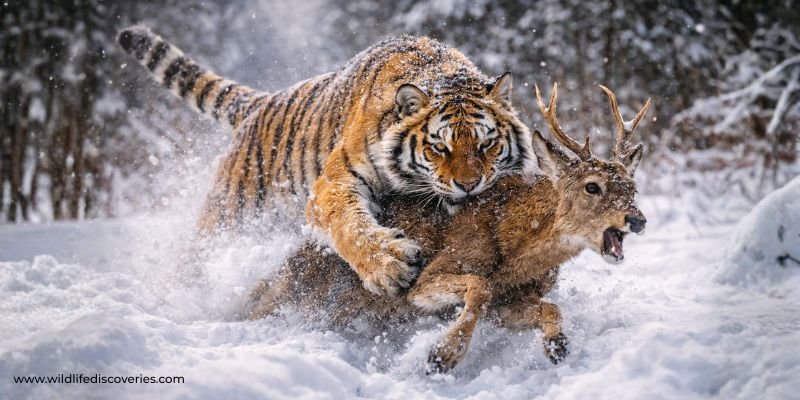
Hunting for a Siberian Tiger in a snow-covered landscape requires both immense strength and unique strategies. The tiger’s enormous padded paws are perfectly designed for the snow, acting like natural snowshoes to help distribute their weight and prevent them from sinking too deeply. This allows them to move with surprising stealth over a snowy terrain that would slow down their prey.
Although they can sprint at high speeds, they cannot maintain it for long. Their hunting success relies on stealth and the element of surprise. They use their pale striped coat for camouflage, stalking prey until they are close enough to launch a sudden, powerful ambush. The sheer muscle power allows them to drag a carcass weighing hundreds of kilograms over long distances to a safe, secluded spot for feeding, proving the resilience of the Siberian Tiger.
What They Hunt to Survive?
The Siberian Tiger is a pure carnivore, and as an apex predator, its diet consists mainly of large hoofed animals (ungulates) that share its harsh environment. A single tiger needs to consume a massive amount of meat to maintain its body weight and energy levels in the cold. It requires approximately 9 to 10 kilograms (20 to 22 pounds) of meat per day on average to survive.
Their main prey species include:
| Prey Species | Common Name | Weight Range | Importance to Tiger Diet |
| Sus scrofa | Wild Boar | 50 – 200kg | Primary food source, especially in winter. |
| Cervus elaphus xanthopygus | Manchurian Wapiti (Elk) | 150 – 300kg | Crucial large meal; provides meat for days. |
| Cervus nippon | Sika Deer | 35 – 110kg | Important supplementary prey. |
| Alces alces | Moose | Up to 600kg | Occasionally hunted; a massive feast. |
They also occasionally hunt smaller prey like rabbits, pikas, and even fish. Remarkably, they are known to attack and kill Asiatic black bears and brown bears, especially if they find them in hibernation or if food is scarce. This is a testament to the tiger’s unmatched power and ferocity.
How They Live by Themselves?
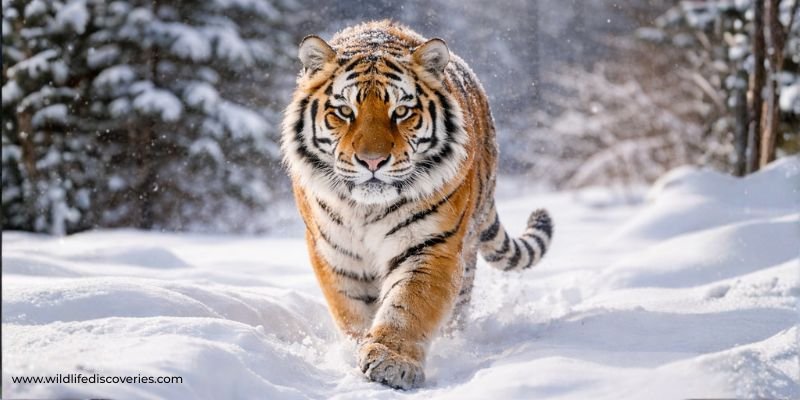
Like most big cats, the Siberian Tiger leads a solitary and highly territorial life. Once cubs leave their mother, a tiger will roam alone, establishing a huge home range that can span hundreds or even thousands of square kilometers. The sheer size of this territory is necessary to ensure enough prey is available to support their massive bodies, as prey density is low in their cold habitat.
The tigers mark their territory using various methods, including scent marking (spraying urine and rubbing scent glands), claw raking on trees, and roaring. These signals communicate to other tigers which areas are already claimed, helping to minimize conflicts. The only time a male and female Siberian Tiger will come together is briefly for mating. The female then raises her litter of two to four cubs alone, teaching them the essential skills of survival, hunting, and how to be a Siberian Tiger, a process that takes up to three years.
Why They Are in Danger?
Despite their fearsome power, the Siberian Tiger is classified as Endangered on the IUCN Red List. Their population, estimated to be fewer than 600 individuals in the wild, faces constant, grave threats almost entirely caused by human actions. The fight for survival is real, and the key dangers are interconnected and devastating.
The greatest threat is poaching. Tigers are hunted illegally for their beautiful coats and for their body parts, which are used in traditional Asian medicine despite being scientifically proven ineffective. This illegal wildlife trade is incredibly lucrative, driving criminal syndicates to relentlessly pursue these rare animals. The second major threat is habitat loss and fragmentation.
Human activity, primarily illegal logging and forest fires, destroys the dense forest habitat the tigers rely on. This also fragments their territory, isolating small tiger populations and leading to inbreeding and loss of genetic diversity, making the entire species weaker and less able to adapt to environmental changes. Furthermore, the poaching of their prey species (deer and boar) removes the tiger’s essential food source, leading to starvation and increasing the likelihood of tigers preying on livestock, which, in turn, leads to human-tiger conflict.
The Fight to Save Them
The story of the Siberian Tiger is also one of resilience and a long, determined conservation effort. In the 1940s, the population dropped to fewer than 50 individuals, an alarming crisis that spurred Russia to become the first country to grant the tiger full protection. Thanks to decades of hard work, the population has slowly rebounded.
Key conservation strategies are currently in place:
Anti-Poaching Patrols: Highly trained teams patrol vast forest areas to actively deter and arrest poachers. Stricter laws and harsher penalties for wildlife crimes are essential tools.
Habitat Protection: Establishing and expanding protected areas, like nature reserves and national parks, ensures safe havens where tigers can roam and hunt undisturbed.
Scientific Research: Projects like the Siberian Tiger Project use radio-collars and GPS tracking to monitor tiger movements, behavior, and health. This data is vital for making informed conservation decisions and managing human-tiger conflicts.
Prey Recovery: Protecting deer, wild boar, and other prey animals ensures the tiger has a sustainable food source, which is one of the most direct ways to support the tiger population’s growth.
Amazing Facts of Siberian Tiger
The Siberian Tiger is a creature of mystery and power, and many fascinating facts contribute to its legendary status:
Unique Stripes: Just like a human fingerprint, no two Siberian Tigers have the same stripe pattern. Researchers often use these stripes to identify individual tigers in the wild for population counts and monitoring.
Stripes on Skin: The stripe pattern on a tiger’s fur is actually mirrored on the skin itself. If a tiger were shaved, the stripes would still be visible.
Powerful Hunters: A Siberian Tiger can jump up to five meters in a single bound and can run at speeds of up to 50 miles per hour (80 km/h) over short distances.
Vast Territory: A male Siberian Tiger’s home range can cover over 1,000 square kilometers (386 square miles), requiring a constant, dedicated effort to patrol and mark its borders.
| Siberian Tiger Key Data | Measurement/Fact |
| Conservation Status (IUCN) | Endangered |
| Average Male Weight | 160 – 190kg (up to 300kg max) |
| Wild Population Estimate | Fewer than 600 individuals |
| Primary Threat | Poaching and Habitat Loss |
| Lifespan in the Wild | 10 – 15 years |
What We Can Do to Help?
The future of the majestic Siberian Tiger depends on our continued commitment. Every person can contribute to the global effort to save the wildlife and this incredible species. We must recognize that protecting the tiger means protecting the entire boreal forest ecosystem.
Here are simple, impactful ways you can help:
Support Conservation Groups: Donate to or volunteer with reputable organizations, such as the Wildlife Conservation Society (WCS) or the World Wildlife Fund (WWF), that run on-the-ground anti-poaching and research programs for the Siberian Tiger.
Choose Sustainable Products: Avoid buying products made with illegally logged timber or goods that contribute to the destruction of the tiger’s habitat. Look for FSC-certified wood products.
Raise Awareness: Use social media and conversations to educate others about the tiger’s plight and the importance of global biodiversity. The more people who care, the stronger the protection will be.
Adopt a Tiger: Many wildlife organizations offer symbolic adoption programs. The funds go directly toward protecting the animals and their habitat.
The Siberian Tiger has clawed its way back from the brink of extinction once, a testament to its formidable spirit and the dedication of conservationists. It is our moral duty to ensure this striped icon of the snowy forests has a safe and secure future. By understanding their world and taking action, we can help secure the legacy of the world’s largest cat for generations to come.