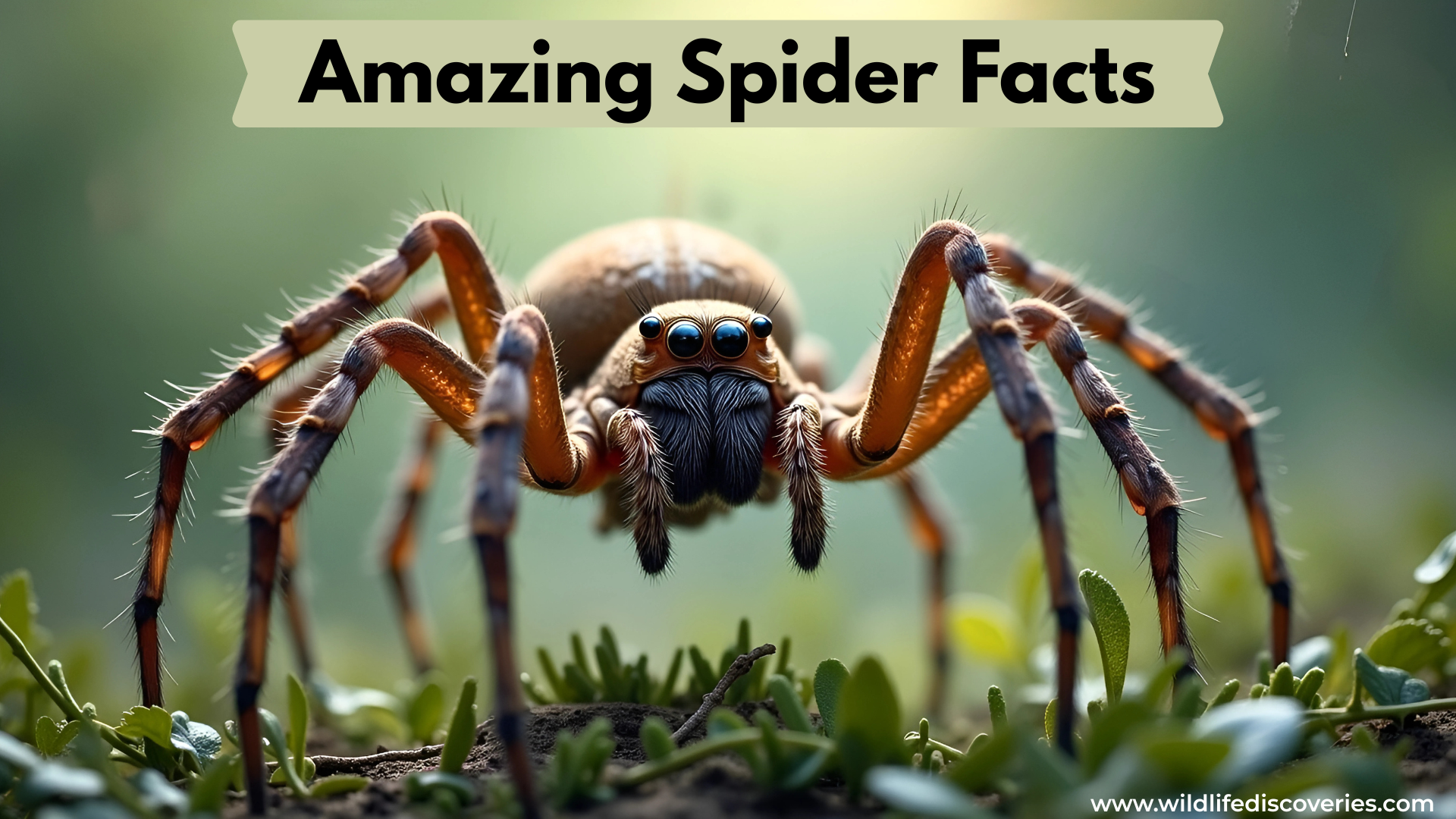
Spiders are often the misunderstood protagonists of the animal kingdom. While many people recoil at the sight of a web in the corner of a room, these eight-legged architects are essential to our planet’s survival. In this deep dive, we will explore amazing spider facts, look closely at specific species, and understand why these tiny predators are actually a farmer’s best friend.
The Diversity of the Spider World
There are over 45,000 known species of spiders, and they live on every continent except Antarctica. They aren’t insects; they belong to the class Arachnida. From the way they hunt to the strength of their silk, every aspect of a spider is a marvel of biological engineering.
Yellow Sac Spider (Cheiracanthium)

Commonly found in gardens and homes, the Yellow Sac Spider is often misunderstood. One of the amazing spider facts regarding this species is that they don’t use a traditional orb web to catch prey. Instead, they build small, silk “sacs” in protected areas to rest during the day. They are active nocturnal prowlers, often wandering into human living spaces while searching for small insects..
Hunting Style: They are nocturnal hunters that roam around looking for prey rather than waiting in a web.
Fact: They are responsible for more indoor bites than most other spiders, though their venom is usually not medically significant for humans.
Wolf Spider (Lycosidae)

The Wolf Spider is a robust and agile hunter. An amazing spider facts highlight for this family is their incredible eyesight; they have eight eyes arranged in three rows, giving them nearly 360-degree vision. Unlike most spiders, they do not spin webs at all. They rely on their sheer speed and strength to run down their prey, much like the wolves they are named after.
No Web Needed: They do not spin webs to catch food. Instead, they chase down their prey like wolves—hence the name.
Parental Care: One of the most amazing spider facts about Wolf Spiders is that the mother carries her egg sac attached to her spinnerets, and once the babies hatch, they ride on her back for several days.
Cellar Spider (Pholcidae)

Often called “Daddy Long-Legs,” these spiders are a staple in household basements. An amazing spider facts curiosity is their “whirling” defense mechanism. When threatened, they vibrate their webs so rapidly that they become a blur to the eyes of a predator. Despite their fragile appearance, they are fierce enough to hunt and eat other, more venomous spiders.
The Vibrating Defense: When threatened, they shake their webs violently, becoming a blur to confuse predators.
Effective Hunters: Despite their delicate appearance, they are known to hunt and kill much larger spiders, including the Redback or Black Widow.
Black Widow Spider (Latrodectus)

The Black Widow is iconic for the red hourglass mark on its abdomen. One of the most famous amazing spider facts is the potency of its venom, which is a neurotoxin. While dangerous, these spiders are naturally shy and only bite when they feel trapped or squeezed. Their silk is also incredibly strong, often used by scientists to study high-tensile materials.
Potent Venom: Their venom is a neurotoxin. While a bite is extremely painful, it is rarely fatal to healthy humans if treated properly.
The Name: The name comes from the belief that the female eats the male after mating, though this doesn’t happen in every instance.
Jumping Spider (Salticidae)

The Black Widow is iconic for the red hourglass mark on its abdomen. One of the most famous amazing spider facts is the potency of its venom, which is a neurotoxin. While dangerous, these spiders are naturally shy and only bite when they feel trapped or squeezed. Their silk is also incredibly strong, often used by scientists to study high-tensile materials.
Vision and Precision: They have the best vision of any spider, allowing them to track prey from a distance.
The Leap: They can jump up to 50 times their body length. Before jumping, they attach a silk “safety line” to their starting point, just in case they miss the landing.
Tarantula (Theraphosidae)

Tarantulas are the giants of the spider world. A significant amazing spider facts point is their longevity; female tarantulas in some species can live for over 30 years. They also possess “urticating hairs”—tiny barbed bristles on their abdomen that they can flick at predators to cause irritation to the skin and eyes.
Longevity: Female tarantulas can live for over 20–30 years.
Defense Mechanism: Instead of just biting, many New World tarantulas flick “urticating hairs” from their abdomen that cause irritation to the skin and eyes of predators.
Spider Hunting: The Art of the Kill

One of the most amazing spider facts involves their diverse hunting strategies. They are not all web-weavers; they are specialized killers that use physics, chemistry, and camouflage.
Passive Trappers (The Web Builders)
Silk is a spider’s greatest tool. It is a protein fiber that is, weight-for-weight, stronger than high-grade steel.
Orb Webs: The classic circular design used to catch flying insects.
Funnel Webs: A flat sheet with a hideout at the end. When a bug walks on the sheet, the spider rushes out.
Bolus Spiders: These spiders swing a single strand of silk with a sticky ball at the end, mimicking the scent of a female moth to lure males into the “mace.”
Active Hunters (The Stalkers)
Spiders like the Wolf Spider and Jumping Spider don’t use webs. They use stealth.
Camouflage: Crab spiders can change their color from white to yellow to match the flower they are sitting on.
Ambush: Trapdoor spiders build a burrow with a literal door made of silk and dirt. They wait behind the door and pounce when they feel footsteps above.
Spiders in Agriculture: The Farmer’s Secret Weapon

If spiders disappeared tomorrow, the world would face a famine. This is one of the most critical amazing spider facts for humans to understand.
Natural Pest Control
In agricultural settings, spiders act as the primary line of defense against crop-destroying pests.
Massive Consumption: It is estimated that spiders globally eat between 400 and 800 million tons of insects every year.
Broad Spectrum: Unlike some ladybugs that only eat aphids, spiders eat almost everything: beetles, caterpillars, flies, and grasshoppers.
Reducing Chemical Use
By maintaining “spider-friendly” zones in farms (like leaving some grass at the edges of fields), farmers can significantly reduce their reliance on chemical pesticides. In rice paddies across Asia, spiders are essential for controlling leafhoppers, which can destroy an entire season’s harvest if left unchecked.
Key Takeaways
Eco-Engineers: Spiders control the insect population, preventing ecological collapse.
Silk Mastery: Spider silk is being studied for use in bulletproof vests and medical sutures because of its incredible strength and elasticity.
Safety First: Very few spiders are actually dangerous to humans. Most would rather run away than bite.
Agricultural Heroes: They are the “organic” alternative to pesticides, protecting our food supply.
Frequently Asked Questions (FAQs)
Q: Do all spiders spin webs? A: No. While all spiders produce silk, only about half of them use it to build webs for catching food. Others use it for egg sacs, safety lines, or lining their burrows.
Q: Are Black Widow bites always fatal? A: Very rarely. While the bite is extremely painful and requires medical attention, modern medicine has made fatalities almost non-existent for healthy adults.
Q: What is the biggest spider in the world? A: The Goliath Birdeater (a type of tarantula) holds the record by mass, with a leg span of up to 12 inches—the size of a dinner plate!
Q: Can spiders fly? A: Not with wings, but many small spiders use a technique called “ballooning.” They release a strand of silk into the wind, which catches the air and carries them for miles—sometimes even miles high in the atmosphere!
Q: Why do spiders have eight legs? A: Spiders are arachnids, not insects. All arachnids (including scorpions and ticks) have eight legs, whereas insects have six.