Introduction
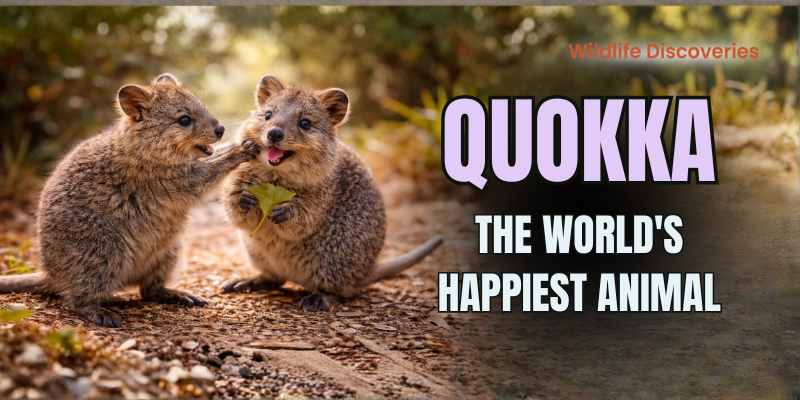
In a world hungry for positivity, the quokka provides a daily dose of pure, unfiltered joy. This marsupial’s constant, upward-curving expression has earned it the title of the World’s Happiest Animal, turning it into a social media superstar. The phenomenon began with tourists and celebrities sharing “quokka selfies,” photos where the animal appears to pose willingly with a wide grin.
This viral fame has fundamentally changed the quokka’s profile, transforming it from a relatively obscure Western Australian wallaby into a global icon of happiness. It is a powerful example of how a unique physical feature can captivate millions and drive interest in wildlife conservation.
Setting the Stage
While the quokka is known everywhere, its home is geographically restricted to a small number of islands and isolated patches of the Australian mainland. The main population thrives on Rottnest Island, a tiny, safe haven off the coast of Perth. Understanding the quokka’s biology and environment is the key to understanding its scarcity and the answer to why this beloved creature exists only in Australia.
What Exactly Is a Quokka?
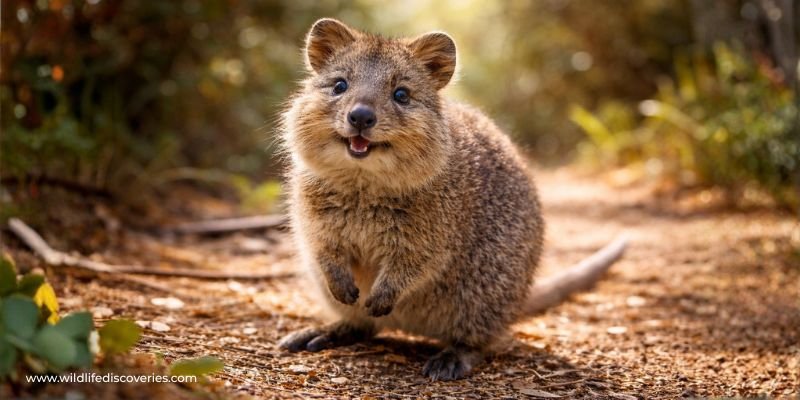
The quokka (Setonix brachyurus) is a small macropod, meaning it belongs to the same family as kangaroos and wallabies. Roughly the size of a domestic cat, it weighs between 2.5 and 5 kilograms and has a stocky build with coarse, grey-brown fur. The animal is instantly recognizable by its short, rounded ears and, of course, its friendly facial expression.
Like their larger cousins, quokkas move by hopping and bounding on their powerful hind legs. They are herbivores and mostly nocturnal, spending their days resting in the cool, dense undergrowth of their island and mainland habitats.
| Feature | Description | Related Macropod |
| Size | Small cat-sized (2.5-5 kg) | Wallaby, Pademelon |
| Diet | Herbivore (grasses, leaves, shrubs) | Kangaroo, Wallaby |
| Movement | Hopping and bounding | Kangaroo |
| Social Life | Peaceful, non-territorial groups | Wallaby |
Biological Features of the Smile
The “smile” that defines the World’s Happiest Animal is not an emotional display, but a fascinating biological necessity. The quokka’s resting facial structure features a distinct, upturned corner of the mouth. When the animal pauses foraging, this shape gives the optical illusion of a genuine grin.
More importantly, this open-mouth posture helps the quokka pant and regulate its body temperature. By positioning its mouth like this, the quokka can more efficiently cool itself down in Australia’s often hot, dry environment. It is a perfect example of a biological adaptation that has created an irresistibly adorable cultural phenomenon.
A Life in the Pouch
As a marsupial, the female quokka carries her young, called a joey, in a pouch. After a very short gestation period of about 27 days, a single, tiny, underdeveloped joey is born. The joey immediately makes the journey to the mother’s pouch, where it will live for approximately six months.
Interestingly, quokkas exhibit a reproductive strategy called embryonic diapause. This means a female can mate again soon after giving birth, but the new embryo’s development is suspended until the first joey leaves the pouch or, crucially, if the first joey does not survive. This ensures the species can quickly recover from loss, which is a key survival mechanism in the wild.
Why Only Australia?
The question of why the World’s Happiest Animal is confined to Australia is directly linked to two critical factors: the presence of introduced predators and the loss of suitable habitat. This has forced the quokka into the last few safe havens.
The Island Sanctuary: Rottnest Island’s Role
The vast majority of the quokka population, estimated to be around 10,000, lives on Rottnest Island, or Wadjemup in the Noongar language. This small island, located just off the coast of Perth, is the quokka’s most important sanctuary. The island is entirely free of their natural mainland predators, particularly the European Red Fox and feral cats.
This predator-free environment allows the quokkas to live and forage without constant threat, leading to a much larger and bolder population. The island’s name itself, bestowed by a Dutch explorer in 1696 who mistook the quokkas for giant rats, is a testament to the animal’s abundance there even centuries ago.
Habitat Essentials
Quokkas are highly dependent on specific environmental conditions that have become scarce on the mainland. Their preferred habitat is dense vegetation, particularly swampy areas or coastal heath, which provides both cover for daytime resting and the leafy food they need.
The crucial requirement is access to freshwater sources. While quokkas are remarkably adapted to survive long periods without drinking, relying on moisture from the plants they eat, this need still ties them to damp areas. On the mainland, the combination of dense shelter and permanent water has been drastically reduced by agricultural and urban expansion.
Mainland Decline
Quokkas were once widespread across the southwest of mainland Western Australia. Their rapid decline and retreat to the islands began with the introduction of the European Red Fox in the 1930s. The fox, an efficient and successful predator, decimated quokka populations across the mainland.
Today, only a handful of isolated, small colonies survive in protected mainland reserves, where intensive fox and feral cat control programs are essential for their persistence. Their inability to thrive in areas with these introduced predators is the fundamental reason why the quokka is virtually restricted to its island paradises.
Life in Pocket-Sized Paradise: Diet and Behavior
As herbivores, quokkas maintain a strictly vegetarian diet, which is a major factor in their non-territorial nature. They primarily feed on native grasses, leaves, and the bark of various shrubs. They are even known to climb small trees, up to 1.5 meters, to reach the choicest leaves, demonstrating a surprising agility for such a stocky animal.
An interesting adaptation is their ability to store fat in their short tails. This reserve fat is a vital energy source during dry seasons when food and water become scarce, allowing them to sustain themselves for extended periods without eating.
Nocturnal Habits
Quokkas are naturally nocturnal animals, meaning they are most active between dusk and dawn. They spend the hottest part of the day resting and sleeping in the cool, dense undergrowth, hidden away from the sun and, on the mainland, hidden from predators.
While they are often spotted by tourists during the daytime on Rottnest Island, this is largely due to their habituation to human presence and the lack of predators there. Visitors have the best chance of seeing them active in the early morning or late afternoon when the temperatures are cooler.
Social Structure and Interaction
Quokkas are generally peaceful and social creatures. Unlike some other macropods that are highly territorial, quokkas are happy to live in relatively large, non-aggressive groups. These groups are often observed gathering around food and water sources, particularly during the dry season.
On Rottnest Island, their lack of fear of humans is striking; they often approach visitors out of curiosity. This social, curious nature, combined with their perpetually cheerful look, is what makes them such a captivating and easy subject for photography.
The Quokka Selfie Phenomenon
The quokka’s rise to international stardom is a purely modern phenomenon, driven by the power of social media. The “quokka selfie,” which perfectly captures the animal’s signature smile, became a viral trend, catapulting the World’s Happiest Animal into global consciousness.
This trend, amplified by celebrities and travel influencers, resulted in a massive surge of tourism to Rottnest Island. While this attention has been fantastic for conservation awareness and local tourism, it has also created a critical need to manage human interaction to protect the quokkas.
Respecting Wildlife
Despite their friendly appearance, quokkas are still wild animals, and their health is paramount. Authorities on Rottnest Island enforce strict rules to ensure the quokkas remain safe and wild. It is illegal to touch or feed the quokkas, with heavy fines in place for those who break the rules.
Do Not Touch: Touching can stress the quokka and is a risk for transmitting diseases between humans and animals. They also possess sharp claws and teeth they will use if they feel threatened.
Do Not Feed: Human food, even seemingly harmless items like bread or processed fruit, is highly detrimental to their delicate digestive system and can lead to illness or even death.
Where to See Them Safely?
The best place to see the World’s Happiest Animal is, without a doubt, on Rottnest Island. With a large, healthy population, quokkas are easily spotted across the entire island, often venturing into settlements and pathways.
For a respectful and rewarding selfie experience, follow these guidelines:
| Action | Ethical Guideline | Purpose |
| Patience | Crouch down quietly and allow the quokka to approach you. | Reduces stress and ensures the quokka feels safe. |
| Distance | Use a selfie stick or wide-angle lens. Maintain an arm’s length minimum. | Prevents physical contact and respects personal space. |
| Lighting | Avoid using flash photography, especially at night. | Prevents startling or harming the animal’s eyes. |
| Observation | Never chase a quokka for a photo; let them wander freely. | Maintains their natural behavior and avoids interference. |
Conservation Status: Keeping the Smile Going
The thriving population on Rottnest Island is crucial, yet the quokka is officially listed as Vulnerable under both Australian national law and the International Union for Conservation of Nature (IUCN) Red List. This status reflects the dramatic loss of their population on the mainland, which is critical for the species’ overall genetic health and long-term viability. It underscores the urgent need to save the wildlife, ensuring that the quokka’s survival is not dependent on just one location.
Their high numbers on the islands provide a vital safety net, but the entire species is only as secure as its most isolated colonies, which are currently under constant threat.
The Threats They Face
The key challenges to the quokka’s survival are direct consequences of human development and climate change:
Predation by Invasive Species: The European Red Fox and feral cats remain the single biggest threat to mainland populations, preventing the quokka from re-establishing in its former range.
Habitat Loss and Degradation: Land clearing for agriculture, housing, and mining has destroyed the quokka’s swampy, dense forest habitats on the mainland.
Climate Change: Increased frequency of severe droughts and bushfires threatens both island and mainland colonies. Drier conditions reduce the availability of freshwater and fresh food, pushing the animals to the brink.
Efforts to Protect the Quokka
Conservation efforts are focused on protecting existing populations and attempting to reintroduce quokkas safely into suitable mainland areas.
Feral Predator Control: Intensive, ongoing control programs targeting foxes and cats are essential to protect the small mainland colonies that possess crucial genetic diversity.
Habitat Management: Protected nature reserves are actively managing vegetation and water sources to ensure the quokkas have sufficient resources, especially during harsh summers.
Responsible Tourism: Campaigns on Rottnest Island focus on educating tourists to minimize stress and ensure that the surge in popularity does not harm the World’s Happiest Animal. The ultimate goal is to turn the quokka’s celebrity status into a powerful tool for global conservation awareness.