Have you ever stared deeply into the eyes of a household pet, marveling at the quiet intelligence staring back at you? Or perhaps you have watched a nature documentary showcasing the bizarre, alien-like creatures of the deep ocean, wondering how such vastly different beings share the same Earth. If you are captivated by nature, you have likely asked a fundamental scientific question: What are the classifications of animals?
Understanding the zoological classification system is like being handed the master blueprint to life on Earth. When exploring [Why Is the Earth Called a Unique Planet?], the answer inevitably points back to our world’s staggering biodiversity. From microscopic water bears (tardigrades) surviving in extreme environments to massive blue whales migrating across entire oceans, millions of species interact to keep our planet alive.
To study, protect, and make sense of this massive web of life, scientists developed a highly organized system. In this comprehensive, beginner-friendly guide, we will explore exactly how are animals classified, dive into the fascinating differences between vertebrates and invertebrates, and provide a clear, easy-to-read animal classification chart with examples. Whether you are a student, an educator, or simply an animal lover, this guide will change the way you look at the natural world.
What are the classifications of animals ?
When we ask, What are the classifications of animals, we are seeking the definition of biological taxonomy. Simply put, the classification of animals is a scientific system used by biologists to group, name, and categorize all living creatures based on their shared physical characteristics, genetic makeup, and evolutionary history.
This incredible system organizes the wild, chaotic beauty of nature into neat, logical categories. It begins very broadly—placing all animals into a massive group known as Kingdom Animalia—and becomes increasingly specific until it identifies one unique type of animal.
To understand the animal kingdom classification, imagine a giant library. If you walk into a library looking for a specific book, you do not search randomly. You go to a section (Fiction or Non-Fiction), find a genre (Sci-Fi or History), locate the author’s last name, and finally pull the specific book from the shelf. The biological classification of animals works exactly the same way, allowing scientists from all over the world to communicate clearly without the confusion of regional languages or local nicknames.
Why Do We Classify Animals?
The sheer volume of living creatures on Earth is difficult to comprehend. Scientists estimate there are over 8.7 million species on our planet, yet we have only discovered and described about 1.2 million of them. Without a unified system of zoological classification, studying wildlife would be pure chaos. But why is it so vital that we dedicate resources to categorizing these animals?
1. Understanding Evolutionary History
By grouping the types of animals based on their shared physical traits and DNA, scientists can literally map out the evolutionary history of life on Earth. Classification allows us to see how an ancient, fish-like ancestor eventually gave rise to amphibians, reptiles, birds, and mammals over millions of years.
2. Tracking and Preventing Extinctions
You cannot protect what you do not know exists. Taxonomy helps conservationists track [Animal Extinctions: How Many Species Are Extinct?] by providing a baseline of what species are currently alive. By identifying which specific animal families are declining, we can target our rescue efforts effectively.
3. Boosting Global Conservation Efforts
When we celebrate global observances like [World Wildlife Day], we rely heavily on scientific data gathered through animal classification. Understanding the exact needs, habitats, and breeding cycles of classified species directly answers [Why Is Wildlife Conservation Important?]. It allows us to build protected reserves that cater exactly to the species struggling to survive.
4. Recognizing Ecological Roles
Knowing the types of animal classification in biology helps researchers understand how different creatures interact within their habitats. A healthy planet requires a diverse mix of all animal classifications interacting within [Different Types of Ecosystems and Characteristics], from rainforests to coral reefs.
Did You Know? The concept of classifying animals dates all the way back to the ancient Greek philosopher Aristotle, who first divided animals into two basic groups: those with blood and those without blood!
Main Classification of Animals
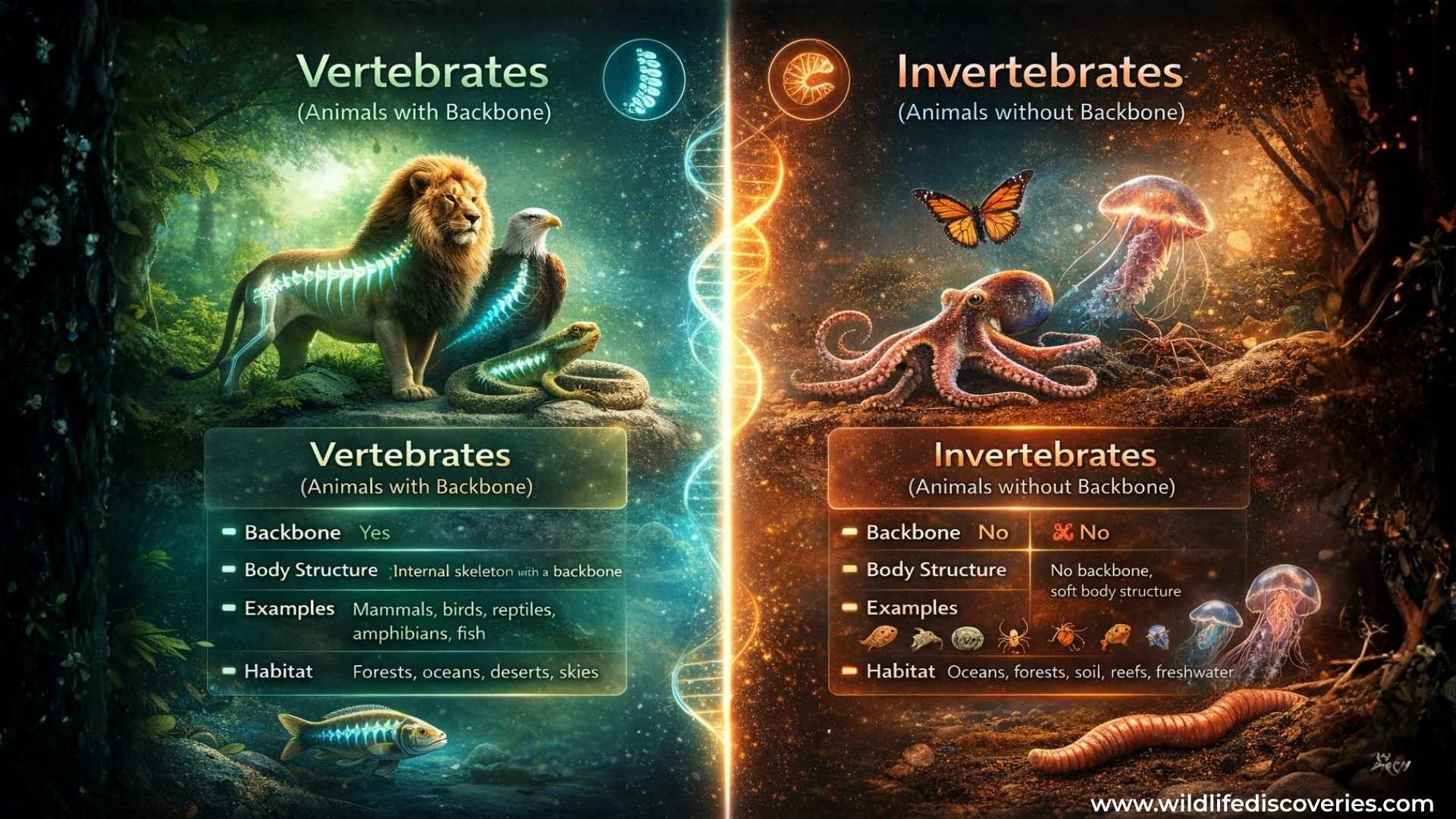
At the absolute highest, most foundational level, the classification of animals is split into two massive categories. This primary division is based on a single, defining physical feature: the presence or absence of a backbone (spinal column).
To fully grasp how are animals classified, we must deeply explore what are vertebrates and invertebrates.
Vertebrates
Vertebrates are animals that possess a backbone and an internal skeleton (endoskeleton) made of bone or cartilage. This internal structure acts as an anchor for complex muscle systems, allowing vertebrates to grow to massive sizes and move with incredible speed and agility. Although they represent only about 5% of all animal species on Earth, they are the animals humans are most familiar with.
The vertebrate group is divided into five primary classes: mammals, birds, reptiles, amphibians, and fish.
Mammals (Class Mammalia)
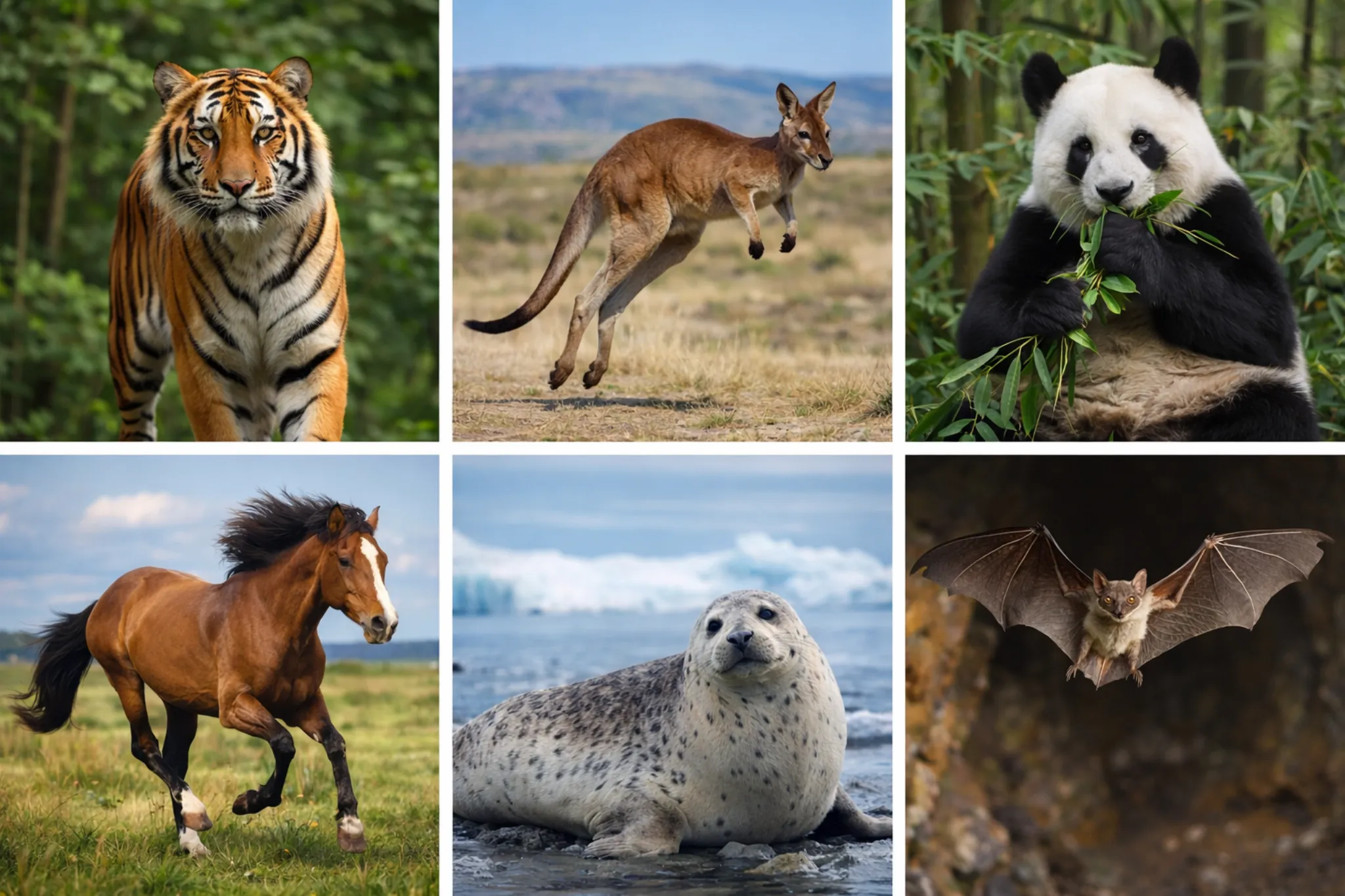
Mammals are warm-blooded vertebrates that have evolved incredibly complex bodily systems. They are easily identified by a few strict, defining characteristics: they have hair or fur on their bodies at some point in their lives, and the females possess mammary glands that produce milk to nourish their young. Additionally, mammals have a unique jawbone structure and a specialized four-chambered heart.
To learn more in detail, check out our complete guide on What Is a Mammal? Definition, Examples & Easy Facts, where we explain their features and real-world examples.
Key Characteristics: Warm-blooded (endothermic), live birth (usually), hair/fur, complex brains.
Real-World Examples: Humans, lions, elephants, blue whales, kangaroos, and bats.
Birds (Class Aves)
Birds are the undisputed masters of the sky. Like mammals, they are warm-blooded, but their bodies have evolved specifically for the physics of flight. They are defined by their feathers (which are actually modified scales), toothless beaks, and the laying of hard-shelled amniotic eggs. To reduce weight for flying, most birds possess hollow bones and a highly efficient, one-way respiratory system.
Key Characteristics: Feathers, wings, bipedal (walk on two legs), lay hard eggs.
Real-World Examples: Bald eagles, emperor penguins, hummingbirds, ostriches, and parrots.
Reptiles (Class Reptilia)
Reptiles are ancient, cold-blooded (ectothermic) survivors. Because they cannot regulate their own internal body temperatures, they rely heavily on their environment, often basking on hot rocks to absorb solar energy before hunting. Reptiles are covered in dry, scaly skin or tough bony plates that prevent moisture loss, allowing them to thrive in harsh, arid deserts. They typically lay soft, leathery eggs on land.
Key Characteristics: Cold-blooded, scaly skin, lay leathery eggs, breathe with lungs.
Real-World Examples: Crocodiles, sea turtles, king cobras, chameleons, and geckos.
Amphibians (Class Amphibia)
The word “amphibian” translates roughly to “both kinds of life,” perfectly describing these unique creatures. Amphibians lead a double life: they usually hatch in the water as aquatic larvae equipped with gills (like tadpoles) and later undergo a radical metamorphosis, developing lungs and legs to live on land as adults. They have incredibly thin, permeable, moist skin through which they can actually absorb oxygen.
Key Characteristics: Cold-blooded, moist/slimy skin, metamorphosis, rely on water for breeding.
Real-World Examples: Poison dart frogs, salamanders, toads, and axolotls.
Fish (Classes Osteichthyes, Chondrichthyes, Agnatha)
Fish are the oldest and most diverse group of vertebrates. They are entirely aquatic, cold-blooded animals that breathe by extracting dissolved oxygen from the water using specialized organs called gills. They maneuver through rivers, lakes, and oceans using fins, and most have bodies covered in protective, overlapping scales. Fish are divided into bony fish, cartilaginous fish (like sharks), and jawless fish.
Key Characteristics: Aquatic, possess gills and fins, usually covered in scales.
Real-World Examples: Great white sharks, clownfish, salmon, manta rays, and lampreys.
Invertebrates
Invertebrates are animals completely lacking a backbone. While they might not be as universally beloved as fuzzy mammals, they are the undisputed rulers of the animal kingdom classification. Invertebrates make up a staggering 95% of all known animal species on Earth! Because they lack internal bony skeletons, they have evolved mind-blowing alternative ways to support their bodies.
Let’s look at the major phyla of invertebrates.
Arthropods (Phylum Arthropoda)
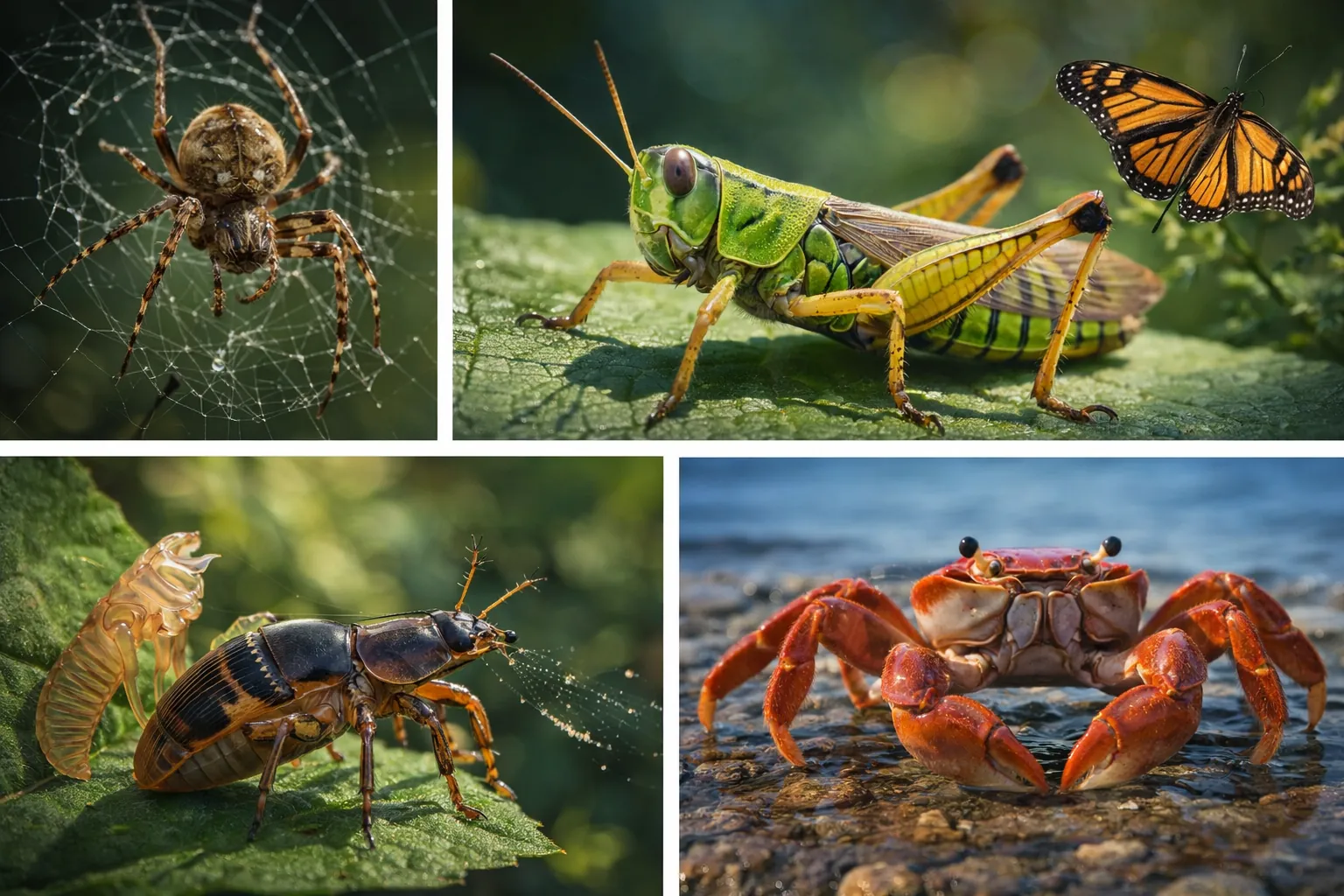
This is by far the largest, most successful animal group in the history of the planet. Arthropods are characterized by their hard outer shell (exoskeleton) made of a material called chitin, clearly segmented bodies, and jointed limbs. Because their hard exoskeletons do not grow with them, arthropods must periodically molt (shed) their shells to grow larger.
Key Characteristics: Exoskeleton, jointed legs, bilateral symmetry.
Real-World Examples: Insects (butterflies, beetles, ants), Arachnids (spiders, scorpions, ticks), and Crustaceans (crabs, lobsters, shrimp).
Mollusks (Phylum Mollusca)
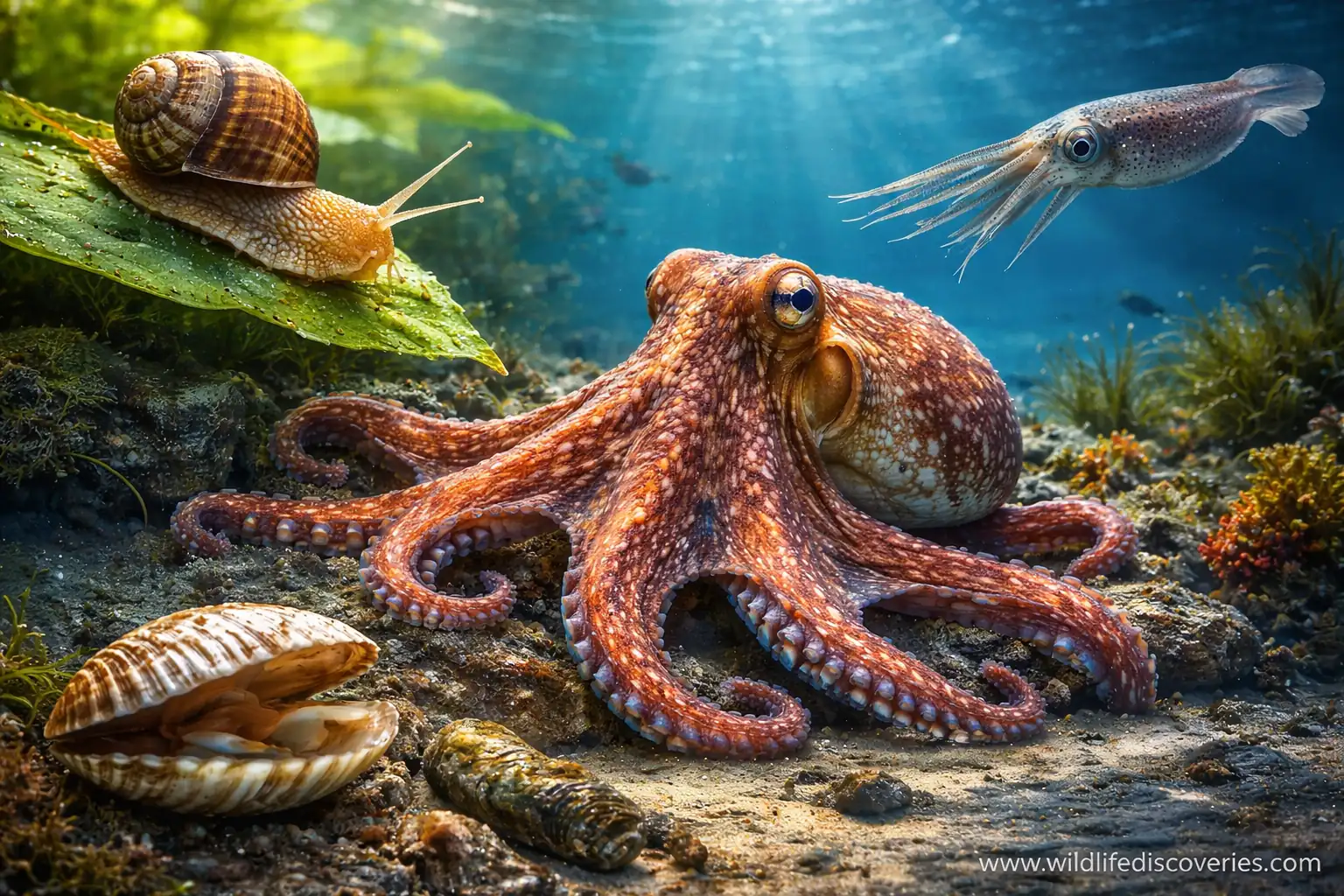
Mollusks are an incredibly diverse group of soft-bodied invertebrates. Many, though not all, secrete a hard calcium carbonate shell to protect their highly vulnerable internal organs. They generally possess a specialized, muscular structure called a “foot,” which they use for crawling, digging, or even catching prey.
Key Characteristics: Soft unsegmented bodies, muscular foot, many have external or internal shells.
Real-World Examples: Snails, octopuses, squids, giant clams, and oysters.
Annelids (Phylum Annelida)
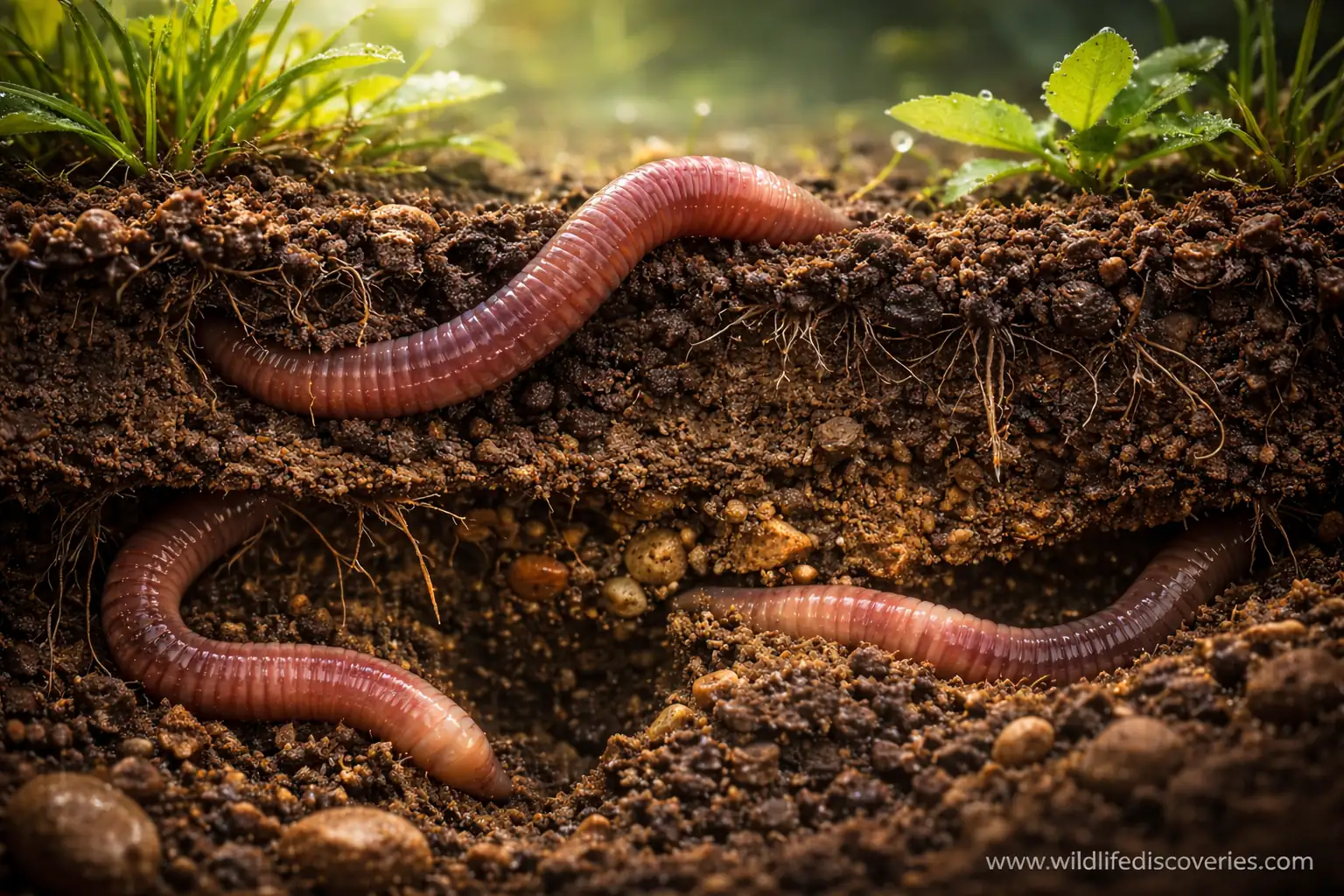
Annelids are the segmented worms. If you look closely at an earthworm, you will see its body is divided into repetitive, ring-like segments. This segmentation allows for highly flexible, coordinated movement through dense soil or murky water. They are incredibly important to global agriculture because they constantly aerate and fertilize the dirt.
Key Characteristics: Long, segmented bodies, no distinct limbs.
Real-World Examples: Earthworms, leeches, and marine bristle worms.
Cnidarians (Phylum Cnidaria)
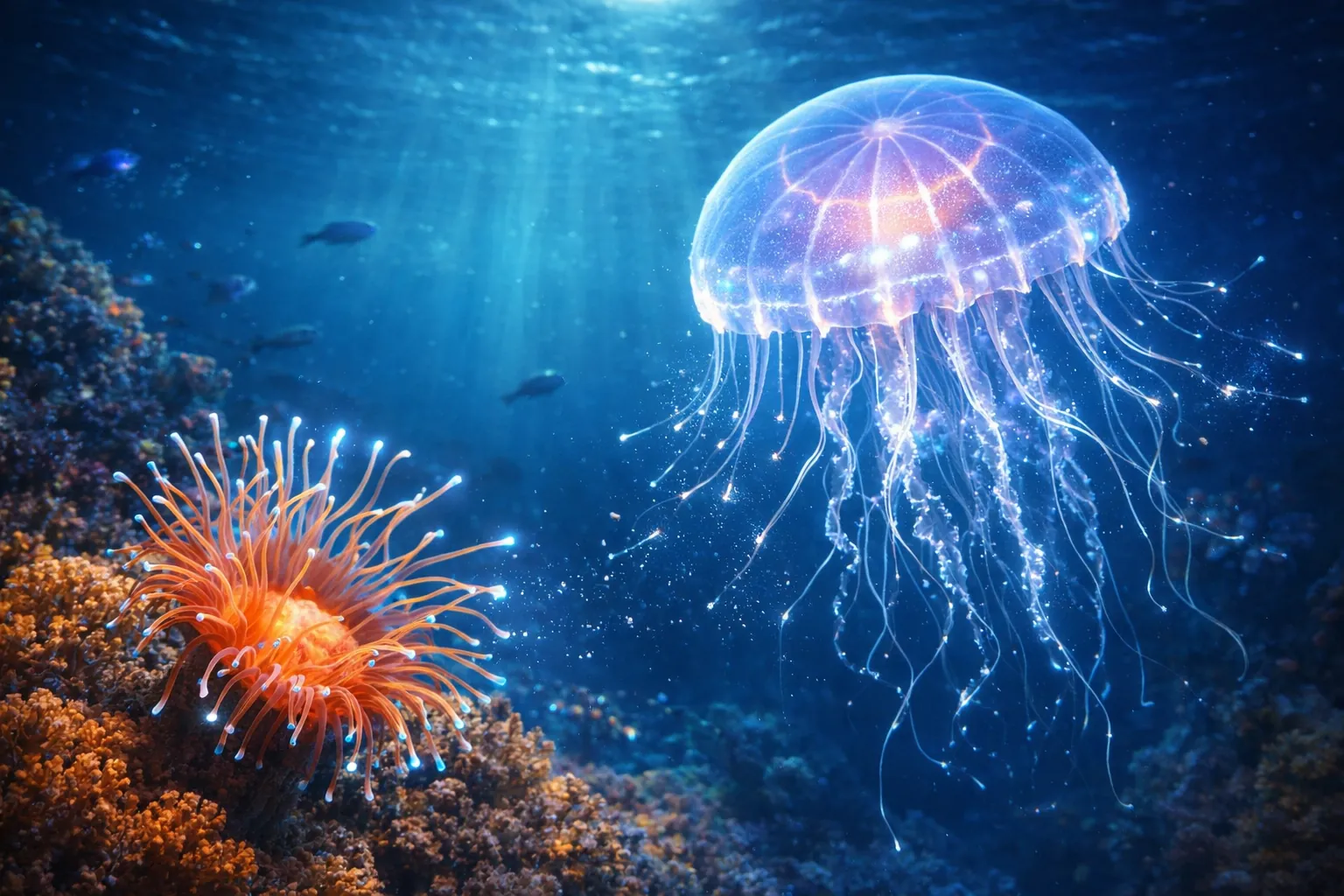
Cnidarians are strictly aquatic, mostly marine animals equipped with a terrifying secret weapon: specialized stinging cells called nematocysts. They use these microscopic harpoons to paralyze passing prey and defend themselves against predators. Cnidarians exhibit radial symmetry, meaning their body parts radiate outward from a central point, like the spokes of a bicycle wheel.
Key Characteristics: Stinging cells, radial symmetry, gelatinous bodies.
Real-World Examples: Jellyfish, sea anemones, Portuguese man o’ war, and reef-building corals.
Echinoderms (Phylum Echinodermata)
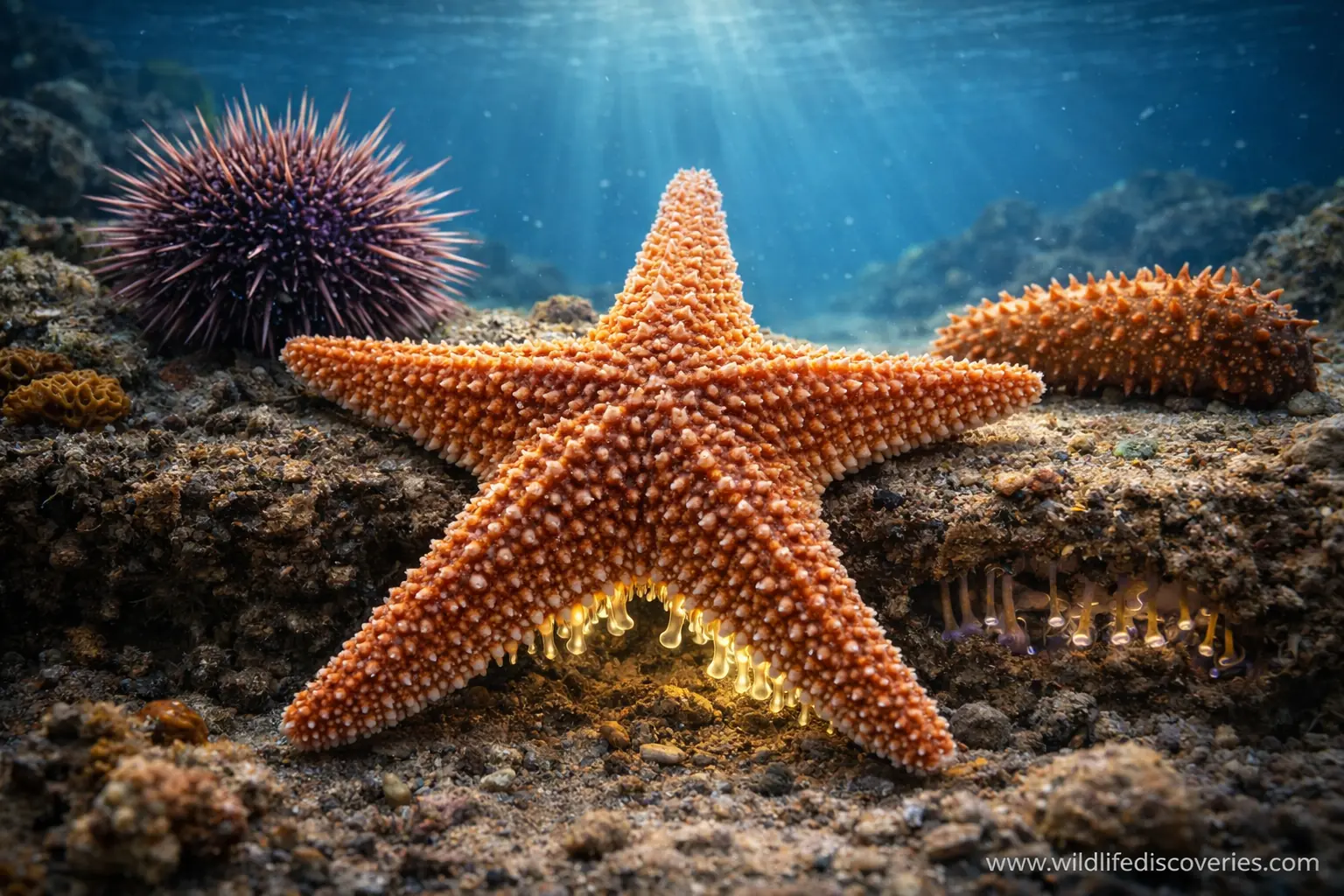
Found exclusively in saltwater oceans, echinoderms are some of the strangest creatures on Earth. The name translates to “spiny skin,” reflecting their tough, calcified outer texture. Instead of blood, they possess a unique “water vascular system” that pumps ocean water through their bodies to help them move their tiny tube feet and capture food.
Key Characteristics: Marine habitat, radial symmetry (usually 5-point), spiny skin.
Real-World Examples: Starfish (sea stars), sea urchins, sand dollars, and sea cucumbers.
Animal Classification Chart
To make this vast, complex system easier to study and memorize, here is an animal classification chart with examples. This quick-reference guide breaks down the major types of animals and their defining traits.
| Kingdom | Backbone? | Class / Phylum | Key Characteristics | Real-World Examples |
| Animalia | Vertebrates (Yes) | Mammals | Warm-blooded, hair/fur, produce milk | Humans, Dolphins, Tigers |
| Birds | Warm-blooded, feathers, lay hard eggs | Eagles, Penguins, Owls | ||
| Reptiles | Cold-blooded, scaly skin, lay leathery eggs | Snakes, Crocodiles, Turtles | ||
| Amphibians | Cold-blooded, moist skin, water-to-land life | Frogs, Salamanders, Toads | ||
| Fish | Cold-blooded, breathe with gills, use fins | Sharks, Salmon, Goldfish | ||
| Animalia | Invertebrates (No) | Arthropods | Exoskeleton, jointed legs, segmented body | Spiders, Crabs, Bees |
| Mollusks | Soft body, muscular foot, often have a shell | Octopuses, Snails, Clams | ||
| Annelids | Soft, distinctively segmented worm bodies | Earthworms, Leeches | ||
| Cnidarians | Aquatic, possess stinging cells, radial | Jellyfish, Corals, Anemones | ||
| Echinoderms | Marine only, spiky skin, water vascular system | Starfish, Sea Urchins |
Scientific Classification System (Taxonomy Explained)
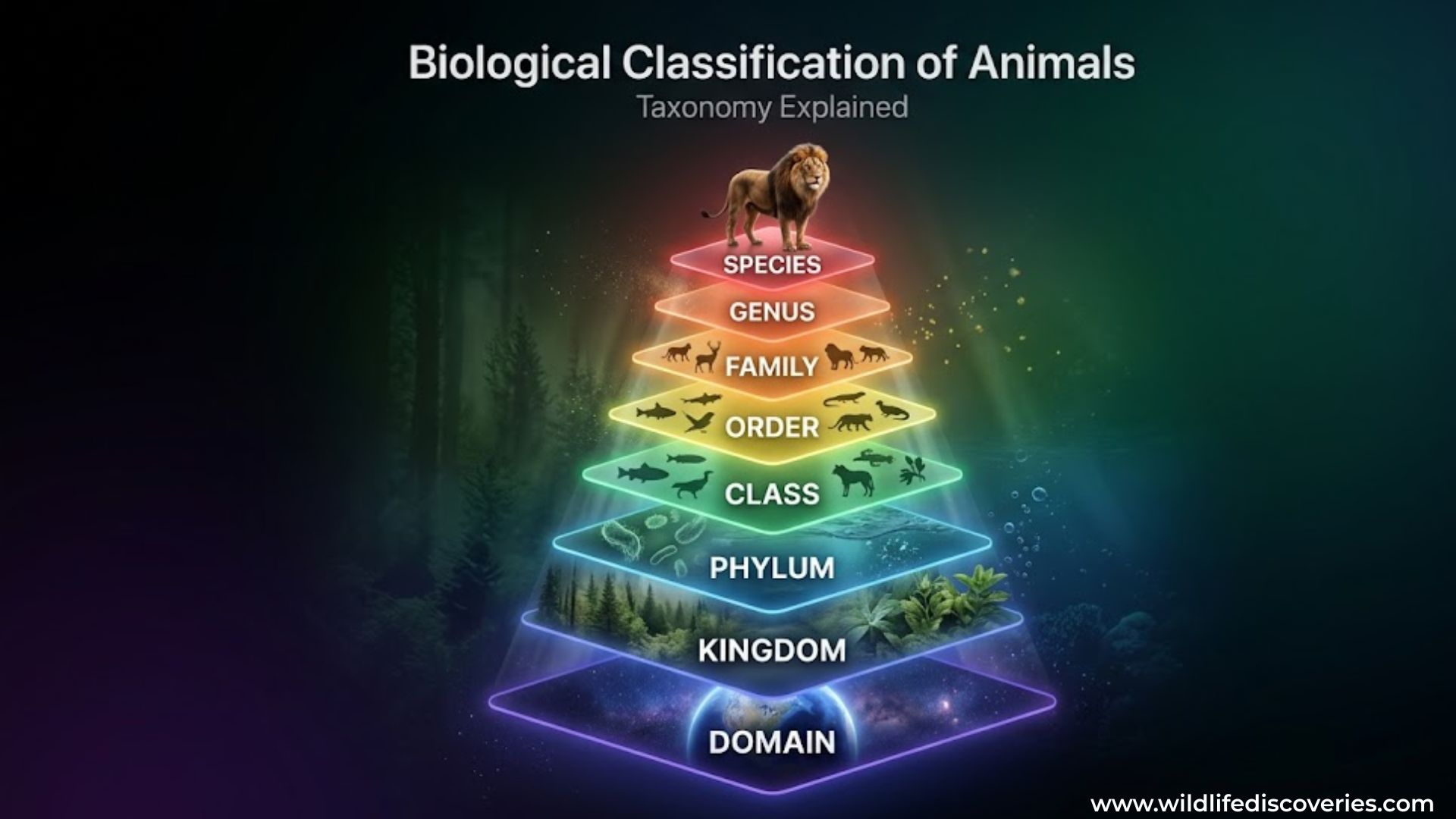
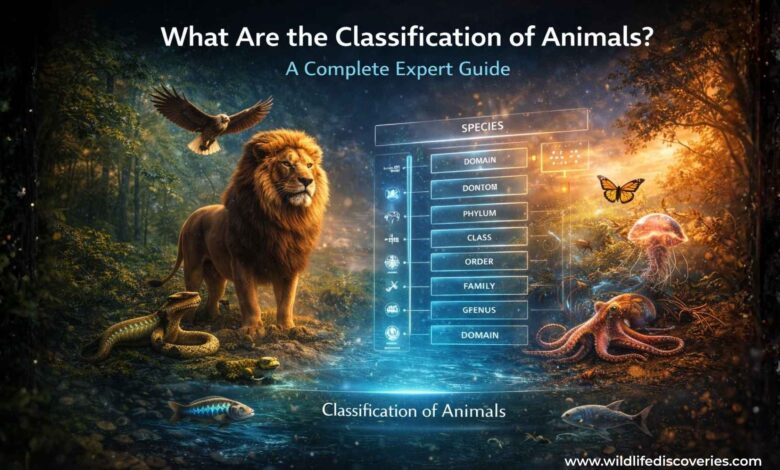
Think of this system as an upside-down pyramid. It starts incredibly broad at the top and gets narrower and narrower until it pinpoints one exact creature.
Here is exactly how animals are classified, from the broadest rank down to the most specific:
Domain: The absolute highest rank of life. All animals belong to the Domain Eukarya (meaning organisms composed of complex cells with a nucleus).
Kingdom: Under Eukarya, life is split into Kingdoms (Plants, Fungi, etc.). Here, we find Kingdom Animalia—all animals.
Phylum: This rank groups animals by major fundamental body plans. For example, all vertebrates belong to the Phylum Chordata (having a spinal nerve cord).
Class: Breaks phylums down further. Mammalia (mammals) and Aves (birds) are Classes.
Order: Groups classes by closer physical traits. For example, Carnivora is an order of meat-eating mammals.
Family: Groups closely related animals together. Felidae is the family of all cats, while Canidae is the family of all dogs.
Genus: The first part of an animal’s official scientific name. Panthera is the genus for large, roaring cats.
Species: The absolute most specific classification. A species identifies a group of individual animals that can successfully breed with each other. Leo is the specific name for a lion.
The Power of the Scientific Name
When you combine the Genus and the Species, you get the animal’s official biological name, written in Latin (e.g., Panthera leo for the Lion). This is called binomial nomenclature. It ensures that whether a scientist speaks Spanish, Mandarin, or English, they know exactly which animal is being discussed.
Key Facts About Taxonomy: > Biological classification is never entirely “finished.” It is a constantly evolving science. As modern DNA testing and genetic sequencing become more advanced, scientists frequently discover that animals they thought were related actually aren’t. Because of this, the zoological classification of certain species is updated regularly to reflect their true genetic history.
Characteristics of Each Animal Group
Understanding the animal groups and characteristics is about more than just memorization; it is about witnessing the genius of natural adaptation. Each group within the animal kingdom classification has evolved incredible survival strategies perfectly suited to their environments.
Mammalian Intelligence and Bonding: Because mammals invest an enormous amount of physical energy and time into raising a small number of young, they have evolved high intelligence, complex social structures, and deep emotional bonds.
Avian Engineering: The bodies of birds are miracles of natural engineering. They possess highly efficient respiratory systems that allow them to extract massive amounts of oxygen at freezing, high altitudes, sustaining the intense cardiovascular energy required for continuous flight.
Reptilian Resilience: The tough scales of a reptile are essentially a waterproof biological armor. They lock moisture inside the body, preventing dehydration and allowing reptiles to conquer the world’s most brutal, sun-scorched deserts.
Amphibian Bio-Indicators: Because amphibians breathe and drink partially through their highly permeable skin, they absorb whatever is in their water. This makes them crucial “indicator species.” When frog populations suddenly drop, it acts as a stark warning to scientists that the local ecosystem has become dangerously polluted.
Arthropod Adaptability: The lightweight armor of the arthropod exoskeleton, combined with their rapid reproductive cycles, allows them to adapt to environmental changes faster than almost any other group. This is why insects outnumber humans by billions to one!
When learning about these incredible biological characteristics, many people feel a deep, urgent urge to help protect them. If you frequently find yourself wondering [How Can You Take Care of Animals?] in your local area, the best approach is to support native habitat preservation, plant native pollinator gardens, and minimize your use of chemical pesticides.
Importance of Animal Classification in Modern Conservation
We have thoroughly answered What are the classifications of animals, but why does this deeply scientific topic matter to the average person today?
The biological classification of animals serves as the absolute bedrock of modern ecological conservation, veterinary medicine, and the global animal welfare movement. When we deeply understand the specific biological, dietary, and psychological needs of different types of animals, we can advocate for them much more effectively.
Driving Ecological Conservation
To save a species from the brink of extinction, we must first understand its exact biological requirements. Many people search for answers regarding [What Can We Do to Protect Endangered Animals?]. By knowing an animal’s exact classification, wildlife biologists can build highly targeted, species-specific breeding programs, legally protect vital migratory routes, and accurately monitor population health. For example, knowing that corals are living Cnidarians—not inanimate rocks—helps environmentalists push for strict maritime laws to prevent anchor damage.
Shaping Ethics and Animal Rights
Understanding animal classifications also heavily shapes our moral and ethical treatment of them in society. The global conversation around animal ethics is deeply nuanced, and it is largely informed by an animal’s classified cognitive abilities.
It is incredibly important to recognize the [Difference Between Animal Rights and Animal Welfare] in this context.
Animal welfare focuses on ensuring that animals under human care (like livestock or pets) are treated humanely, using taxonomy to understand their specific biological needs to prevent suffering.
Conversely, understanding the [Animal Rights Meaning: What Are Animal Rights?] involves the deeper philosophical stance that highly sentient animals (often higher-order mammals and birds) possess inherent legal and moral rights to live entirely free from human use, ownership, or exploitation.
Today, various [Animal Welfare Organizations Around the World], such as the WWF or the ASPCA, rely heavily on scientific zoological classification to draft strict species-specific care guidelines. This vital scientific data ensures that everything from an injured wild hawk to an abandoned domestic dog receives the exact, biologically appropriate care they need to survive and thrive.
Frequently Asked Questions (FAQs)
What are the classifications of animals?
The classification of animals is an internationally recognized scientific method used by biologists to group, name, and categorize all animal life on Earth. It is based on shared physical traits, cellular structures, genetics, and evolutionary history. The primary division separates animals into vertebrates (having backbones) and invertebrates (lacking backbones).
How are animals classified?
Animals are classified using a strict, descending hierarchical system called Linnaean taxonomy. Scientists categorize them starting from incredibly broad groups down to the most specific. The ranks, in order, are: Domain, Kingdom (Animalia), Phylum, Class, Order, Family, Genus, and Species.
What are vertebrates and invertebrates?
Vertebrates are complex animals that possess a spinal column or backbone, and an internal skeleton. They include mammals, birds, reptiles, amphibians, and fish. Invertebrates are animals that completely lack a backbone, relying instead on soft bodies, shells, or hard exoskeletons. They include insects, spiders, worms, snails, and jellyfish. Remarkably, invertebrates make up roughly 95% of all animal species.
What are the 5 classes of vertebrates?
The five primary, universally recognized classes of vertebrates are Mammals (possess hair/fur, produce milk), Birds (possess feathers, lay hard eggs), Reptiles (possess scales, cold-blooded), Amphibians (possess moist skin, transition from water to land), and Fish (possess gills and scales, live entirely in water).
Why is animal classification important?
Animal classification is absolutely vital because it creates a universal language that allows scientists worldwide to communicate clearly without language barriers. It helps us map evolutionary relationships, discover new medicines, track the health of global biodiversity, and create highly effective, targeted conservation strategies to protect endangered wildlife from extinction.
What is taxonomy in biology?
Taxonomy is the specific branch of biological science directly concerned with the description, identification, naming, and classification of all living organisms. It provides the structured, logical framework used by scientists to organize the otherwise chaotic natural world.
What is the animal kingdom?
The animal kingdom, scientifically referred to as Kingdom Animalia, is one of the primary biological kingdoms of life on Earth. It encompasses all living and extinct animals. To be part of this kingdom, an organism must be multicellular, it must consume organic material for energy (it cannot make its own food like a plant), it must breathe oxygen, and it is generally capable of voluntary movement.
Understanding the types of animal classification in biology does more than just help you pass a science test; it connects you profoundly to the living world. By studying the animal classification chart and learning about the incredibly diverse species that share our home, we become more empathetic, informed advocates for the planet. The next time you step outside, take a moment to look closely at a singing bird, a scurrying bug, or even your own beloved pet—you now hold the knowledge of exactly where they fit in the magnificent, ancient tree of life!