When we look up at the night sky, we are gazing into an infinitely vast, silent expanse filled with trillions of stars and planets. Yet, despite decades of advanced astronomical research and the discovery of thousands of exoplanets, we have only found one place that harbors the chaotic, beautiful complexity of life. This brings us to a fundamental question: Why Is the Earth Called a Unique Planet?
To answer this, we must look beyond its stunning blue oceans and green continents. Earth’s uniqueness is not born from a single cosmic stroke of luck, but rather an extraordinarily delicate balance of geological, chemical, and astronomical factors. It is a world where the conditions are just right—not too hot, not too cold, shielded from deadly cosmic radiation, and equipped with a dynamic, self-regulating surface.
In this comprehensive guide, we will explore the science behind our habitable world, comparing it to its barren neighbors and understanding the delicate biosphere that makes our home a true cosmic anomaly.
What Makes Earth Unique in the Solar System?
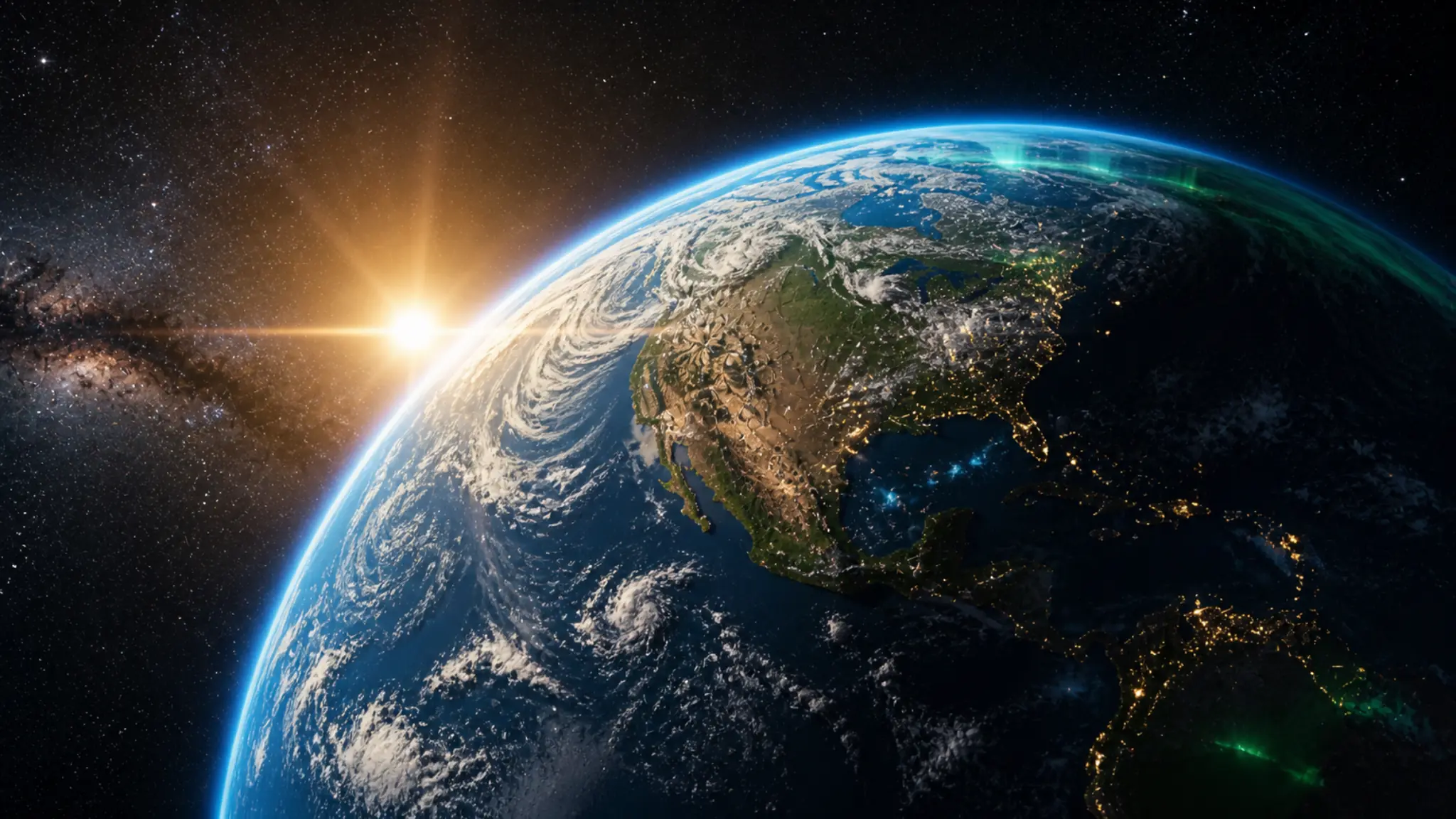
To understand the core unique planet earth reasons, we have to look at the solar system as a whole. Earth is the third planet from the Sun, a rocky terrestrial world forged from stellar dust over 4.5 billion years ago. While Mercury, Venus, and Mars share a similar rocky composition, Earth is the only one that evolved to sustain a thriving, planet-wide web of life.
Key Facts About Earth’s Uniqueness
Average Surface Temperature: 15°C (59°F), perfectly suited for liquid water.
Atmospheric Composition: 78% Nitrogen, 21% Oxygen, 1% other gases (a highly reactive, yet stable mix).
Water Coverage: Approximately 71% of the surface is covered in liquid H2O.
Magnetic Shielding: A robust, active magnetosphere protecting against solar winds.
Did You Know? If Earth were just 5% closer to the Sun, our oceans would likely boil away. If we were 20% further away, the planet would freeze over into a global ice age. This narrow margin of safety is one of the most remarkable aspects of our existence.
Presence of Liquid Water: The Universal Solvent
If you want to know why earth supports life, look no further than water. Water and life on Earth are inextricably linked. While water exists throughout the universe—in the form of ice on comets or vapor in giant gas clouds—Earth is the only known planet where liquid water exists in vast quantities on the surface.
Water is often called the “universal solvent.” Because of its molecular structure—two hydrogen atoms carrying a slight positive charge and one oxygen atom carrying a slight negative charge—water can dissolve more substances than any other liquid. This allows it to carry valuable chemicals, minerals, and nutrients wherever it goes, making complex biochemistry possible.
Furthermore, water has a high specific heat capacity. This means our oceans act as a massive thermal sponge, absorbing heat from the Sun during the day and slowly releasing it at night. Without this regulating effect, Earth would experience wild, lethal temperature swings between day and night.
Perfect Distance from the Sun (The Goldilocks Zone)
In astrobiology, the circumstellar habitable zone is commonly referred to as the “Goldilocks Zone.” This is the region around a star where the temperature is “just right”—neither too hot nor too cold—for liquid water to exist on a planet’s surface.
Being in the Goldilocks zone is one of the most critical habitable planet features. Venus is too close to the Sun, resulting in a runaway greenhouse effect that makes it a hellish inferno. Mars is too far away, leaving it a frozen, arid desert. Earth sits right in the middle.
However, distance alone isn’t enough. The Moon is essentially at the same distance from the Sun as Earth, yet it is completely sterile. This proves that while the Goldilocks Zone provides the potential for life, a planet must have other mechanisms—like an atmosphere and a magnetic field—to capitalize on that potential.
Atmosphere and Oxygen: A Blanket of Life
The relationship between earth atmosphere and life is a profound one. Earth’s atmosphere is not just a static bubble of gas; it is a dynamic, protective shield.
The composition of our atmosphere is unique. The 21% oxygen levels are highly anomalous. Oxygen is a highly reactive element; in normal circumstances, it would quickly bind with other elements and disappear from the atmosphere. The only reason Earth maintains such high levels of free oxygen is due to continuous replenishment by photosynthetic life—primarily marine phytoplankton and plants.
Our atmosphere also provides two vital protective layers:
The Greenhouse Effect: Trace gases like carbon dioxide and methane trap just enough solar heat to keep the planet from freezing over.
The Ozone Layer: Sitting high in the stratosphere, ozone (O3) absorbs the majority of the Sun’s harmful ultraviolet (UV) radiation, which would otherwise mutate DNA and sterilize the planet’s surface.
Magnetic Field Protection: The Invisible Shield
Deep beneath our feet lies a churning ocean of superheated, liquid iron and nickel in Earth’s outer core. The convection currents within this molten metal, combined with the planet’s rotation, generate a massive magnetic field—a process known as the geodynamo.
This magnetosphere extends far out into space, acting as an invisible shield against the solar wind—a relentless stream of charged particles blasted from the Sun at over a million miles per hour. Without this magnetic field, the solar wind would gradually strip away our ozone layer and atmosphere, leaving Earth exposed to deadly radiation and causing our oceans to evaporate into space.
Biodiversity and Life Complexity
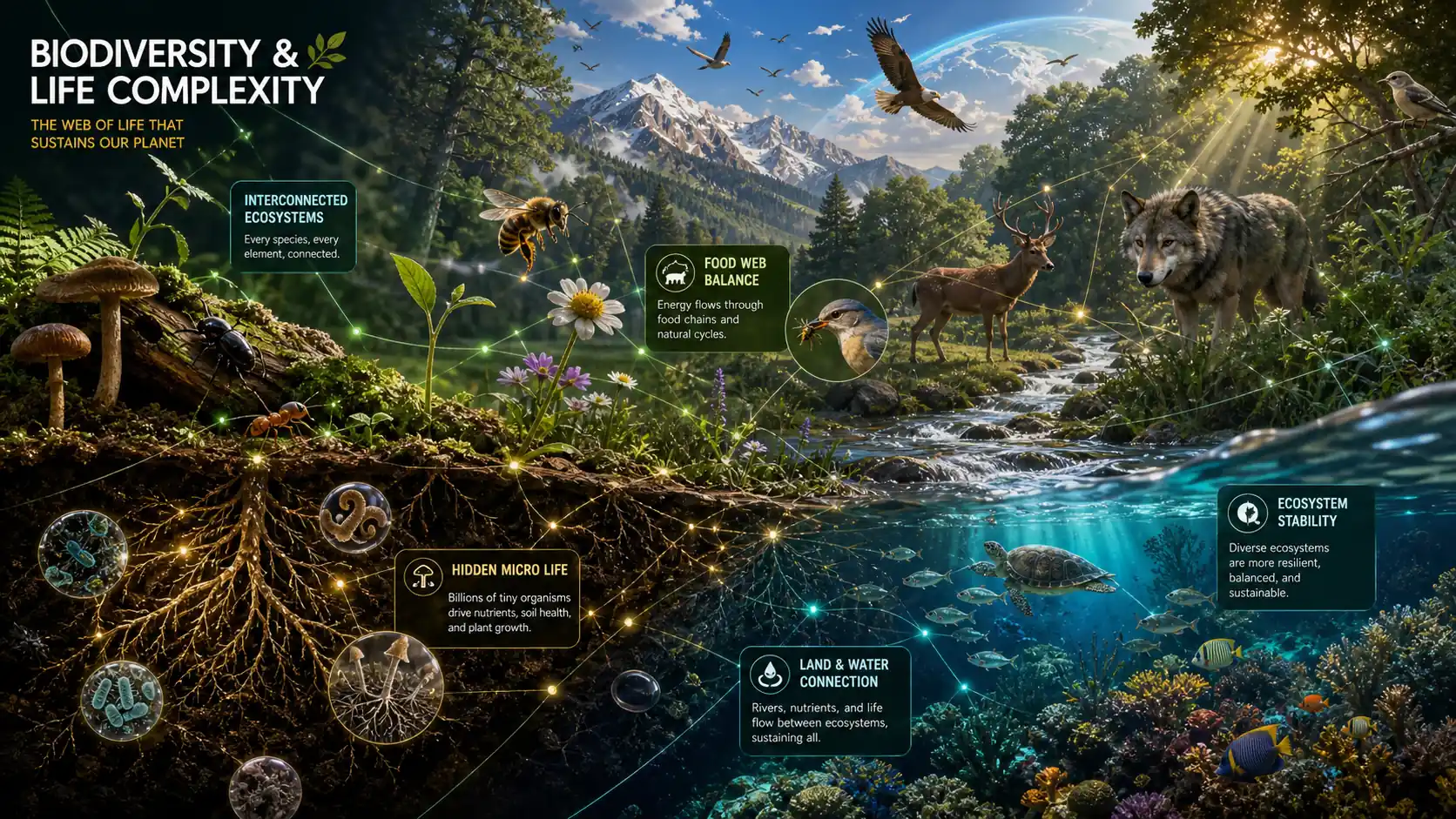
Perhaps the most visually stunning reason Why Is the Earth Called a Unique Planet is its staggering biodiversity. From microscopic extremophiles living in boiling hydrothermal vents to massive blue whales roaming the deep oceans, life has conquered nearly every square inch of this planet.
Life on Earth is highly organized and deeply interconnected. To understand how life exists and functions in such complex webs, it’s important to first explore What Are the Classification of Animals? By grouping life into domains, kingdoms, and species, scientists can trace the evolutionary lineage that proves all life on Earth shares a common ancestor. This evolutionary adaptability allows life to survive mass extinctions, climate shifts, and catastrophic meteor strikes, continuously emerging stronger and more diverse.
Stable Climate System
While Earth has experienced ice ages and warmer periods, its climate has remained remarkably stable over billions of years, allowing life the time it needs to evolve. This stability is driven by complex feedback loops.
One major factor is Earth’s axial tilt. Tilted at approximately 23.5 degrees, Earth experiences distinct seasons. This prevents the equator from becoming unbearably hot and the poles from reaching absolute zero. Ocean currents act as a global conveyor belt, transporting warm water from the equator to the poles and cold water back to the equator, regulating global temperatures.
Plate Tectonics and Land Formation
Earth is the only planet in our solar system known to have active plate tectonics. The Earth’s crust is fragmented into massive puzzle pieces (tectonic plates) that float on the semi-fluid mantle beneath them.
Why does this matter for life? Plate tectonics act as a global thermostat. Through the carbonate-silicate cycle, tectonic activity regulates the amount of carbon dioxide in the atmosphere. When volcanoes erupt, they release CO2, warming the planet. Over millions of years, rain washes this carbon into the oceans, where it becomes locked in tectonic plates that are eventually subducted back into the mantle. This constant recycling of the Earth’s crust ensures that the planet never permanently freezes or boils. Furthermore, tectonic activity drives the creation of landmasses, mountains, and deep-sea vents, creating diverse habitats for life to flourish.
Comparison with Other Planets (Mars, Venus)
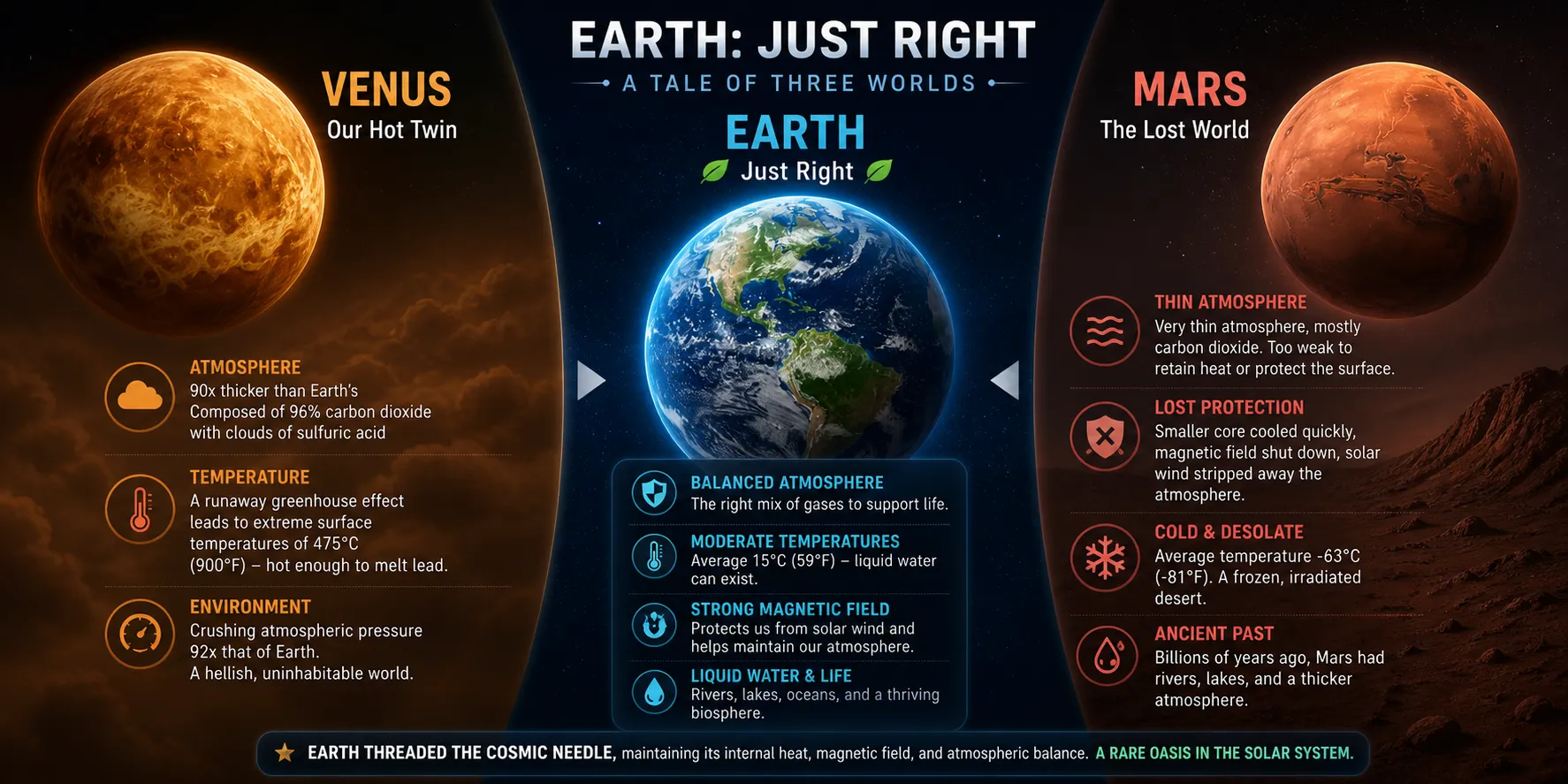
To truly appreciate Earth, we must look at earth vs other planets. Venus and Mars are often considered Earth’s “sister planets,” yet their evolutionary paths diverged drastically.
Venus: Venus is roughly the same size and mass as Earth. However, its atmosphere is 90 times thicker than ours and is composed almost entirely of carbon dioxide, with clouds of sulfuric acid. Venus suffered a runaway greenhouse effect, leading to surface temperatures hot enough to melt lead (475°C / 900°F).
Mars: Mars sits on the outer edge of the habitable zone. Billions of years ago, Mars had rivers, lakes, and a thick atmosphere. However, because Mars is smaller than Earth, its core cooled rapidly. Its magnetic field shut down, allowing the solar wind to strip away its atmosphere. Today, Mars is a frozen, irradiated desert with a very thin atmosphere.
Earth threaded the cosmic needle, maintaining its internal heat, magnetic field, and atmospheric balance.
Role of Ecosystems in Making Earth Unique
Earth’s uniqueness is sustained by the complex interactions within its ecosystems. An ecosystem is a geographic area where plants, animals, and other organisms, as well as weather and landscape, work together to form a bubble of life.
The biosphere importance cannot be overstated. Forests produce oxygen and absorb carbon; wetlands filter water; coral reefs provide nurseries for marine life. If you study the Different Types of Ecosystems and Characteristics, you will see that from the tundra to the tropical rainforests, every biome plays a specific role in regulating the Earth’s climate and atmospheric composition. The planet is not just a rock with life on it; life actively shapes the rock.
Why Earth is Called a Living Planet?
Scientists often refer to Earth as a “living planet,” a concept best summarized by the Gaia hypothesis, proposed by James Lovelock and Lynn Margulis. This hypothesis suggests that Earth’s biological, geological, and chemical systems are so intricately connected that they function as a single, self-regulating organism.
For instance, when the planet gets too hot, increased weathering of rocks draws more CO2 out of the atmosphere, eventually cooling the planet. When oxygen levels drop, photosynthetic life expands to replenish it. This chemical disequilibrium—an atmosphere constantly kept out of thermodynamic balance by the presence of life—is the ultimate proof that Earth is a living, breathing entity.
Importance for Humans
As humans, we are the first species in Earth’s history capable of understanding the uniqueness of our planet. We have built civilizations, explored the depths of the oceans, and even walked on the Moon. However, our survival is entirely dependent on the Earth’s fragile systems. We rely on the biosphere for the air we breathe, the water we drink, and the soil that grows our food.
Because we hold such immense power over the planet, we have a profound ethical responsibility toward the life that shares it with us. This brings up complex moral discussions. For example, understanding the Difference Between Animal Rights and Animal Welfare is crucial when deciding how we treat livestock, wildlife, and domestic animals. To ensure that our impact is positive, we rely on dedicated individuals and groups. There are numerous Animal Welfare Organizations Around the World working tirelessly to protect habitats, enforce humane treatment, and ensure that Earth’s biodiversity is preserved for future generations.
Threats to Earth’s Uniqueness
For the first time in 4.5 billion years, Earth’s unique balance is being threatened not by a meteor or a supervolcano, but by a single species: humanity. The era we live in is often called the Anthropocene, defined by human impact on geology and ecosystems.
The burning of fossil fuels is rapidly altering the atmospheric composition, enhancing the greenhouse effect and causing unprecedented global warming. Deforestation is shrinking the lungs of our planet, while industrial pollution is poisoning our vital water sources. The most devastating consequence of these actions is a massive drop in biodiversity. When we look at Animal Extinctions: How Many Species Are Extinct?, the numbers are alarming. We are currently experiencing the sixth mass extinction event in Earth’s history, driven entirely by human activity.
How We Can Protect Earth?
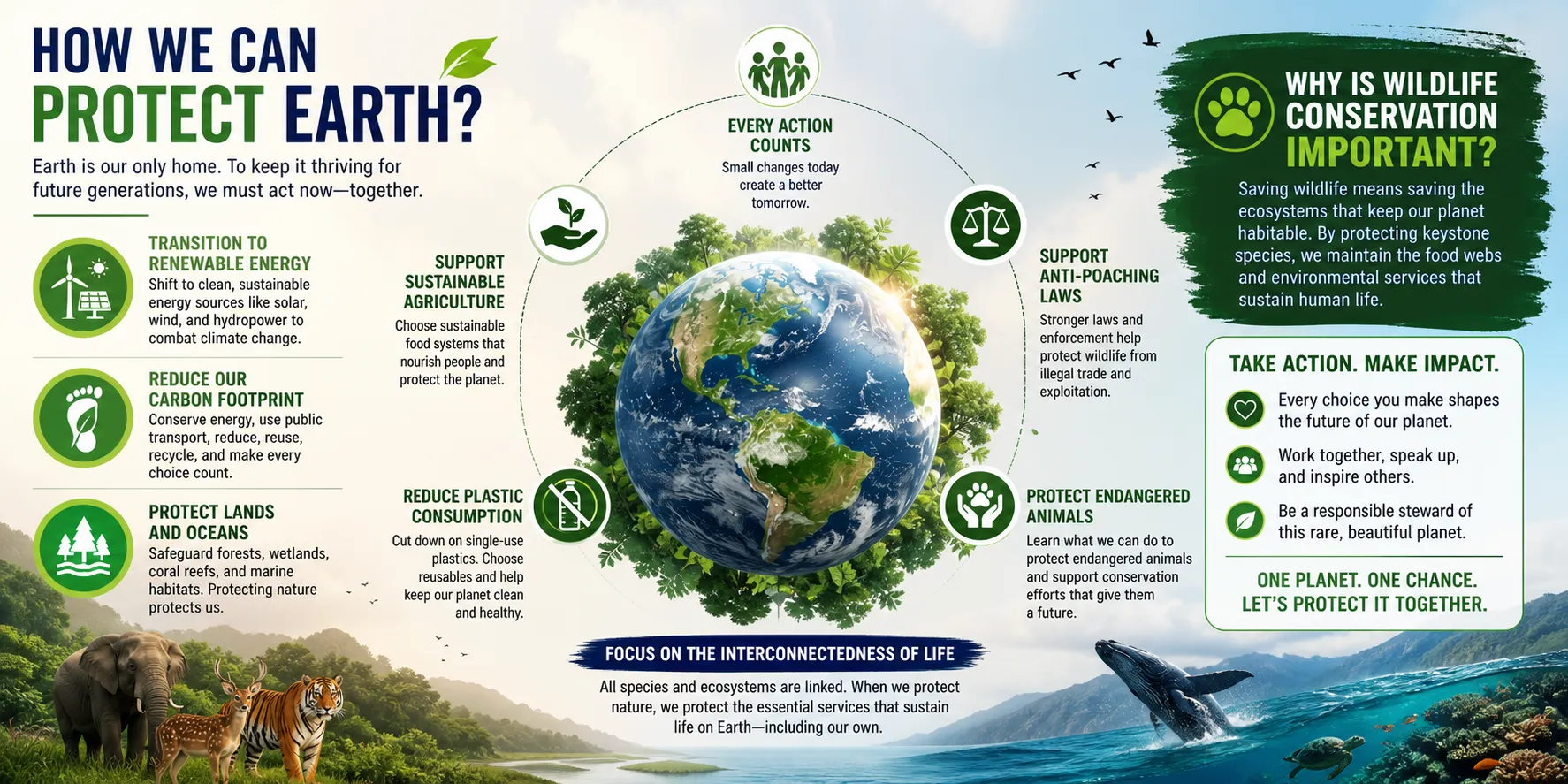
Knowing Why Is the Earth Called a Unique Planet comes with a mandate to protect it. The conditions for life on earth are resilient but not invincible.
We must transition to renewable energy sources, reduce our carbon footprint, and protect vast areas of land and ocean. But more importantly, we must focus on the interconnectedness of life. People often ask, Why Is Wildlife Conservation Important? The answer is simple: saving wildlife means saving the ecosystems that keep our planet habitable. By protecting keystone species, we maintain the food webs and environmental services that sustain human life.
If we want to reverse the damage, we must take actionable steps. Learning What Can We Do to Protect Endangered Animals?—such as supporting anti-poaching laws, reducing plastic consumption, and backing sustainable agriculture—is the first step toward becoming responsible stewards of this incredibly rare, beautiful planet.
FAQs (Frequently Asked Questions)?
1. Why does Earth support life while other planets do not? Earth supports life because it has a unique combination of factors: it is located in the Goldilocks zone allowing for liquid water, it has a stable atmosphere rich in oxygen and nitrogen, and it possesses a strong magnetic field that protects the surface from harmful solar radiation. Other planets in our solar system lack one or more of these critical components.
2. What are the main unique planet earth reasons? The primary reasons include the presence of abundant liquid surface water, an active system of plate tectonics, a massive moon that stabilizes our axial tilt, a breathable atmosphere, and a dynamic biosphere that regulates the planet’s chemistry.
3. Could there be other Earths out there? Statistically, it is highly likely. Astronomers have discovered thousands of exoplanets, some of which lie in the habitable zones of their host stars. However, having Earth-like conditions (size and distance from the star) does not guarantee the planet has the chemical makeup or magnetic field required to spark and sustain life.
4. What are the essential conditions for life on earth? Life as we know it requires liquid water, a source of energy (like the Sun or geothermal heat), essential chemical elements (carbon, hydrogen, nitrogen, oxygen, phosphorus, and sulfur), and a stable environment over long geological timeframes to allow complex organisms to evolve.
5. How does Earth’s atmosphere protect life? The atmosphere acts like a thermal blanket, keeping the planet’s surface warm through the greenhouse effect. Additionally, the stratospheric ozone layer absorbs lethal ultraviolet radiation from the Sun, while the mesosphere burns up millions of meteors every day before they can strike the surface.
6. Why is water so important for life on Earth? Water is a universal solvent, meaning it can dissolve and transport a wide variety of chemicals and nutrients. This allows cellular processes and complex biochemistry to occur. It also regulates the planet’s temperature, preventing extreme heat or cold.
Conclusion
So, Why Is the Earth Called a Unique Planet? It is not just because of its location, its water, or its magnetic field. Earth is unique because of the magnificent, intricate symphony of all these elements working together. It is a world where dead rock and gas gave rise to conscious beings capable of looking up at the stars and wondering about their place in the universe.
We live on an oasis suspended in a vast, hostile void. There is no backup planet, no “Planet B” waiting to save us if we destroy our home. The delicate balance that makes Earth habitable has been maintained for billions of years, and now, its future rests entirely in our hands. Understanding the profound rarity of our world should inspire not just awe, but a fierce, unwavering commitment to protect the fragile, beautiful web of life that makes Earth the most spectacular planet we know.