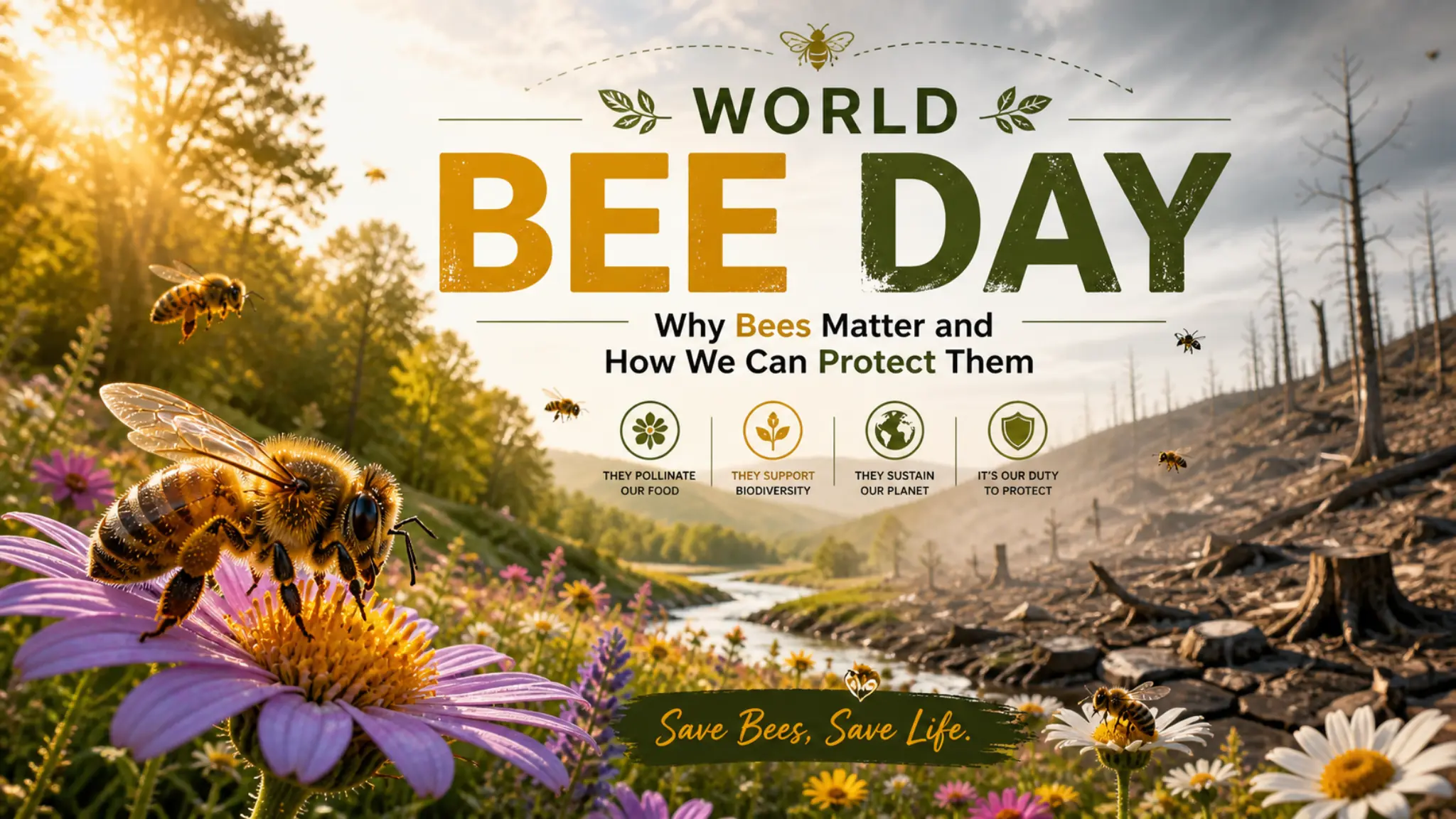
World Bee Day: Why Bees Matter and How We Can Protect Them
The tiny pollinators that sustain our planet—and why they need our help now more than ever.

Imagine walking into a grocery store and finding the produce section completely empty. No apples, no almonds, no strawberries, no coffee, and no chocolate. This is not the plot of a dystopian novel; it is a very real glimpse into a world without bees. These tiny, buzzing insects are the unsung heroes of our global food supply, holding up the foundation of the natural world on their fragile wings.
For decades, scientists have warned of a silent crisis unfolding in our meadows, forests, and farmlands. Bee populations are declining at an alarming rate, threatening not just our diets, but the survival of life on Earth as we know it. To address this looming ecological disaster, the global community comes together every year on World Bee Day to raise awareness, share knowledge, and inspire action.
But what exactly is the purpose of this day, and what makes these pollinators so utterly irreplaceable? In this comprehensive guide, we will explore the profound importance of bees, the severe threats they face, and the actionable steps we can all take to ensure their survival.
What Is World Bee Day?
World Bee Day is an international day of awareness celebrated annually on May 20. The day was officially designated by the United Nations General Assembly in December 2017, following a proposal led by the Republic of Slovenia and supported by Apimondia (the International Federation of Beekeepers’ Associations).
The Significance of May 20
The date was not chosen at random. May 20 coincides with the birthday of Anton Janša (1734–1773), a Slovenian pioneer of modern apiculture. Janša came from a long line of beekeepers and was the first modern beekeeping teacher in the Austrian court. He recognized the incredible intelligence and work ethic of bees, laying the groundwork for sustainable beekeeping practices that are still utilized today.
The Global Objective
The primary goal of World Bee Day is to strengthen measures aimed at protecting bees and other pollinators. It serves as an urgent reminder to governments, organizations, civil society, and concerned citizens that we must halt the rapid decline of global pollinator populations. By celebrating this day, the UN aims to highlight how essential bees are to achieving the Sustainable Development Goals (SDGs), particularly those related to ending hunger, preserving biodiversity, and adapting to climate change.
Why Bees Are Important
If you have ever wondered why bees are important, the answer lies in their unique biological function: pollination. Without them, the vibrant tapestry of life on our planet would unravel rapidly.
The Role of Pollination
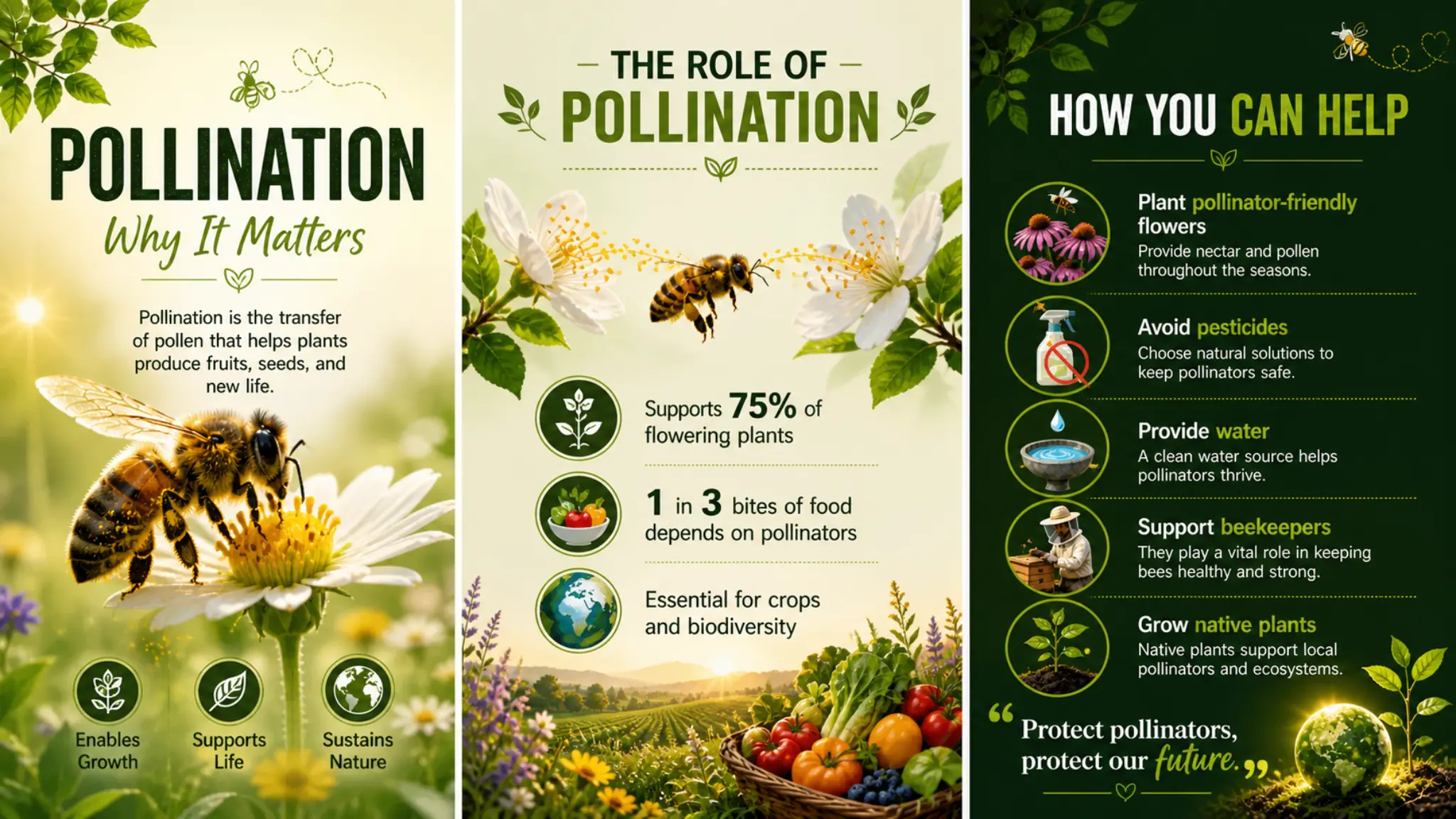
Pollination is the transfer of pollen from the male part of a flower (the anther) to the female part (the stigma), allowing plants to reproduce and produce seeds and fruit. While wind and water play a role, nearly 90% of the world’s wild flowering plant species depend entirely, or at least in part, on animal pollination. Bees are the undisputed champions of this process. Their fuzzy bodies naturally attract and hold pollen, allowing them to cross-pollinate plants with incredible efficiency.
Securing Global Food Production
When exploring the role of bees in agriculture, the numbers are staggering. According to the Food and Agriculture Organization of the United Nations (FAO), 71 out of the 100 crop species that provide 90% of food worldwide are pollinated by bees. This means that every third bite of food you consume exists because of the tireless work of a pollinator.
Crops dependent on bees include:
Fruits: Apples, berries, citrus fruits, melons, and avocados.
Vegetables: Pumpkins, squash, cucumbers, and onions.
Nuts and Seeds: Almonds, macadamia nuts, and sunflowers.
Stimulants: Coffee beans and cocoa.
Supporting Unparalleled Biodiversity
Bees do not just feed humans; they sustain entire ecosystems. By pollinating wild plants, they provide the seeds, fruits, and nuts that countless other species rely on for survival, from small birds to large mammals. When we reflect on why is the Earth called a unique planet, the answer is deeply rooted in this intricate, interdependent web of life where a creature as small as a bee can sustain vast, diverse biomes.
Key Facts About Bees:
A single honey bee will visit 50 to 100 flowers during one collection trip.
To produce just one pound of honey, a colony of bees must fly approximately 55,000 miles and visit around 2 million flowers.
There are over 20,000 distinct bee species recorded globally.
Role of Bees in Ecosystems
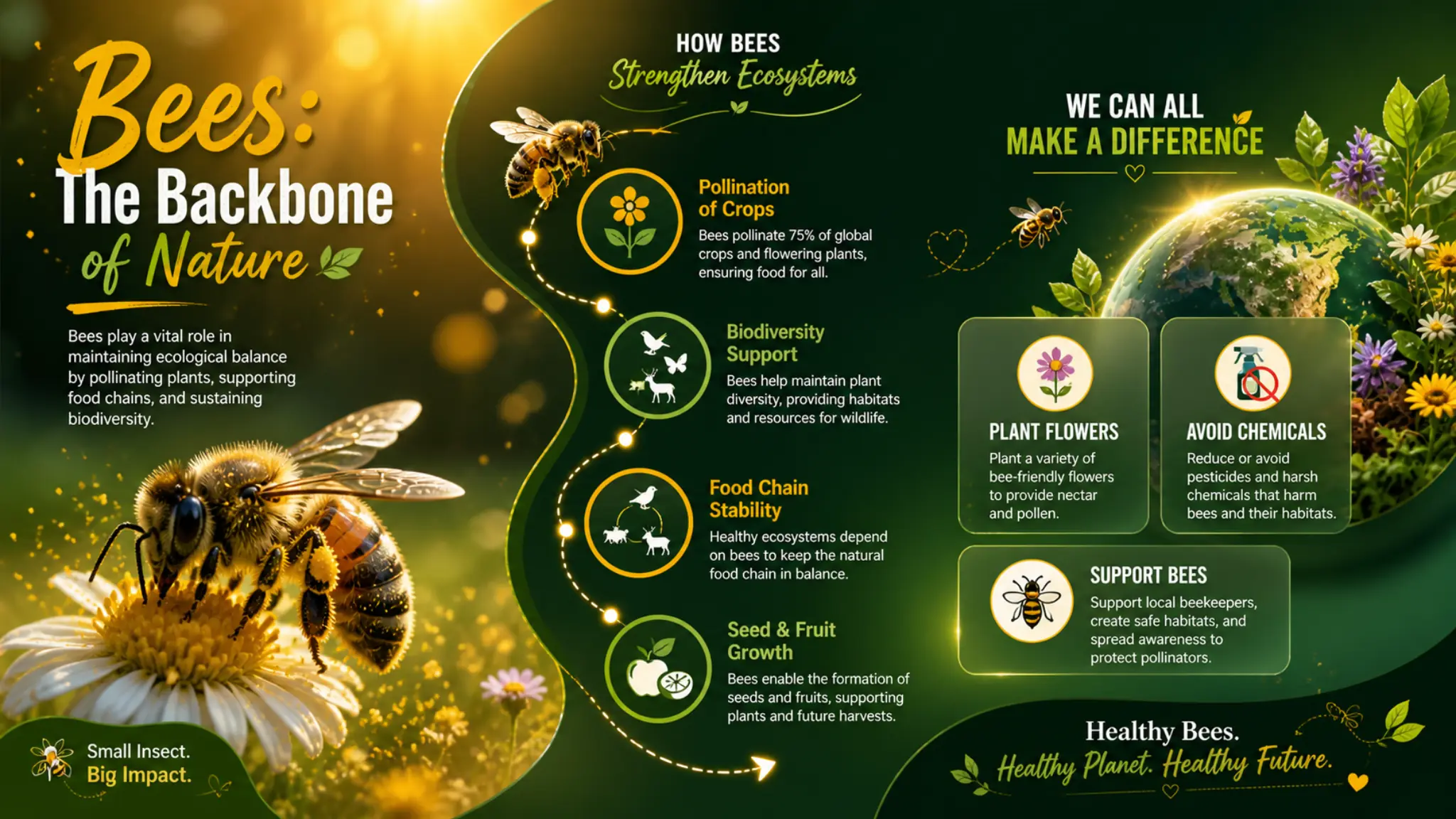
Bees are often referred to as a “keystone species.” In ecology, a keystone species is a species on which other species in an ecosystem largely depend, such that if it were removed, the ecosystem would change drastically. As primary ecosystem pollinators, bees facilitate the growth of trees, flowers, and other vegetation.
These plants, in turn, serve as the habitat and food source for insects, birds, and herbivores. The vegetation also plays a crucial role in preventing soil erosion, retaining groundwater, and absorbing carbon dioxide. To fully understand their environmental impact, it is helpful to look at the different types of ecosystems and characteristics worldwide. Whether in a dense tropical rainforest, a sprawling temperate grassland, or an arid desert, native bee species have adapted to pollinate the specific flora of their region, acting as the invisible glue that holds these diverse habitats together.
Importance of Bees for Humans
The question of why bees are important for humans goes far beyond what is on our dinner plates. Their impact touches our global economy, our medical advancements, and our cultural heritage.
1. The Economic Powerhouse: The economic value of bees is immense. The global crop production reliant on pollination is valued between $235 billion and $577 billion annually. Without bees, the agricultural industry would collapse, leading to skyrocketing food prices, widespread job losses in farming and retail sectors, and global economic instability.
2. Nutritional Security: Pollinator-dependent crops are the primary sources of critical micronutrients in the human diet, including Vitamin A, Vitamin C, and calcium. Without bees, we would be forced to rely on wind-pollinated staple crops like wheat, rice, and corn. While these provide calories, they lack the diverse vitamins necessary to prevent malnutrition and diet-related diseases.
3. Medicine and Apitherapy: For thousands of years, humans have used bee products for medicinal purposes. Honey is a natural antibacterial and anti-inflammatory agent used in wound care. Propolis (bee glue) is used in cold remedies and dental care, while bee venom is currently being researched for its potential to treat autoimmune diseases like rheumatoid arthritis and multiple sclerosis.
Types of Bees
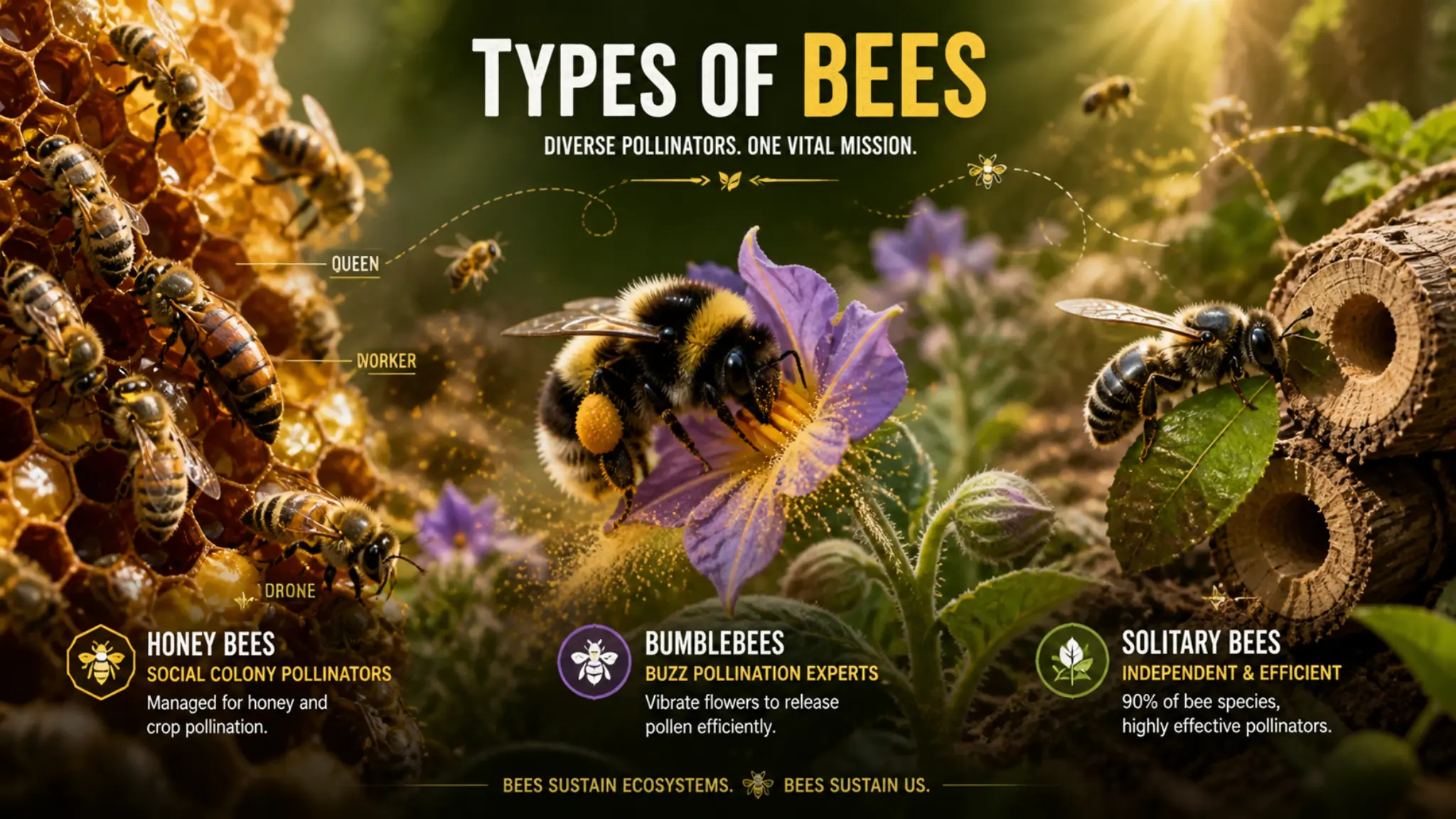
While the European honey bee (Apis mellifera) is the most famous, it represents only a tiny fraction of the bee family tree. Understanding the diversity of bees is crucial for effective bee conservation.
Honey Bees: Highly social insects that live in complex colonies comprising a queen, female worker bees, and male drones. They are the primary species managed by beekeepers for honey production and commercial crop pollination.
Bumblebees: Larger, fuzzier, and also social, bumblebees are exceptionally good at “buzz pollination”—a technique where they vibrate their flight muscles to shake pollen loose from flowers like tomatoes and potatoes.
Solitary Bees: Making up roughly 90% of all bee species, solitary bees (such as mason bees, leafcutter bees, and carpenter bees) do not live in hives. Every female is fertile, builds her own nest, and provisions it with food for her offspring. They are often far more efficient pollinators than honey bees.
Threats to Bee Population
Despite their vital importance, we are currently witnessing a devastating bee population decline. A combination of man-made environmental pressures is pushing many bee species to the brink of extinction.
1. Toxic Pesticides and Agrochemicals
The widespread use of chemical pesticides in industrial agriculture is one of the leading causes of bee mortality. Neonicotinoids, a class of systemic insecticides, are particularly deadly. These chemicals are absorbed by the plant and remain present in its pollen and nectar. Even at sub-lethal doses, they impair a bee’s memory, navigation skills, and immune system, causing them to forget how to return to their hive.
2. Habitat Loss and Fragmentation
As human populations expand, wild landscapes are converted into concrete jungles or vast monoculture farms. Monocultures (growing a single crop over a large area) create “food deserts” for bees. Without a diverse array of wildflowers blooming throughout the seasons, bees simply cannot find enough nutrition to sustain their colonies.
3. Climate Change
Changing global temperatures cause a phenomenon known as “phenological mismatch.” This occurs when the natural timing of the ecosystem falls out of sync. For example, warmer winters may cause flowers to bloom early, before bees have emerged from hibernation. By the time the bees are active, their food source is gone. Furthermore, extreme weather events like droughts and floods destroy bee habitats and nesting grounds.
4. Pathogens and Invasive Species
The globalization of trade has inadvertently spread devastating diseases and parasites, such as the Varroa destructor mite. This parasitic mite attacks honey bees, weakening them and transmitting deadly viruses that can quickly wipe out an entire colony.
What Happens If Bees Disappear?
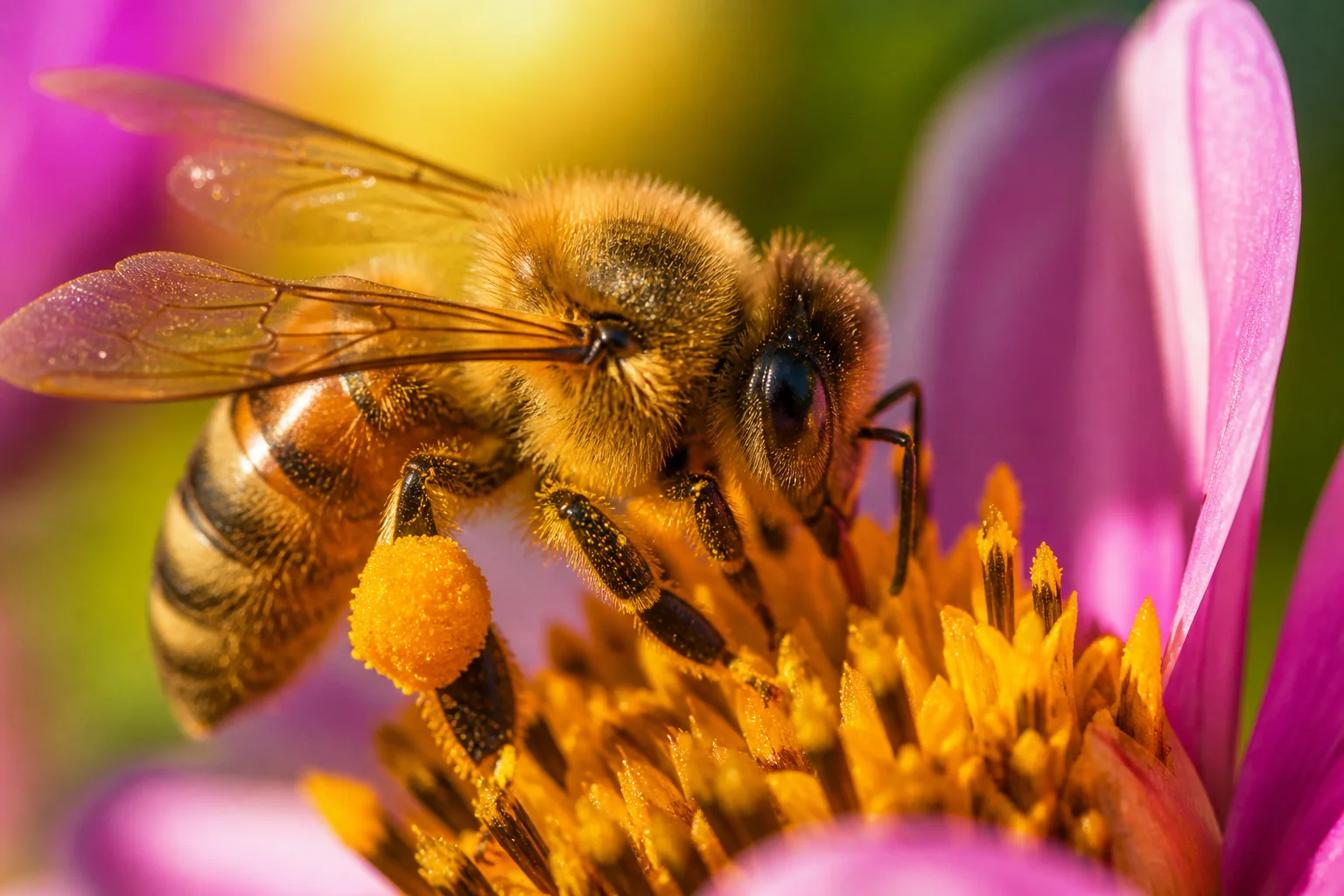
To contemplate a world without bees is to contemplate a world in crisis. If bees were to vanish, the initial shockwave would be felt in our supermarkets. The produce aisle would shrink by at least half, and luxury goods like coffee, chocolate, and vanilla would become memories of the past.
The meat and dairy industries would also face a massive crisis, as the alfalfa and clover used to feed cattle are pollinated by bees. As food scarcity drives prices up, global malnutrition rates would soar.
However, the tragedy extends far beyond human agriculture. When examining the history of animal extinctions: how many species are extinct due to the collapse of foundational food webs, we see a grim reality. Without bees to pollinate wild plants, those plants would fail to reproduce. The herbivores that eat those plants would starve, followed quickly by the carnivores that hunt the herbivores. The loss of bees would trigger a cascading extinction event, fundamentally altering the Earth’s biodiversity.
Global Efforts to Protect Bees
The critical importance of bees has not gone entirely unnoticed, and global momentum is building to save them.
Policy and Legislation: The European Union has taken significant steps by banning the outdoor use of the three most harmful neonicotinoid pesticides. Various countries are slowly following suit, updating agricultural policies to restrict toxic agrochemicals.
The FAO and UN Initiatives: The UN’s Food and Agriculture Organization leads international efforts to monitor pollinator decline and promotes agroecology—farming practices that work in harmony with nature rather than against it.
Corporate Responsibility: Many large food brands and agricultural companies are investing heavily in pollinator-friendly farming initiatives, recognizing that their supply chains are entirely dependent on healthy bee populations.
How You Can Help Bees
Understanding the save bees importance movement means realizing that conservation is not just for scientists and policymakers. Every individual can make a tangible difference. If you are wondering how can you take care of animals right in your own neighborhood, bees are the perfect place to start.
Plant a Bee-Friendly Garden: Create a pollinator haven by planting a diverse range of native, nectar-rich flowers. Choose species that bloom at different times of the year (spring, summer, and fall) to provide a continuous food supply.
Ditch the Chemicals: Stop using synthetic pesticides, herbicides, and chemical fertilizers in your garden. Opt for natural, organic pest control methods.
Create a Bee Bath: Bees get thirsty, especially in the heat of summer. Fill a shallow dish with clean water and add some pebbles or marbles so the bees have a safe place to land and drink without drowning.
Build a Bee Hotel: Support solitary bees by leaving dead wood or hollow stems in your garden, or build/buy a small “bee hotel” to provide them with safe nesting sites.
Support Local Beekeepers: Buy raw, local honey. This supports beekeepers in your community who are dedicated to maintaining healthy, sustainable hives.
Let Your Lawn Run Wild: A perfectly manicured green lawn is an ecological desert. Allow clovers and dandelions to grow in your grass—they are vital early-spring food sources for hungry bees.
World Bee Day Activities & Awareness
How should you celebrate World Bee Day on May 20th? The possibilities are engaging and highly educational:
Host a Seed Bomb Workshop: Gather friends and family to make “seed bombs” (a mix of clay, soil, and native wildflower seeds) to toss into barren patches of land.
Educational Seminars: Schools and community centers can host local beekeepers to explain the art of apiculture and the science of pollination.
Social Media Campaigns: Use the primary keyword hashtag #WorldBeeDay to share facts, statistics, and photos of your pollinator garden to spread global awareness.
Farm-to-Table Dinners: Host a meal made entirely of bee-pollinated foods to highlight exactly what we stand to lose without them.
Connection Between Bees, Ecosystems, and Wildlife Conservation
When we step back to view the larger environmental picture, the lines between an insect, a plant, and a large mammal begin to blur. This brings us to a broader, essential question: why is wildlife conservation important?
Wildlife conservation is the practice of protecting animal species and their habitats to ensure a healthy, balanced planet. Bees are the foundational pillars of this balance. You cannot save the pandas, tigers, or elephants without saving the habitats they live in—and those habitats rely on pollinators to regenerate and thrive.
When considering what can we do to protect endangered animals, we must expand our definition of “wildlife.” It is easy to rally behind saving charismatic megafauna like rhinos and whales, but the preservation of the tiny, unglamorous insect is equally, if not more, critical. A successful conservation strategy must be holistic, recognizing that saving the bees is synonymous with saving the forests, the oceans, and ultimately, ourselves.
FAQs
1. Is it true that all bees sting? No. Only female bees have stingers (as the stinger is a modified egg-laying organ). Furthermore, many solitary bee species do not have stingers strong enough to penetrate human skin, and male bees cannot sting at all. Honey bees generally only sting when they feel their hive is under direct attack.
2. Why do bees make honey? Honey bees make honey as a way to store food for the winter months when flowers are not blooming and nectar is unavailable. They produce far more than the colony needs, which is why humans can harvest the surplus sustainably.
3. Do bees sleep? Yes! Bees need rest just like humans. They sleep inside the hive, and solitary bees can often be found sleeping inside flowers or clinging to plant stems during the night.
4. How do bees communicate? Honey bees use a complex system of pheromones (chemical scents) and physical movements. The most famous is the “waggle dance,” a figure-eight movement performed by foraging bees to tell their hive-mates the exact direction and distance of a good food source relative to the sun.
5. Are “murder hornets” a threat to bees? The Asian giant hornet (colloquially called the murder hornet) is a natural predator of bees. While they can decimate a honey bee hive quickly, the larger, global threats of pesticides, climate change, and habitat loss are far more pressing dangers to bee populations overall.
6. Can I save a tired bee on the sidewalk? Yes. If you find a bee that appears exhausted and unable to fly, you can mix a little white sugar with water (on a spoon) and place it near the bee’s head. The sugar water will give it the energy boost it needs to fly home. Never give a bee honey, as imported honey can carry pathogens that infect native colonies.
Conclusion
As we observe World Bee Day, it is time to shift our perspective. Bees are not a nuisance to be swatted away at summer picnics; they are the tiny, golden engines that drive the natural world. From the expansive almond orchards of California to the dense, wild forests of the Amazon, the importance of bees echoes across every continent and ecosystem.
Their current decline is an urgent distress signal from nature. If we ignore it, we risk unprecedented agricultural failure and the collapse of the biodiversity that sustains our planet. But hope is far from lost. By rethinking how we use our land, eliminating toxic chemicals from our environment, and planting just a few wildflowers in our backyards, we can rewrite the future for these indispensable creatures.
We all share a collective responsibility to protect them. Let today be the day you take a stand for the pollinators. Plant a seed, spread the word, and remember: when we save the bees, we are ultimately saving ourselves.