Animal Extinctions: How Many Species Are Extinct?
Exploring Wildlife Loss, Endangered Species, and the Global Extinction Crisis

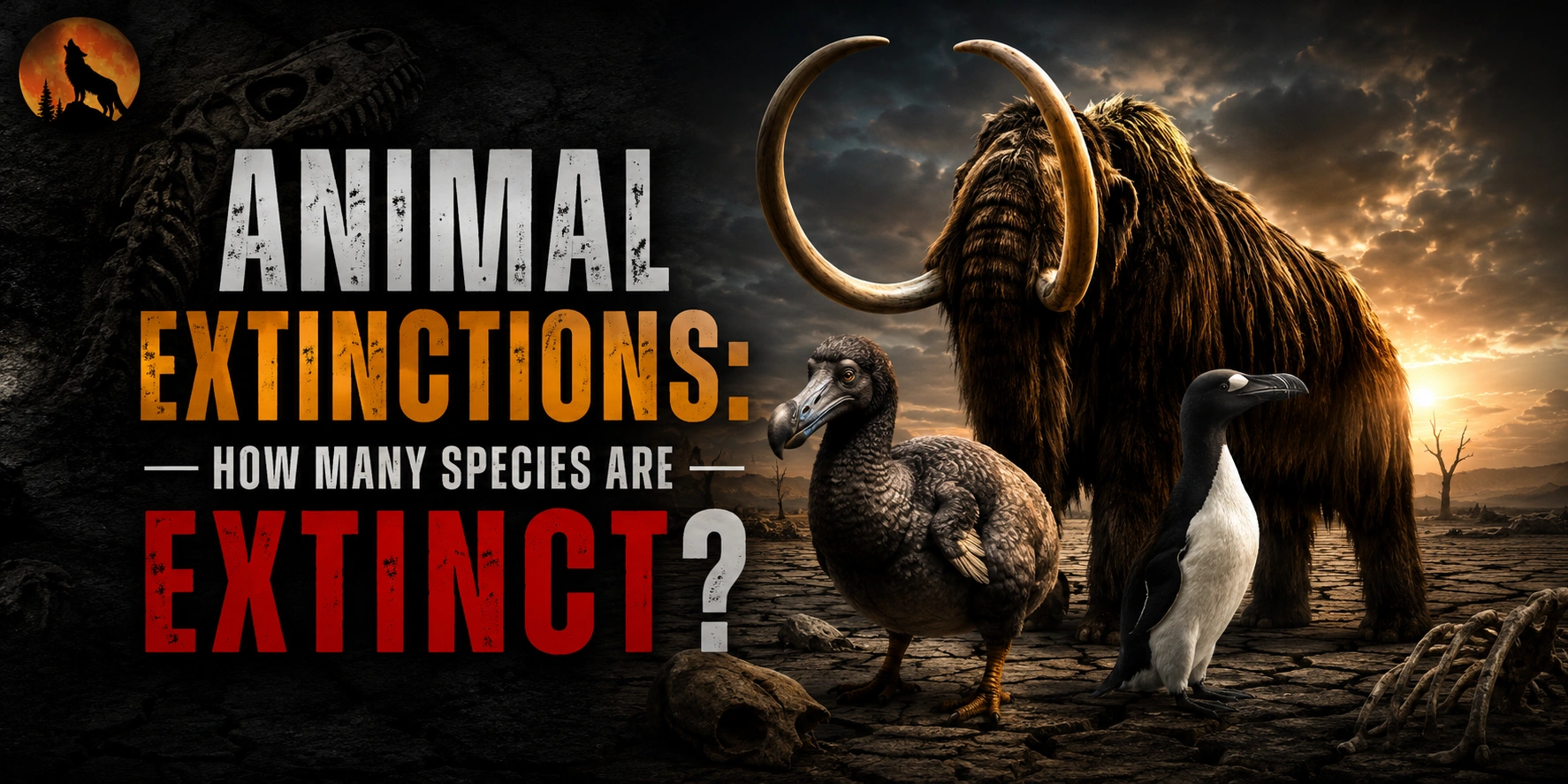
When we gaze into the cosmos, the sheer scale of the universe can feel overwhelming, yet it brings into sharp focus the profoundly fragile nature of our own home. We are currently standing on the precipice of a severe biological crisis, with the United Nations estimating that up to one million plant and animal species are threatened with extinction, many within mere decades. This alarming reality is not just about the loss of beautiful, isolated creatures; it represents a rapid unraveling of the intricate, interdependent web of life that sustains every ecosystem on the globe.
Animal extinctions signify the permanent erasure of unique evolutionary lineages that have taken millions of years to develop. To truly understand the gravity of this modern extinction crisis, we must delve deep into the science, the historical context, and the staggering numbers behind our vanishing wildlife. It is a sobering reminder that human expansion, climate change, and habitat destruction are fundamentally altering the biological makeup of our world, pushing irreplaceable species past the point of no return.
So, why is the Earth called a unique planet? The answer lies entirely in its unparalleled capacity to harbor and sustain an incredible diversity of life. In all of our astronomical observations, Earth remains the only known celestial body equipped with the precise atmospheric conditions, liquid water, and ecological balance required to support complex biological systems. Our planet is a rare, living oasis in an otherwise barren universe, making the protection of its biodiversity not just a conservation effort, but a fundamental duty to preserve the only known sanctuary for life in the cosmos.
What Is Animal Extinction?
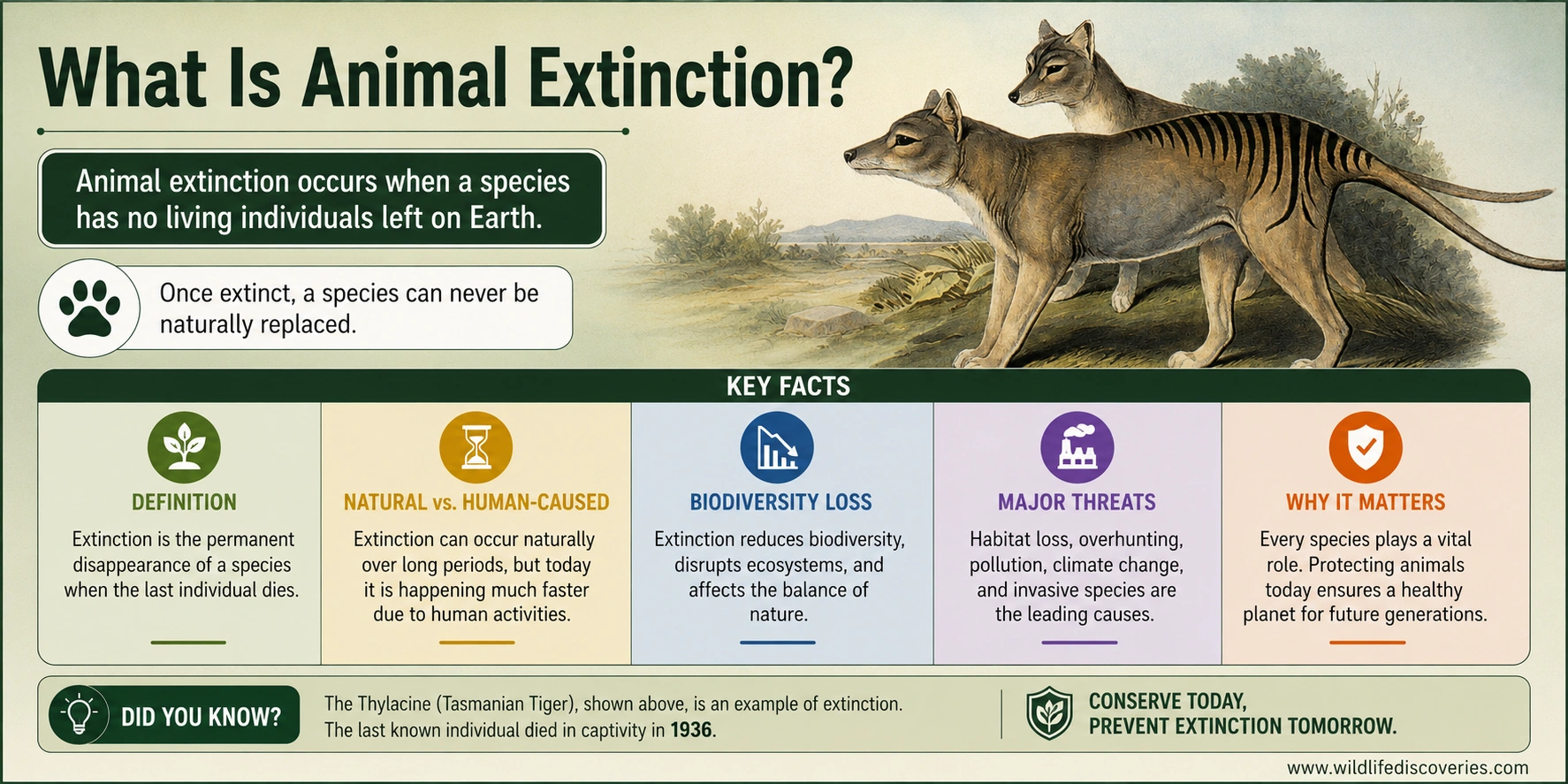
Before we can calculate the toll, we must clearly define our terms. In biological and ecological sciences, extinction is the termination of a kind of organism or of a group of kinds (taxon), usually a species. The moment of extinction is generally considered to be the death of the last individual of the species, although the capacity to breed and recover may have been lost long before this point.
However, conservationists categorize the survival status of species into distinct tiers:
| Conservation Status | Scientific Definition | Real-World Example |
| Extinct (EX) | No reasonable doubt that the last individual has died. Extensive surveys have failed to record an individual. | Dodo, Passenger Pigeon |
| Extinct in the Wild (EW) | Known only to survive in captivity, cultivation, or as a naturalized population well outside its past range. | Spix’s Macaw, Panamanian Golden Frog |
| Endangered (EN) | Facing a very high risk of extinction in the wild in the near future. Population size is critically reduced. | Blue Whale, Asian Elephant |
Understanding the difference between an endangered species and an extinct one highlights the urgency of intervention. Once a species slips from endangered to extinct, that genetic code is lost forever.
Extinct in the Wild: The Living Dead of Conservation
Between “Endangered” and “Extinct” lies one of conservation’s most heartbreaking categories: Extinct in the Wild (EW). These species no longer exist as free, self-sustaining populations in their natural habitat. They survive only in zoos, breeding programs, or botanical gardens — alive but homeless.
Notable Species Currently Extinct in the Wild:
| Species | Last Wild Sighting | Current Status | Hope for Return? |
|---|---|---|---|
| Spix’s Macaw | ~2000 (Brazil) | ~180 in captivity | Reintroduction program active |
| Panamanian Golden Frog | 2007 (Panama) | Hundreds in zoos | Awaiting habitat decontamination |
| Wyoming Toad | 1991 (USA) | ~1,000 in captivity | Limited reintroductions attempted |
| Black Soft-shell Turtle | ~2002 (wild) | Single captive population in Bangladesh | Critically uncertain |
| Père David’s Deer | Late 1800s (China) | Reintroduced; ~6,000 now exist | Partial success ✅ |
The EW category represents both a tragedy and a last chance. The Père David’s Deer story shows that with sustained effort, a species can be brought back from the brink — but only if we act before the final wild individual disappears.
How Many Species Are Extinct?
The question “how many species are extinct?” is one of the most complex inquiries in modern biology. To answer it, we must look at both deep time and modern records.
The Deep Time Estimate
Paleontologists estimate that 99% of all species that have ever lived on Earth are now extinct. Since life began on Earth around 3.5 billion years ago, an estimated 5 billion species have existed. This means approximately 4.95 billion species are extinct. Natural extinction is a normal part of evolution, opening ecological niches for new life forms to emerge.
The Modern Record
When people ask about animal extinction facts, they are usually referring to modern history. The International Union for Conservation of Nature (IUCN) Red List is the world’s most comprehensive inventory of the global conservation status of biological species.
According to recent IUCN data:
Over 900 species have been officially declared extinct since the year 1500.
More than 80 species are listed as Extinct in the Wild.
However, scientists universally agree this is a massive underestimate.
Why is the exact number so difficult to pin down? Because of the “Centinelan extinction” effect—species disappearing before they are ever discovered or named by science. With millions of insects, fungi, and deep-sea creatures still unidentified, the true modern extinction rate likely measures in the hundreds of thousands.
Key Extinction Facts
The current rate of extinction is estimated to be 100 to 1,000 times higher than the natural “background” rate.
Amphibians are the most vulnerable group, with over 40% of known species threatened.
More than 33% of marine mammals and reef-forming corals face immediate threats of extinction.
Which Animal Group Is Most Threatened? (IUCN Data)
| Animal Group | Total Assessed Species | Threatened Species | % At Risk |
|---|---|---|---|
| Amphibians | 8,000+ | 3,300+ | 41% |
| Reef-forming Corals | 845 | 280+ | 33% |
| Mammals | 5,900+ | 1,400+ | 26% |
| Birds | 11,000+ | 1,400+ | 13% |
| Reptiles | 10,000+ | 2,000+ | 21% |
| Fish | 35,000+ | 3,000+ | 17% |
| Insects | 8,000+ assessed | 2,000+ | 26% |
The History of Extinction on Earth
To comprehend the severity of species extinction today, we must look at the geological record. Earth’s history is punctuated by natural mass extinction events, periods where over 75% of all species vanished in a relatively short geological timeframe.
Timeline of the Big Five Mass Extinctions
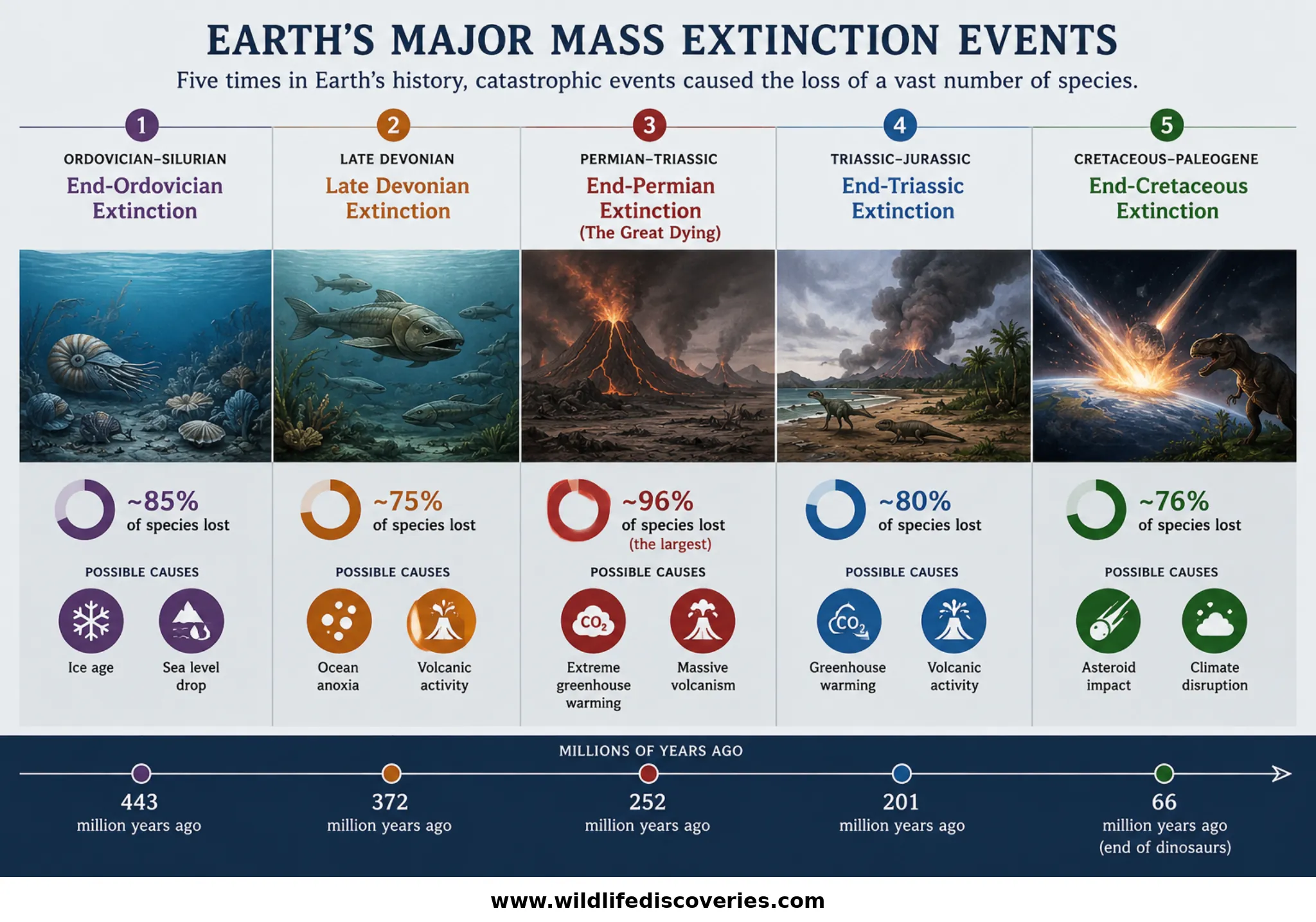
End-Ordovician (443 million years ago): The first major extinction event was driven by severe glaciation and falling sea levels. An estimated 86% of all marine species perished.
Late Devonian (359 million years ago): Triggered by massive algal blooms sucking oxygen from the oceans, combined with volcanic activity, wiping out 75% of species.
End-Permian “The Great Dying” (252 million years ago): The deadliest event in Earth’s history. Massive volcanic eruptions in modern-day Siberia released immense greenhouse gases, killing 96% of marine life and 70% of terrestrial vertebrate species.
End-Triassic (201 million years ago): Massive geological shifts and climate changes cleared the way for dinosaurs to dominate the planet. 80% of species were lost.
Cretaceous-Paleogene (66 million years ago): The most famous event, caused by a massive asteroid impact in the Yucatán Peninsula. It ended the reign of the non-avian dinosaurs and eradicated 76% of all species.
The Sixth Mass Extinction
While the Big Five were caused by asteroids, volcanoes, and natural climate shifts, we are currently in the midst of a new global crisis: the Holocene (or Anthropocene) extinction. This is often referred to as the Sixth Mass Extinction.
Unlike previous events, the current extinction crisis is not driven by cosmic or geological forces. It is driven by human activity. Why scientists are alarmed is due to the sheer velocity of the biodiversity loss. Species are dying off at a rate unprecedented in human history. The background extinction rate—the standard rate at which species naturally go extinct without human interference—is roughly 1 species per million species per year. Today, that rate has violently accelerated, fundamentally destabilizing the biosphere.
Main Causes of Animal Extinction
Why do animals go extinct today? The human impact on extinction cannot be overstated. Decades of research have isolated the primary drivers of modern wildlife collapse, often remembered by the acronym HIPPO (Habitat loss, Invasive species, Pollution, Population growth, Overharvesting).
1. Habitat Destruction
The single greatest threat to wildlife is habitat loss. As human populations expand, forests are cleared for agriculture, wetlands are drained for housing, and rivers are dammed. When an animal’s home is destroyed, it loses its source of food, shelter, and breeding grounds. The destruction of the Amazon Rainforest and Southeast Asian peat swamps are prime examples of ecosystems under siege.
2. Climate Change
Rapid global warming alters the timing of seasons, shifts weather patterns, and warms the oceans. Polar bears are losing their sea ice, while coral reefs suffer from mass bleaching events caused by ocean acidification. Many species simply cannot adapt or migrate fast enough to survive these rapid changes.
3. Pollution
From microplastics in the Mariana Trench to toxic agricultural runoff creating “dead zones” in the oceans, pollution is silently devastating global wildlife. Pesticides like DDT famously decimated bird populations in the 20th century by thinning their eggshells.
4. Overhunting and Poaching
For centuries, humans have hunted species faster than they can reproduce. Today, commercial overfishing is emptying the oceans. On land, the illegal wildlife trade drives the poaching of elephants for ivory, rhinos for their horns, and pangolins for their scales.
5. Invasive Species
When humans introduce non-native species to new environments—whether accidentally or intentionally—the results are often catastrophic. Invasive predators like feral cats, rats, and snakes have decimated island bird populations that evolved without natural defenses.
6. Wildlife Trade
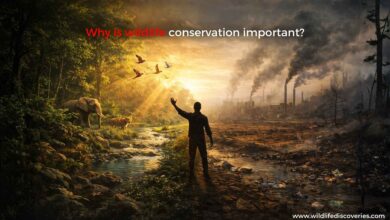
The global demand for exotic pets, traditional medicine, and animal parts fuels a multi-billion-dollar illegal wildlife trade. This relentless pressure pushes already vulnerable species to the brink. Why is wildlife conservation important? Because without coordinated global intervention, the insatiable demand of the wildlife trade will empty our forests and oceans.
The Silent Crisis Beneath the Waves: Marine Extinction
While land-based extinction grabs headlines, the ocean extinction crisis is arguably more severe — and far less visible. The world’s oceans cover 71% of Earth’s surface and contain approximately 80% of all life on the planet. Yet they are being emptied at an alarming rate.
The Ocean’s Most Threatened:
- Vaquita Porpoise: Fewer than 10 individuals remain in the Gulf of California, making it the world’s most endangered marine mammal. Illegal gillnet fishing for the Totoaba fish is the primary cause.
- Hawksbill Sea Turtle: Hunted for centuries for its beautiful shell (used in jewelry and accessories), the Hawksbill population has declined by over 80% in the last three generations.
- Scalloped Hammerhead Shark: Listed as Critically Endangered, these distinctive sharks are victims of the global fin trade — often caught, de-finned, and discarded alive.
- Bluefin Tuna: Commercial overfishing has reduced Atlantic Bluefin Tuna populations by over 60% since the 1970s.
Coral Reefs — The Ocean’s Rainforests:
Coral reefs cover less than 1% of the ocean floor yet support approximately 25% of all marine species. Due to ocean warming and acidification, the world has already lost approximately 50% of its coral reefs since the 1950s. Scientists warn that at the current trajectory of climate change, 90% of coral reefs could be severely damaged by 2050.
Ocean Dead Zones:
Agricultural runoff rich in nitrogen and phosphorus creates “hypoxic zones” — areas of water so depleted of oxygen that almost nothing can survive. There are currently over 700 identified dead zones worldwide, covering an area larger than the United Kingdom.
Famous Extinct Animals
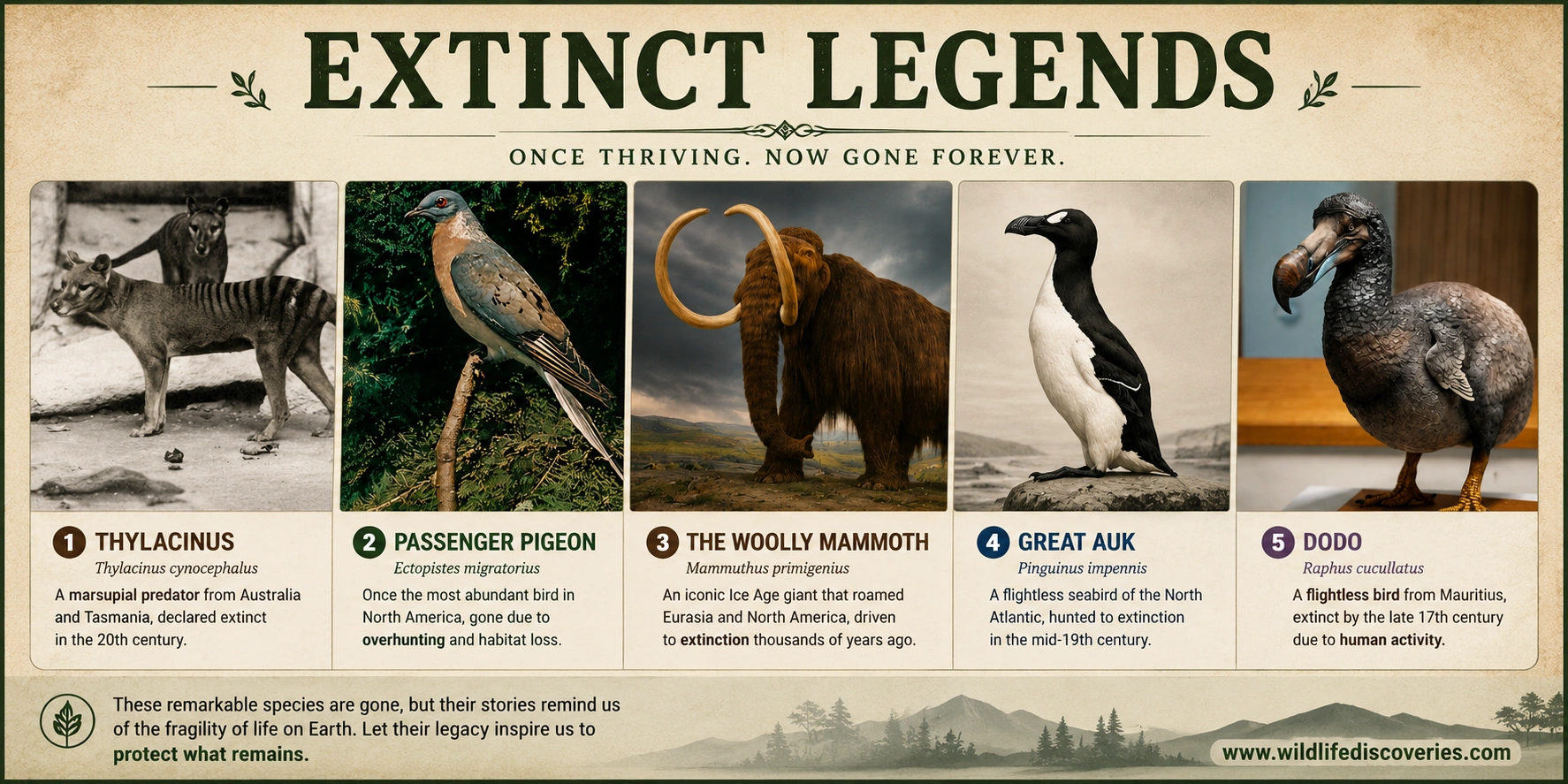
Looking at the extinct species list provides a somber reminder of what happens when human expansion goes unchecked. Here are some of the most famous animals that became extinct in recent centuries:
The Dodo (Extinct ~1681): A flightless bird endemic to the island of Mauritius. Evolving without predators, the dodo lacked fear of the human sailors who arrived in the 17th century. Overhunting and the introduction of pigs and macaques wiped them out in less than a century.
The Tasmanian Tiger (Extinct 1936): Also known as the thylacine, this carnivorous marsupial was native to Australia, Tasmania, and New Guinea. Hunted mercilessly by farmers who mistakenly believed it threatened sheep, the last known thylacine, named Benjamin, died in a Hobart zoo in 1936.
The Passenger Pigeon (Extinct 1914): Once the most abundant bird in North America, numbering in the billions. Their flocks were so vast they would darken the sky for days. Commercial hunting for cheap meat and habitat destruction eradicated them in a matter of decades.
The Great Auk (Extinct 1844): A flightless, penguin-like bird of the North Atlantic. They were slaughtered in massive numbers for their down, which was used to make pillows in Europe.
The Woolly Mammoth (Extinct ~4,000 years ago): While largely falling victim to natural climate shifts at the end of the last Ice Age, human hunting played a significant role in wiping out the last remaining populations of these magnificent Ice Age titans.
Critically Endangered Animals Today: The Red List’s Most Urgent Cases
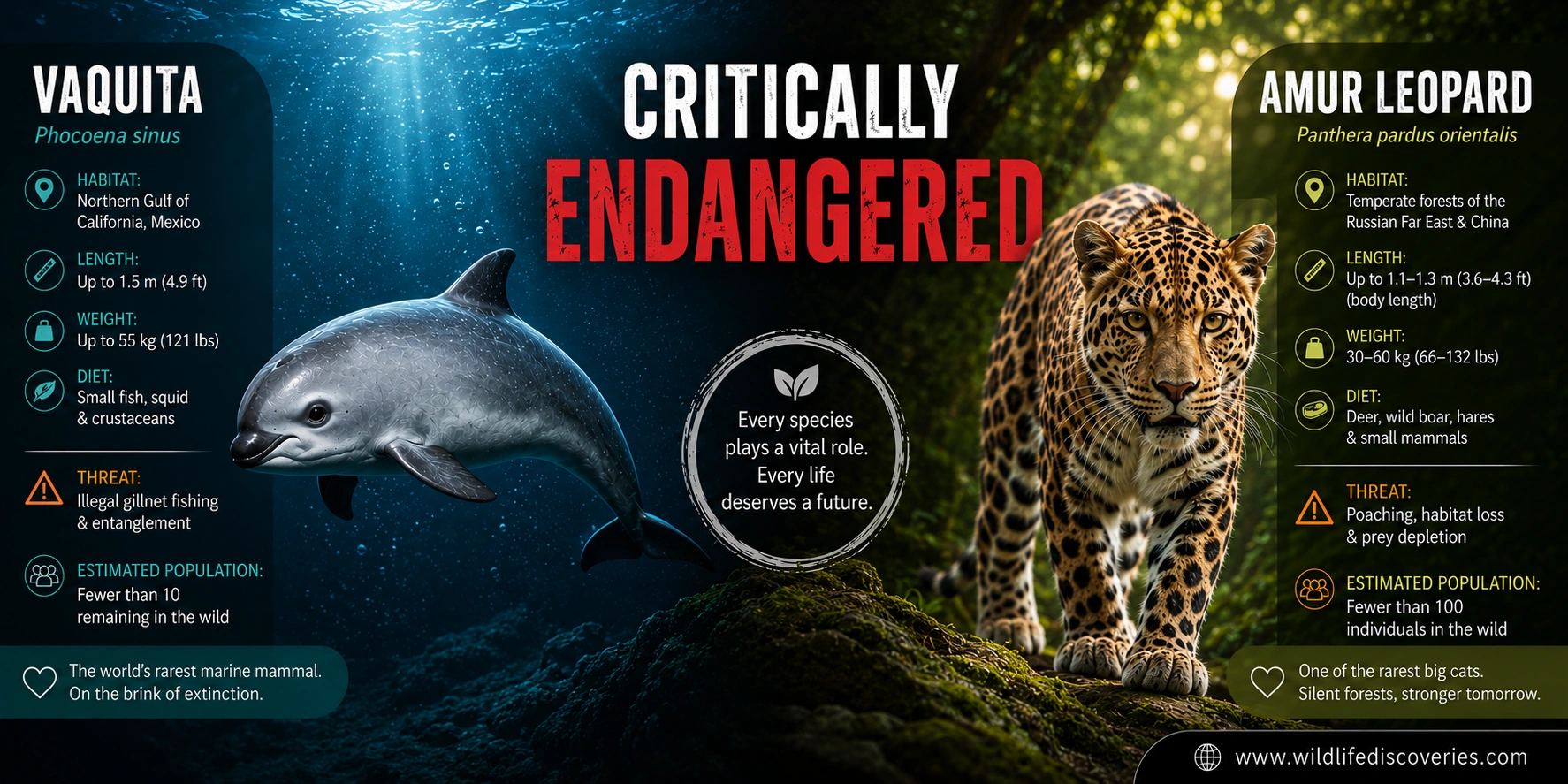
The following species are currently classified as Critically Endangered (CR) by the IUCN — one step away from extinction in the wild:
| Species | Est. Wild Population | Primary Threat | Found In |
|---|---|---|---|
| Amur Leopard | ~100 | Poaching, habitat loss | Russian Far East |
| Vaquita | <10 | Illegal gillnet bycatch | Gulf of California, Mexico |
| Javan Rhino | ~75 | Habitat loss, past poaching | Ujung Kulon, Indonesia |
| Sumatran Orangutan | ~13,000 | Palm oil deforestation | Sumatra, Indonesia |
| Saola | Unknown (possibly <100) | Snare hunting | Vietnam/Laos border |
| Kakapo (Owl Parrot) | ~250 | Introduced predators | New Zealand |
| Northern White Rhino | 2 (both female) | Poaching — functionally extinct | Kenya (in captivity) |
| Hawksbill Sea Turtle | ~8,000 nesting females | Shell trade, habitat loss | Tropical oceans globally |
| Cross River Gorilla | ~200–300 | Hunting, deforestation | Nigeria/Cameroon border |
| Irrawaddy Dolphin | ~92 (Mekong subpopulation) | Gillnets, habitat degradation | Southeast Asia |
| Great Indian Bustard | ~150 | Power line collisions | Rajasthan, India |
| Sumatran Tiger | ~400 | Deforestation, poaching | Sumatra, Indonesia |
🔴 The Northern White Rhino situation is particularly devastating — with only two individuals remaining (both female, both in captivity in Kenya’s Ol Pejeta Conservancy), the subspecies is functionally extinct. Scientists are pursuing IVF using frozen genetic material as the last hope.
India’s Extinction Crisis: Species on the Brink
India is one of the world’s 17 megadiverse countries, hosting over 7-8% of all recorded species on Earth. Yet this extraordinary biodiversity is under severe threat. Here are some of India’s most critically endangered animals fighting for survival today:
| Species | Estimated Wild Population | Primary Threat | Location |
|---|---|---|---|
| Great Indian Bustard | ~150 individuals | Power line collisions, habitat loss | Rajasthan, Gujarat |
| Gangetic River Dolphin | ~3,500 individuals | Pollution, dam construction | Ganga-Brahmaputra river system |
| Gharial | ~650 adults | Sand mining, river degradation | Chambal, Girwa rivers |
| Snow Leopard | ~400–700 in India | Poaching, climate change | Himachal Pradesh, Ladakh |
| Asiatic Lion | ~674 individuals | Single-location vulnerability | Gir Forest, Gujarat |
| Nilgiri Tahr | ~3,000 individuals | Deforestation, invasive plants | Western Ghats |
| Indian Vulture | Critically declined (99% drop since 1990s) | Diclofenac drug poisoning | Pan-India |
India’s vulture crisis is a haunting example of how a single man-made substance — the veterinary drug Diclofenac — wiped out over 99% of three vulture species within a decade. Their collapse triggered a rise in feral dog populations and disease outbreaks, demonstrating how the extinction of one species can cascade into a public health emergency.
Key Indian Conservation Laws Protecting These Species:
- Wildlife Protection Act, 1972
- Project Tiger (1973) — now covering 54 Tiger Reserves
- Project Elephant (1992)
- Project Dolphin (2020)
Why Animal Extinction Matters?
When learning about these tragic losses, people often wonder: why does animal extinction matter to us? The answer lies in the deeply interconnected nature of biological systems.
Ecosystems are like complex games of Jenga. You can remove a few pieces (species), and the structure may wobble but stand. However, if you remove a keystone piece, the entire tower collapses. This is known as ecosystem collapse.
Food Chain Disruption
The loss of a single apex predator can cause a devastating trophic cascade. For instance, without wolves to hunt them, deer populations explode, overgrazing vegetation, which then destroys habitats for birds and insects, leading to riverbank erosion.
The Human Survival Connection
Biodiversity is not just an aesthetic luxury; it is the foundation of human survival. A third of our global food supply relies on pollinators like bees, bats, and birds. Medical science relies heavily on nature; compounds found in plants and animal venom are the basis for treatments ranging from pain relief to cancer therapies. A loss in biodiversity is a direct threat to global food security and medical advancement.
Role of Ecosystems in Preventing Extinction
To halt the extinction crisis, we must focus on saving habitats, not just individual animals. To do this effectively, we must study the different types of ecosystems and characteristics that support diverse life forms, from tropical rainforests to deep-sea hydrothermal vents.
Healthy, intact ecosystems provide natural buffers against extinction. They offer diverse food sources, varied genetic pools, and resilience against climate anomalies. When ecosystems are fragmented by roads or agriculture, populations become isolated, leading to inbreeding and increased vulnerability to disease. By establishing vast, connected marine and terrestrial protected areas, we allow ecosystems to self-regulate and sustain their native species.
Conservation Success Stories
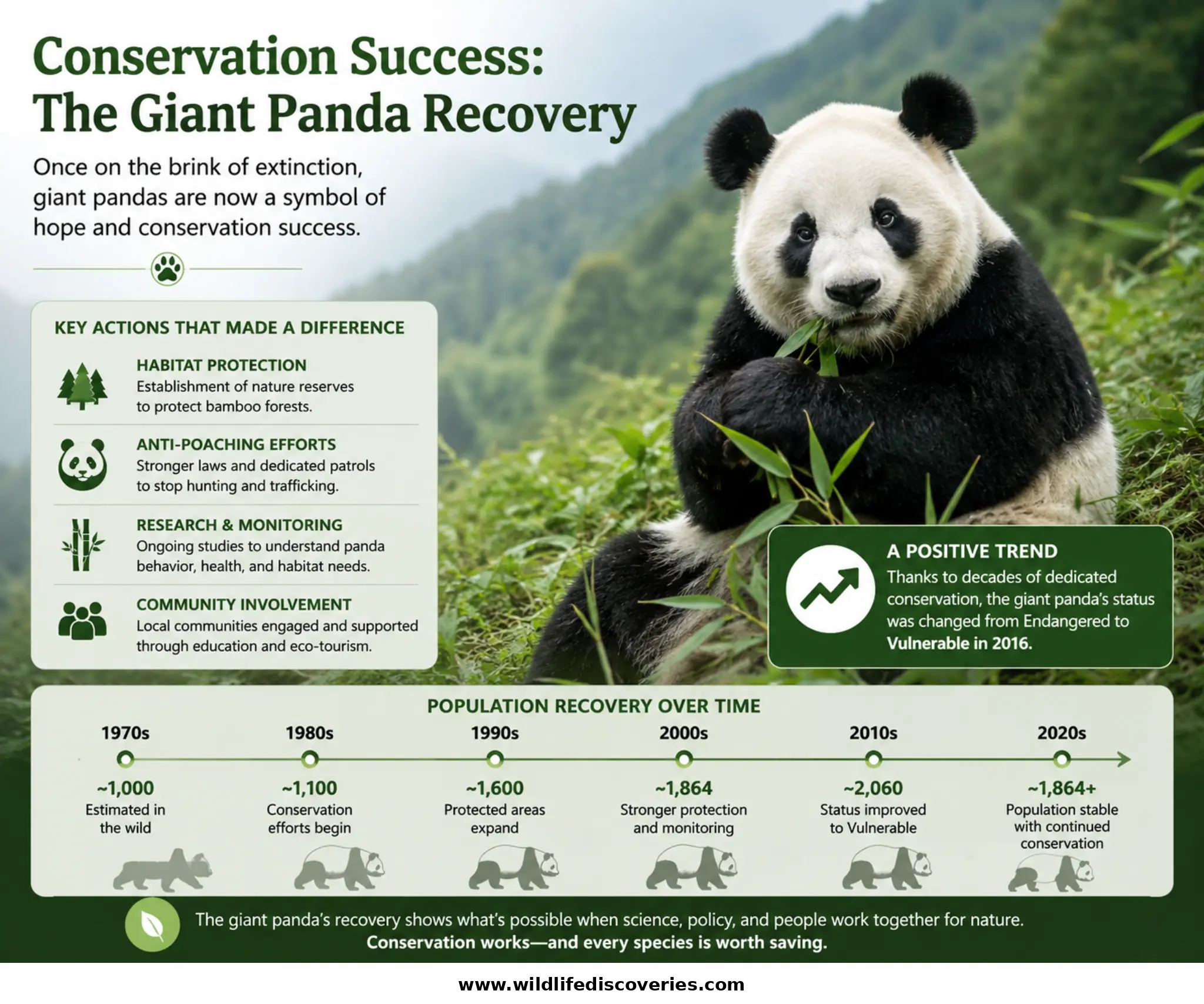
Amidst the grim statistics, there is profound hope. When human ingenuity and resources are directed toward preservation, nature can rebound remarkably. Exploring these triumphs is part of understanding what can we do to protect endangered animals?
The Bald Eagle: In the mid-20th century, the bald eagle population in the contiguous United States crashed to just 417 nesting pairs due to DDT poisoning and hunting. Following a ban on DDT and the implementation of the Endangered Species Act, populations soared. Today, there are over 300,000 bald eagles, and they have been removed from the endangered list.
The Giant Panda: Once teetering on the edge of extinction due to bamboo forest clearing, massive conservation efforts by the Chinese government, including captive breeding and habitat protection, have upgraded their status from Endangered to Vulnerable.
The Arabian Oryx: Hunted to extinction in the wild in 1972. Through an intensive global captive breeding program and carefully managed reintroductions into the deserts of Oman and Saudi Arabia, wild populations have been successfully re-established.
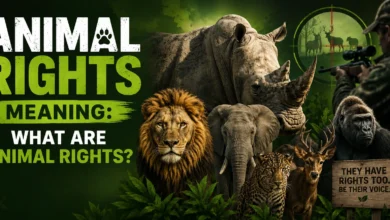
These successes raise important ethical questions regarding our duty to nature. Understanding the animal rights meaning: what are animal rights? helps frame why we owe these creatures a chance at survival. Furthermore, recognizing the difference between animal rights and animal welfare ensures that conservation programs not only aim to keep a species alive but ensure the individuals live a life free from unnecessary suffering during the rehabilitation process.
What Humans Can Do to Prevent Extinction
The sixth mass extinction is not inevitable; it is a choice. Every individual has the power to influence the trajectory of global biodiversity. If you are wondering how can you take care of animals? beyond your own pets, here are actionable steps to protect global wildlife:
Support Sustainable Products: Boycott products that drive deforestation, such as unsustainable palm oil, uncertified timber, and fast fashion. Look for certifications like FSC (Forest Stewardship Council) and RSPO.
Reduce Meat Consumption: Industrial agriculture and livestock grazing are the leading causes of habitat destruction. Reducing meat intake lowers the demand for massive land clearances.
Vote for Wildlife: Support politicians and legislation that prioritize environmental protection, fund national parks, and enforce strict anti-poaching laws.
Reduce Carbon Footprints: Combating climate change directly combats extinction. Drive less, use renewable energy, and support aggressive climate action.
Support Conservation Organizations: Donate time or resources to groups like the World Wildlife Fund (WWF), the Jane Goodall Institute, or local wildlife rehabilitators.
De-Extinction: Science’s Most Controversial Frontier
The idea of resurrecting extinct species — once purely science fiction — is now an active area of scientific research with real-world projects underway. Here is where the science currently stands:
Active De-Extinction Projects:
The Woolly Mammoth Project — Colossal Biosciences Dallas-based biotechnology company Colossal Biosciences, co-founded by geneticist George Church, is working to create a cold-adapted “mammophant” — a hybrid animal carrying key Woolly Mammoth traits (thick fur, extra fat layers, cold-resistant blood) within an Asian Elephant body using CRISPR gene-editing. Their target date for a viable embryo is the late 2020s.
The Passenger Pigeon — The Revive & Restore Project Scientists are attempting to genetically reconstruct the Passenger Pigeon by inserting its DNA sequences into the closely related Band-tailed Pigeon genome. The project faces enormous challenges: not just creating the bird, but rebuilding the social flocking behavior essential to its survival.
The Thylacine (Tasmanian Tiger) Revival A team at the University of Melbourne is using preserved Thylacine specimens to sequence the genome and is working toward creating a surrogate embryo within a closely related marsupial species. The project received AUD $50 million in funding in 2022.
The Ethical Debate:
While de-extinction captures imaginations, it raises serious scientific and ethical questions:
- Should resources go toward saving existing endangered species rather than resurrecting extinct ones?
- A resurrected species would return to a world drastically different from when it disappeared — its ecosystem may no longer be able to support it.
- Does de-extinction create a false sense of security, suggesting that extinction is “reversible” and reducing urgency around conservation?
Most conservation biologists argue that preventing extinction is infinitely more efficient and ethical than attempting resurrection. De-extinction is a fascinating tool, but it should never replace the urgent work of protecting living species and habitats.
Frequently Asked Questions (FAQs)
Q.1. What is the most famous extinct animal?
The Dodo bird is arguably the most famous extinct animal. Its rapid demise on the island of Mauritius in the 17th century at the hands of sailors made it the global symbol of human-driven extinction.
Q.2. Are humans causing a mass extinction?
Yes. Scientists widely agree that we are currently undergoing the Sixth Mass Extinction, driven entirely by human activities such as habitat destruction, climate change, overhunting, and pollution.
Q.3. How many species go extinct every day?
Because millions of species remain undiscovered, exact daily numbers are estimates. However, scientists estimate that between 150 to 200 species of plants, insects, birds, and mammals become extinct every 24 hours.
Q.4 Can an extinct animal come back?
Currently, an entirely extinct animal cannot be cloned back to life perfectly, as intact DNA degrades over time. However, scientists are working on “de-extinction” proxies, inserting fragments of extinct DNA (like the Mammoth) into closely related modern surrogates (like the Asian elephant).
Q.5 What is the difference between extinct and endangered?
“Extinct” means the last known individual of a species has died, and the species is gone forever. “Endangered” means the species still exists but its population is so critically low that it faces a high risk of becoming extinct in the near future.
Q.6 Which country has the most endangered species?
Countries with the highest levels of biodiversity, specifically tropical nations facing rapid industrialization, often have the highest numbers. Mexico, Indonesia, Madagascar, and Brazil consistently rank among the countries with the highest numbers of threatened and endangered species.
Q.7. Why do some species survive mass extinctions while others don’t?
Survival during a mass extinction usually comes down to adaptability. Small scavengers, deep-ocean dwellers, and species with rapid reproductive cycles or generalized diets tend to survive global catastrophes better than large, specialized apex predators.
Q.8. Which animal went extinct most recently?
Among vertebrates, the Smooth Handfish (an Australian fish species) was declared extinct in 2020. More recently, the Splendid Poison Frog was declared extinct in 2023. However, due to the “Centinelan effect,” countless invertebrates and plants go extinct undiscovered every year.
Q.9. Is the Snow Leopard still endangered?
The Snow Leopard was reclassified from “Endangered” to “Vulnerable” in 2017 following population surveys revealing approximately 4,000–6,500 individuals in the wild. However, scientists caution that it remains highly threatened by climate change (which is shrinking its high-altitude habitat), poaching, and human-wildlife conflict. It is not “safe” — it is simply slightly less threatened than previously believed.
Q.10. What is the IUCN Red List?
The IUCN Red List of Threatened Species is the world’s most comprehensive and authoritative database tracking the conservation status of plants, animals, and fungi. Established in 1964 by the International Union for Conservation of Nature, it currently assesses over 157,000 species and classifies them into nine categories ranging from “Least Concern” to “Extinct.” Scientists, governments, and conservation organizations worldwide use it as the primary standard for identifying priority species for protection.
Conclusion
The story of animal extinctions is a mirror reflecting humanity’s relationship with the natural world. It is a sobering realization that millions of years of evolutionary brilliance can be snuffed out by a few decades of human negligence. The staggering numbers of lost species—from the thylacine to the passenger pigeon—are not just footnotes in a history book; they are loud, urgent warnings.
However, the conservation success stories of the giant panda and the bald eagle prove that extinction is not a one-way street when we decide to apply the brakes. We are the first generation to fully understand the catastrophic implications of the extinction crisis, and perhaps the last generation with the window of opportunity to reverse it. Protecting our wildlife is no longer just a moral obligation; it is a fundamental requirement for the survival of life on Earth.