For centuries, humans have shared the Earth with millions of other species, relying on them for companionship, labor, food, and ecological balance. Yet, our relationship with the animal kingdom has often been dictated by dominance rather than respect. In recent decades, a powerful global awakening has shifted the conversation from how we can use animals to how we should treat them. At the center of this moral evolution is a fundamental question: Do animals have basic rights?
Understanding the animal rights meaning requires more than just acknowledging that animals can feel pain. It demands a deep philosophical, legal, and ethical inquiry into the intrinsic value of non-human life. Are animals mere property, or are they conscious beings deserving of autonomy and protection?
This comprehensive guide will explore the true animal rights definition, trace the history of the movement, and answer the crucial question—what are animal rights?—while exploring the profound implications these rights have on our society, laws, and daily lives.
1. Animal Rights Meaning: A Clear Definition
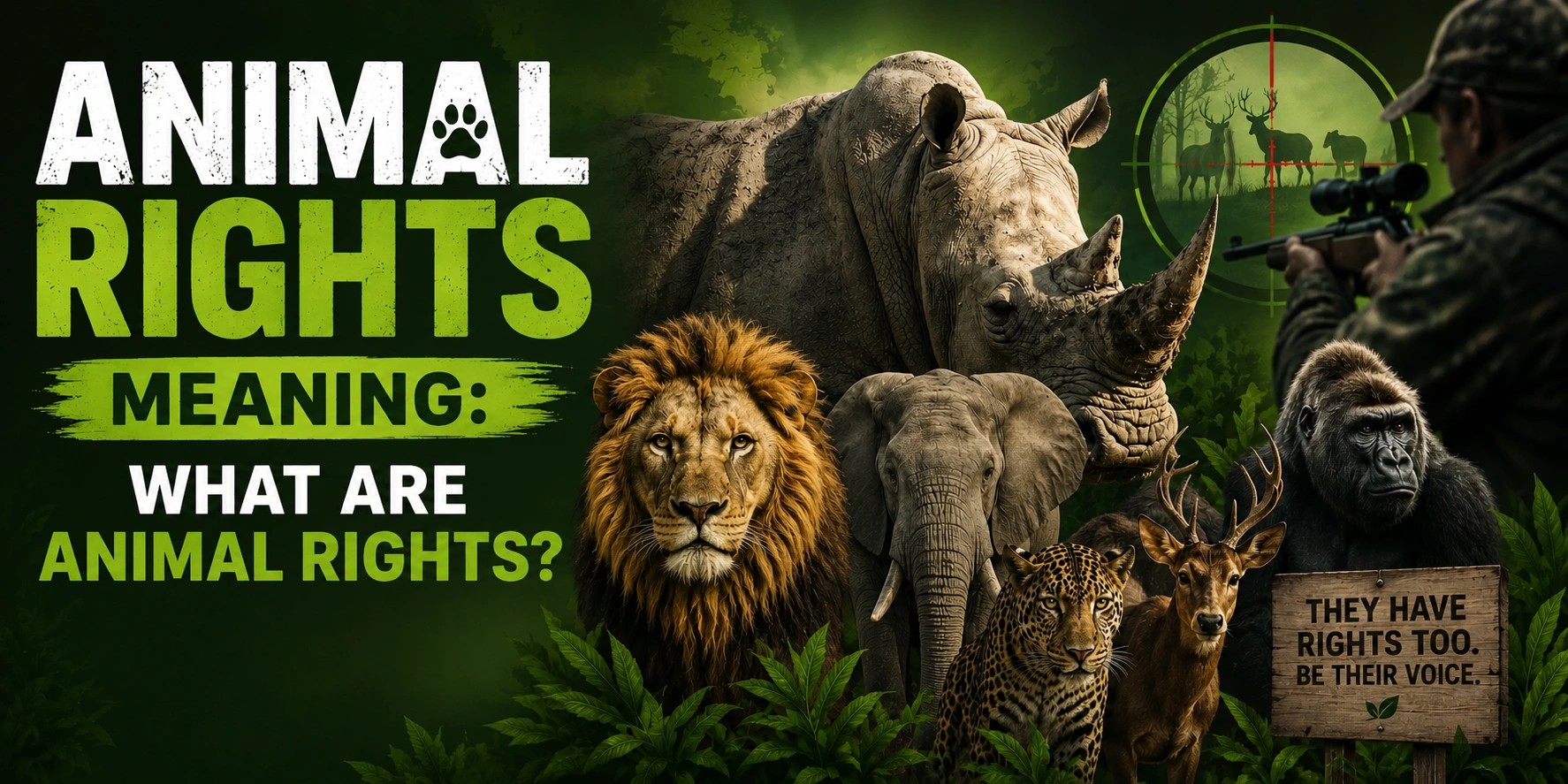
At its core, the animal rights meaning asserts that non-human animals are entitled to the possession of their own lives and that their most basic interests—such as the need to avoid suffering and the desire to live freely—should be afforded the same consideration as similar interests of human beings.
This philosophy rejects the idea that animals are merely property, commodities, or resources meant for human use. Instead, it posits that animals are sentient beings with intrinsic value. This means their worth is not determined by how useful they are to humans, but rather by their own independent existence.
When discussing the animal ethics meaning, it translates to the moral obligation humans have to not exploit animals for food, clothing, entertainment, or experimentation. It is a paradigm shift from traditional views, establishing that animals have a moral right to be treated with respect and to live free from human-imposed confinement and cruelty.
Key Facts: Understanding Sentience
Sentience: The capacity to experience feelings and sensations, including pain, joy, and fear.
The Cambridge Declaration on Consciousness (2012) confirmed that non-human animals, including all mammals, birds, and many other creatures, possess neurological substrates that generate consciousness.
2. What Are Animal Rights?
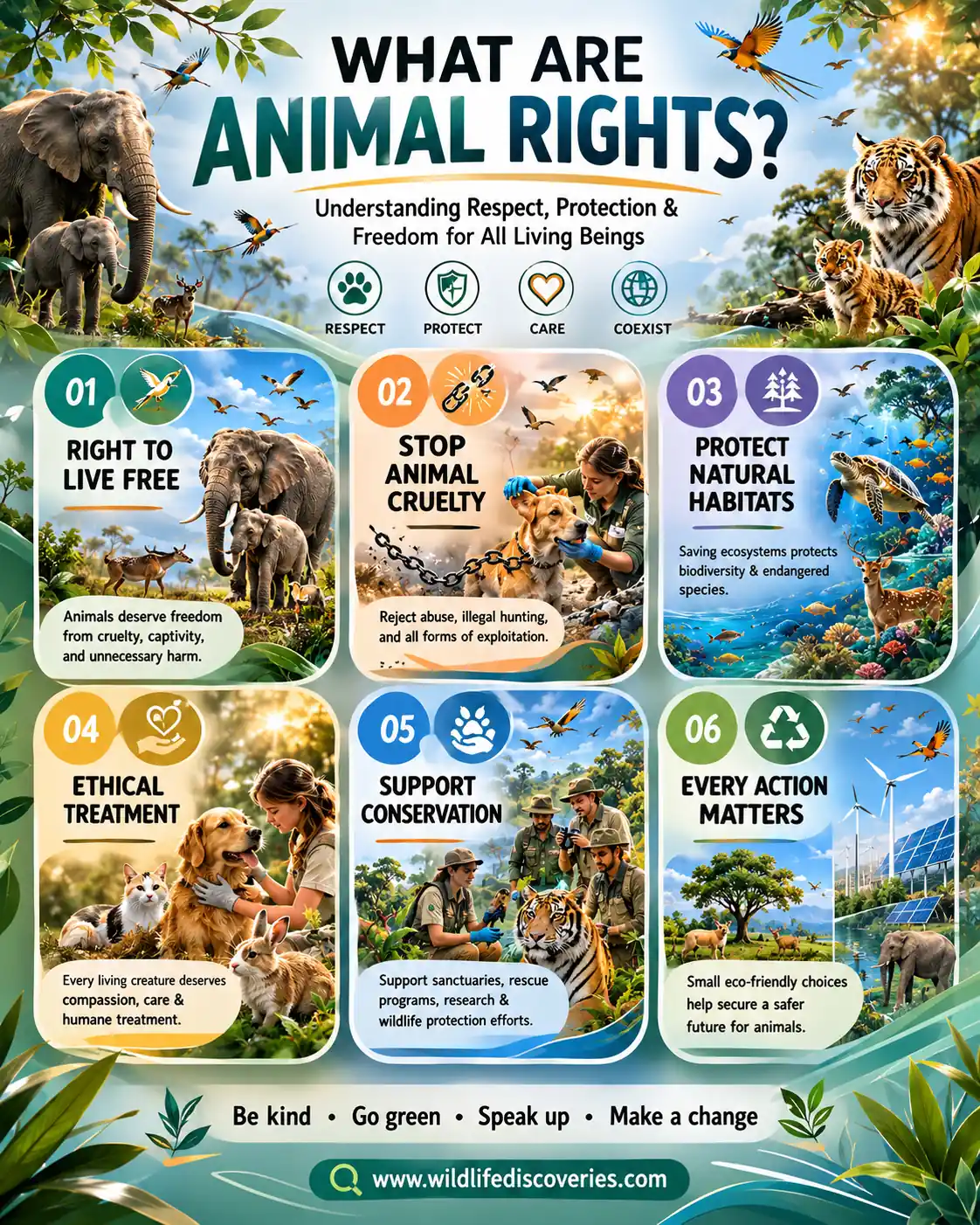
If the meaning is the philosophical baseline, the practical application answers the question: What are animal rights? Animal rights are a set of moral and legal principles designed to protect animals from systemic exploitation and abuse. Proponents of animal rights argue that certain fundamental liberties should be extended beyond the human species. These rights typically include:
The Right to Life: The inherent right not to be killed for human convenience, consumption, or sport.
The Right to Freedom: The right to live in a natural habitat, free from cages, chains, and artificial confinement.
The Right to Bodily Integrity: Protection against physical mutilation, forced breeding, and cruel scientific or cosmetic testing.
The Right to Natural Behaviors: The freedom to express natural instincts, social bonds, and ecological roles without human interference.
In practice, acknowledging what animal rights are means opposing factory farming, animal testing, the fur trade, and the use of animals in circuses or marine parks. It is the belief that a life has value simply because it is a life.
3. History of the Animal Rights Movement
The concept of animal rights is not a modern invention; it has deep historical and philosophical roots.
Ancient Philosophy and Religion:
In ancient times, philosophers like Pythagoras advocated for vegetarianism and kindness to animals, believing in the transmigration of souls between humans and animals. Several Eastern religions, including Jainism, Hinduism, and Buddhism, have long practiced Ahimsa (non-violence) toward all living beings.
The Enlightenment:
The modern philosophical debate began taking shape in the 17th and 18th centuries. While René Descartes infamously argued that animals were unfeeling “automata” (machines), later thinkers challenged this. The turning point came with utilitarian philosopher Jeremy Bentham in 1789, who famously wrote: “The question is not, Can they reason? nor, Can they talk? but, Can they suffer?”
The Modern Movement (20th Century to Present):
The modern animal rights movement truly ignited in the 1970s. In 1975, Australian philosopher Peter Singer published Animal Liberation, a groundbreaking book that introduced the concept of “speciesism”—the prejudiced discrimination against beings based on their species. Shortly after, philosopher Tom Regan published The Case for Animal Rights (1983), arguing that animals are “subjects-of-a-life” and thus have inherent rights.
Since then, the movement has grown exponentially, evolving from fringe philosophical debates to mainstream legal and societal discussions focusing on animal cruelty prevention and systemic reform.
4. Core Principles of Animal Rights
The animal rights framework is built upon several non-negotiable core principles. These pillars help guide legislation, activism, and ethical decision-making.
Rejection of Speciesism: Just as racism and sexism are forms of prejudice, speciesism is the unjustifiable prioritization of human interests over the basic life and liberty interests of animals.
Abolition of Animal Exploitation: The ultimate goal of the animal rights movement is not just to make cages larger, but to empty them. It seeks the total abolition of animals in agriculture, scientific research, and commercial entertainment.
Sentience as the Baseline: The capacity to feel pain and experience life is the only criteria needed to be granted basic rights. Intelligence or utility to humans is irrelevant to a being’s right to live freely.
Intrinsic Value: Animals exist for their own reasons. They were not created to serve humans, just as certain groups of humans were not created to serve others.
5. Animal Rights vs Animal Welfare (Crucial Distinction)
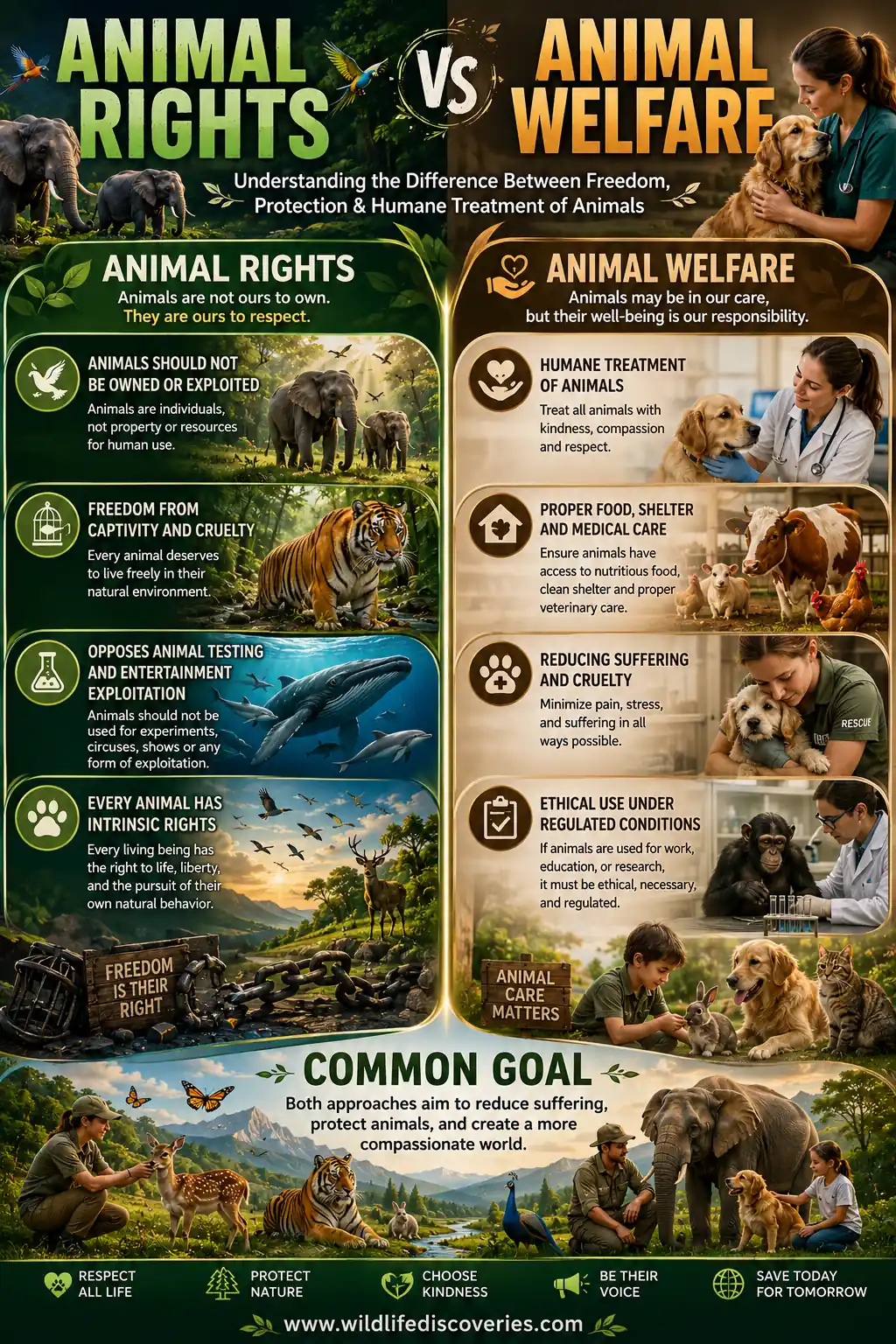
Understanding the Difference Between Animal Rights and Animal Welfare is essential for anyone delving into animal ethics. While the terms are often used interchangeably, they represent two fundamentally different philosophies.
Animal Welfare
The animal welfare viewpoint accepts that humans have the right to use animals for food, clothing, entertainment, and research, provided that the animals are treated humanely. Welfare advocates work to reduce suffering, improve living conditions, and ensure slaughter is “painless.”
Example: Advocating for larger cages for battery hens or promoting “free-range” meat.
Animal Rights
The animal rights viewpoint rejects the use of animals by humans altogether. It argues that no matter how “humane” the treatment is, using animals as property is inherently unjust and violates their basic rights.
Example: Advocating for the total end of egg production and promoting a vegan lifestyle, arguing that birds should not be property in the first place.
| Feature | Animal Welfare | Animal Rights |
| Core Belief | Humans can use animals, but must minimize pain. | Humans have no right to use animals at all. |
| Focus | Regulating exploitation (larger cages, humane slaughter). | Abolishing exploitation (empty cages, no slaughter). |
| Status of Animals | Viewed as property to be treated kindly. | Viewed as individuals with their own sovereign rights. |
| End Goal | Better conditions for animals within human industries. | Liberation of animals from human industries. |
6. Why Animal Rights Are Important?
When we ask why animal rights matter, we are questioning the very foundation of human morality. The importance of animal rights extends far beyond the animals themselves; it reflects our societal values.
Firstly, acknowledging animal rights is a matter of basic justice. If we agree that it is wrong to inflict unnecessary suffering on a vulnerable being, then logic dictates this protection should extend to animals, who are incredibly vulnerable to human power.
Secondly, recognizing these rights fosters empathy and compassion. Studies have frequently shown a link between violence against animals and violence against humans. By promoting a culture that respects animal life, we inherently promote a more peaceful human society.
Finally, the fight for animal rights is intertwined with global survival. The exploitation of animals is a leading cause of deforestation, water pollution, and climate change. Recognizing the rights of animals to their habitats is a critical step in preserving the planet. Understanding Why Is Wildlife Conservation Important? often begins with recognizing the fundamental rights of the species that inhabit those ecosystems.
7. Examples of Animal Rights Violations
To fully grasp the need for animal protection rights, we must look at how these rights are routinely violated globally:
Factory Farming: Billions of animals, including cows, pigs, and chickens, are confined in dark, cramped spaces, genetically manipulated to grow unnaturally fast, and subjected to painful mutilations without anesthesia before being slaughtered.
Animal Testing: Millions of mice, rabbits, dogs, and primates are used in toxicological testing for cosmetics, pharmaceuticals, and household products. They are exposed to harmful chemicals, deliberately infected with diseases, and ultimately killed.
The Wildlife Trade and Poaching: Exotic animals are poached for their skins, tusks, or to be sold in the illegal pet trade. This severely impacts biodiversity.
Entertainment: Animals in circuses, marine parks, and rodeos are deprived of their natural behaviors, often trained through physical dominance and fear, and kept in tiny enclosures.
8. Animal Rights Laws Around the World
The legal landscape regarding animal rights laws is slowly shifting. While most countries still classify animals as “property,” progressive legal frameworks are beginning to emerge.
The United Kingdom: In 2022, the UK passed the Animal Welfare (Sentience) Act, legally recognizing all vertebrates (and some invertebrates like octopuses and crabs) as sentient beings whose feelings must be considered in government policy making.
The European Union: The EU has some of the strictest animal welfare laws globally, banning the cosmetic testing on animals and restricting certain intensive farming practices, such as gestation crates for pigs.
India: Article 51A(g) of the Indian Constitution makes it a fundamental duty of every citizen to have compassion for living creatures. The Prevention of Cruelty to Animals Act (1960) forms the baseline of legal protection, though activists argue the penalties need significant updating.
New Zealand: In 2015, New Zealand officially amended its Animal Welfare Act to recognize animals as sentient beings, strengthening the prosecution of animal abusers.
Despite these advancements, true rights—such as the legal right to life and liberty (often referred to as legal personhood)—have not yet been widely granted to animals, though organizations like the Nonhuman Rights Project are actively fighting for this in courts.
9. Role of Organizations and Activists
The progress made in the realm of animal ethics is largely driven by dedicated individuals and groups. Learning about the various Animal Welfare Organizations Around the World shows the diversity of the movement.
Grassroots Activism: Local activists engage in peaceful protests, undercover investigations of factory farms, and public education campaigns to expose the realities of animal exploitation.
Legal Advocacy: Organizations like the Animal Legal Defense Fund (ALDF) work within the judicial system to file lawsuits on behalf of animals, fighting for stricter laws and harsher penalties for abusers.
Sanctuaries: Farm animal sanctuaries provide safe havens for rescued animals, allowing them to live out their lives in peace while serving as educational ambassadors to the public.
Global NGOs: Large organizations like PETA (People for the Ethical Treatment of Animals), Mercy For Animals, and Humane Society International run massive global campaigns to influence corporate policies, resulting in major brands dropping fur or committing to cage-free supply chains.
10. The Ethical Debate: For and Against Animal Rights
Like any major social justice movement, animal rights faces significant opposition and debate.
Arguments Against Animal Rights
Critics argue that rights inherently come with responsibilities and duties. Since animals cannot understand or participate in a social contract (they cannot respect our rights, pay taxes, or obey laws), they cannot be bearers of rights. Furthermore, opponents point out that human survival and progress—specifically in medical research and nutrition—historically rely on the use of animals. They argue that human life holds superior moral weight.
Arguments For Animal Rights
Proponents counter that the “social contract” argument is flawed. We grant basic human rights to infants and individuals with severe cognitive impairments, even though they cannot fulfill societal duties or understand laws. We protect them simply because they can suffer and have an interest in living. The same logic must apply to animals. Regarding human progress, activists argue that modern alternatives to animal testing exist, and a plant-based diet is not only sustainable but healthy for all stages of human life.
11. Animal Rights in Daily Life
Supporting animal rights is not just for activists; it is a philosophy that can be seamlessly integrated into everyday living. If you are wondering How Can You Take Care of Animals? beyond just petting your dog or cat, the answers lie in consumer choices.
Dietary Choices: Transitioning to a plant-based or vegan diet is the most direct way to stop contributing to the factory farming industry, which is the largest source of animal exploitation globally.
Cruelty-Free Purchasing: Choosing cosmetics, household cleaners, and personal care products that feature the “Leaping Bunny” or similar cruelty-free certifications ensures no animals were blinded, burned, or killed for your shampoo.
Clothing: Opting for alternatives to leather, fur, wool, and exotic skins. Synthetic and plant-based alternatives are now widely available and high-quality.
Entertainment: Refusing to buy tickets to circuses that use animals, marine parks holding cetaceans in captivity, or unregulated roadside zoos.
12. Connection Between Animal Rights and Conservation
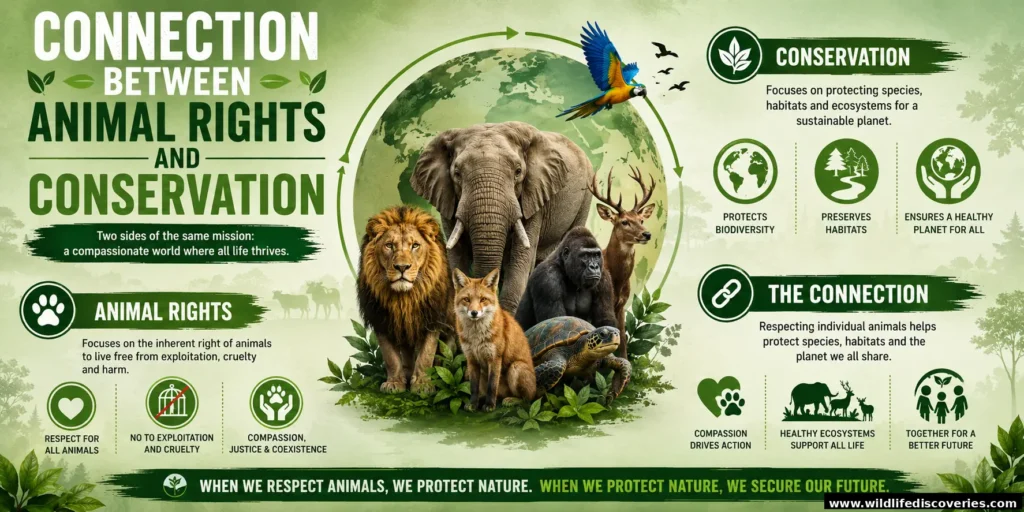
Animal rights and environmental conservation are deeply interconnected. While conservation usually focuses on species at a population level and animal rights focuses on the individual animal, both disciplines aim to protect non-human life.
Habitat destruction, driven largely by animal agriculture, is the leading cause of wildlife decimation. By respecting the right of animals not to be commodified for food, we drastically reduce the land required for agriculture, allowing forests to regenerate.
To understand the stakes, we must look at Animal Extinctions: How Many Species Are Extinct? The numbers are staggering, driven by human encroachment and the illegal wildlife trade. When we respect the individual rights of animals, we naturally protect their habitats. Exploring the Different Types of Ecosystems and Characteristics reveals how delicately balanced these environments are, and how the removal or exploitation of even a single species can cause an entire ecosystem to collapse.
13. Challenges in Implementing Animal Rights
Despite growing public sympathy, implementing true animal rights faces monumental hurdles.
Economic Reliance:
The global economy is deeply entangled with animal exploitation. The meat, dairy, pharmaceutical, and fashion industries represent trillions of dollars. Shifting these massive economic sectors toward animal-free alternatives requires massive systemic change, technological innovation, and political will.
Cultural and Traditional Practices:
Many cultures have long-standing traditions involving animals—from bullfighting in Spain and the Yulin Dog Meat Festival in China to Thanksgiving turkeys in the United States. Challenging these norms often provokes strong cultural defensiveness.
Legal Precedents:
The legal classification of animals as property is deeply entrenched in common law. Overturning this requires shifting centuries of legal precedent. Judges are often hesitant to grant animals rights out of fear of the “slippery slope”—the worry that giving a chimpanzee legal personhood will eventually lead to lawsuits on behalf of farm animals.
14. How Individuals Can Support Animal Rights?
You don’t have to be a lawyer or a full-time activist to make a difference. If you are looking for What Can We Do to Protect Endangered Animals? and domestic animals alike, consider these actionable steps:
Vote with Your Wallet: Every purchase is a vote for the type of world you want. Buy cruelty-free, plant-based, and sustainably sourced products.
Educate and Advocate: Share documentaries, articles, and books with friends and family. Awareness is the first step toward change.
Adopt, Don’t Shop: If bringing a companion animal into your home, adopt from local shelters or rescue groups rather than buying from breeders or pet stores, which perpetuates the cruel puppy mill industry.
Support Legislation: Vote for political candidates who prioritize animal protection and sign petitions demanding stricter animal welfare laws.
Volunteer or Donate: Offer your time or financial support to reputable animal sanctuaries and advocacy groups.
15. FAQs About Animal Rights?
Q1: What is the basic definition of animal rights?
The animal rights meaning refers to the belief that non-human animals are entitled to the possession of their own existence and that their basic interests—such as avoiding suffering—should be given equal moral consideration to human interests. They should not be viewed as property.
Q2: Are animal rights and animal welfare the same thing?
No. Animal welfare allows for the human use of animals (for food, clothing, etc.) as long as “humane” guidelines are followed to minimize suffering. Animal rights, however, calls for the complete abolition of animal use, arguing that animals are not ours to use in the first place.
Q3: Do animal rights activists want animals to have the same rights as humans?
No. Animal rights advocates do not seek the same rights for animals (like the right to vote or drive a car, which makes no sense for a dog or a cow). They advocate for equal consideration of their relevant interests, primarily the right to live free from human-inflicted suffering and confinement.
Q4: Is it illegal to violate animal rights?
It depends on the country and the definition. Violating animal welfare laws (like severely beating a dog) is illegal in many places under anti-cruelty statutes. However, violating animal rights (like breeding and killing a pig for food) is completely legal and standard practice globally.
Q5: Why do some people oppose animal rights?
Opposition usually stems from the belief that humans possess a higher moral status due to superior intelligence or societal structure. Others oppose the movement due to economic interests in the agriculture, pharmaceutical, or fashion industries.
Q6: Can a person support animal rights but still eat meat?
Strictly speaking, consuming meat directly supports the commodification and slaughter of animals, which contradicts the core philosophy of animal rights. A person who eats meat is generally supporting animal welfare (if they choose free-range/humane options), but true adherence to animal rights implies moving toward a vegan lifestyle.
Q7: How do animal rights affect scientific research?
The movement strongly opposes animal testing, advocating for the development and use of advanced alternatives like in vitro testing, computer modeling, and human-patient simulators, which are often more accurate and ethically sound than animal models.
16. Conclusion
The question of what are animal rights is no longer a fringe philosophical musing; it is one of the most pressing social justice issues of our time. The true animal rights meaning challenges us to look past our own species and recognize the vibrant, conscious, and feeling lives with which we share this planet.
Moving from a society that treats animals as disposable commodities to one that respects them as individuals with inherent worth requires unlearning centuries of conditioning. It requires us to bridge the gap between our supposed love for animals and our daily actions. Whether it is by fighting for new legal frameworks, supporting global NGOs, or simply choosing a cruelty-free meal, every step taken toward acknowledging animal rights is a step toward a more compassionate, just, and sustainable world.
The evolution of human morality has historically bent toward expanding the circle of compassion. Extending that circle to encompass non-human animals is the next logical, and necessary, step in our moral evolution.
Enjoyed this comprehensive guide? Share it with your network to help spread awareness about the importance of animal rights and wildlife conservation.