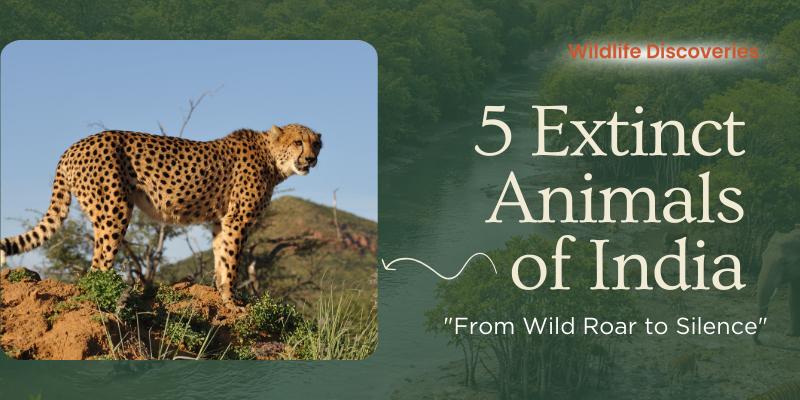
India’s rich landscapes have historically supported a diverse array of wildlife – from majestic elephants and tigers to countless birds and insects. However, colonial-era hunting, agricultural expansion, and later industrial development have driven many species to local or global extinction. In this narrative, we explore the 5 Extinct Animals of India: one mammal, two birds, one prehistoric vertebrate, and one legendary megafauna. Each represents a different era and cause of loss, but all share the common story of disappearance from India’s wild.
We start with the Sumatran Rhinoceros, a forest dweller once present in the far northeast. Then we turn to the Pink-headed Duck, a striking but elusive wetland duck of the Gangetic plains. The Asiatic Cheetah, once celebrated by Indian royalty, fell next to human guns. The Indian Aurochs represents an even older loss – the wild ancestor of today’s zebu cattle, disappearing in the dawn of agriculture. Finally, Sivatherium – a gargantuan Pleistocene giraffid sometimes called “Shiva’s beast” – underscores how even prehistoric megafauna vanished as climates changed and humans spread.
Throughout, we emphasize evidence from fossil records, museum specimens, historical accounts, and conservation research. The goal is to humanize these extinctions – to understand not only the dry facts, but why these animals mattered ecologically and culturally, and what lessons their stories hold for conservation today.
Sumatran Rhinoceros (Dicerorhinus sumatrensis)
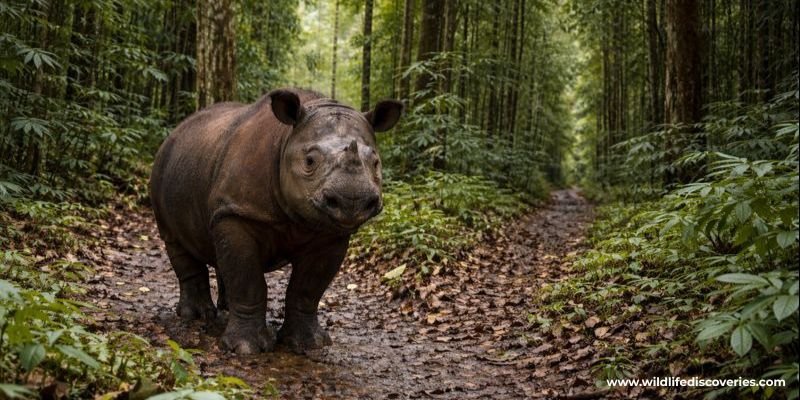
The Sumatran Rhino is the smallest living rhino species, densely covered in reddish-brown hair. It has two horns (unusual among Asian rhinos) and a stocky build. Historically, it ranged widely in Southeast Asia. Indian Range: In the 19th and early 20th centuries, this rhino still inhabited India’s northeastern forests (Assam and Arunachal Pradesh) along the Himalayan foothills. The WWF notes it “once roamed as far away as the foothills of the Eastern Himalayas in Bhutan and eastern India”. It preferred dense tropical and subtropical forest, where it browsed on a variety of vegetation. As a megaherbivore, it would have played an important role in seed dispersal and shaping undergrowth.
Extinction Timeline: By the late 19th/early 20th century, the rhino’s Indian population had dwindled severely. Unconfirmed reports persisted (for example, an 1860s photograph of a “two-horned hairy small rhino” in Nagaland has surfaced), but no confirmed wild sightings occurred after 1900. The last reliable records in India date to the 1930s, and by the mid-20th century the rhino was effectively extirpated from India (and Bangladesh). After a long breeding program, the Sumatran rhino survives today only in Indonesia (Sumatra and Borneo).
Causes of Decline: The Sumatran Rhino suffered from intensive hunting and habitat loss. Colonial-era hunters prized its horns, and local communities also hunted for meat and trophies. Simultaneously, much of its forest habitat was cleared for plantations and settlements. Fragmentation meant surviving rhinos were isolated; with tiny populations, successful breeding was rare. By mid-20th century, poaching and deforestation had erased it from India’s forests.
Records/Specimens: Several museum specimens and photos from the 19th century document the Sumatran Rhino’s existence in India (for example, sketches by British naturalists). However, confirmed documentation of the last individuals is scant. No rhino from India survived to see modern protected-area efforts.
Modern Relevance: The story of the Sumatran Rhino warns that even large, long-lived mammals are vulnerable when humans encroach. Today the species is Critically Endangered globally, with only ~30–50 individuals remaining. India has learned from this loss – current conservation laws and reserves aim to protect all remaining rhinos (and other megafauna) from a similar fate.
Pink-headed Duck (Rhodonessa caryophyllacea)

The Pink-headed Duck was a unique and beautiful waterfowl, named for its rosy-pink head and neck. Males had vivid pink plumage on the head (females were duller). It inhabited swamps and flooded grasslands, especially in the Gangetic plains of northern India, adjacent Bangladesh, and parts of Myanmar. This duck was relatively shy and elusive, often found in thick elephant-grass wetlands and flooded forests.
Historical Range and Ecology: Its range extended along river plains. Harteman’s wildfowl account notes it was “found in parts of the Gangetic plains of India, Bangladesh and in the swamps of Myanmar”, with most Indian records from northeast India. It congregated in small groups (sometimes flocks of 30–40 outside breeding season) in marshes and oxbow lakes. As a waterfowl, it would have contributed to wetland seed dispersal and served as prey for large birds and mammals (though its shy nature made it less obvious in the food chain).
Last Sightings: The Pink-headed Duck has not been conclusively seen in the wild in India since 1949. Officially it’s listed as Critically Endangered, but most experts consider it extinct or possibly “lost”. There was a famous incident in June 1935 when a hunter’s dog presented one in Darbhanga, India, to museum curator Charles Inglis – one of the last physical records. After 1949, only unverified reports and extensive searches (even as late as 2008) yielded nothing concrete. No living bird or credible sighting has occurred in decades.
Causes of Decline: The species declined from a combination of habitat loss and persecution. By the late 19th century, much of the duck’s wetland habitat was drained or converted to agriculture. It was hunted year-round (for food, feathers, and specimens). In fact, one study suggests that concerted collecting for zoos (with wealthy patrons offering rewards) may have hastened its extinction. Invasive plants like water hyacinth also likely degraded its swampy habitat. In short, deforestation of wetlands and unrelenting hunting pressure erased this species from Indian wetlands.
Records/Specimens: Although wild sightings ended around 1949, over 80 museum specimens exist worldwide. Notably, Sir David Ezra collected and sent many live birds in the 1920s to menageries in England, and there were pink-headed ducks in several zoos. The last known captive birds died by 1948. Historic photos (e.g. a 1926 shot of captive pair in London) document its appearance. Today, its existence is almost ghostly, preserved only in books, specimens, and an intriguing photo.
Modern Relevance/Lessons: The near-extinction of the Pink-headed Duck highlights the fragility of wetland ecosystems. These ducks required extensive swamp habitats, which were undervalued by colonial and local planners. Its lingering “lost species” status has spurred periodic searches (even using camera traps in Myanmar) but with no success. Conservationists cite it as a warning: protecting wetlands and curbing hunting are crucial. In any case, its pink head lives on in stamp issues and wildlife art as a symbol of what’s been lost.
Asiatic (Indian) Cheetah (Acinonyx jubatus venaticus)
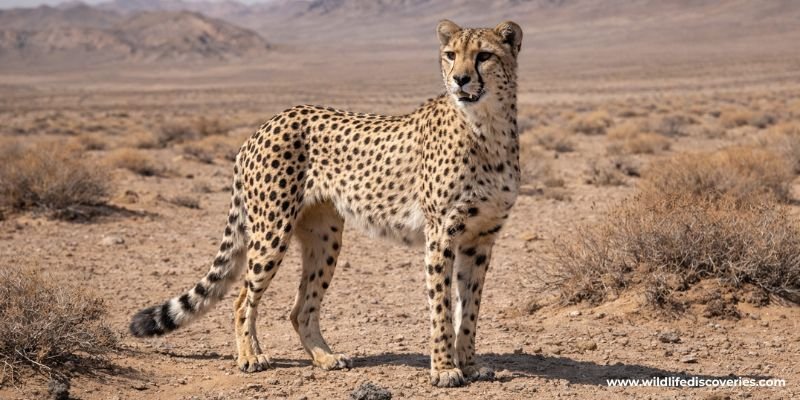
The Asiatic Cheetah, a subspecies that once roamed India’s plains, was the fastest land mammal on Earth. Sleek-bodied with black “tear stripes” on its face, it preyed on antelopes like blackbuck and chinkara in open grassland and thorn scrub. Historically, it had a broad range across Iran, Afghanistan, and into the Indian subcontinent. In India’s cultural lore, the cheetah was famous: Mughal emperors, notably Akbar, used cheetahs for coursing (hunting with captive-cheetahs) and kept them in royal parks.
Historical Range and Ecology: Asiatic Cheetahs once thrived across India, from the northwest deserts to central grasslands. NDTV reports “the cheetah once ranged widely across India, from open forests to dry grasslands”. It needed expanses of open land and healthy prey populations. As a top predator, cheetahs helped regulate herbivore numbers (especially antelope), thus contributing to grassland ecosystem balance. Unlike tigers, cheetahs depended on speed and open terrain, and did not hunt large prey.
Extinction Timeline: The Indian cheetah’s extinction is well documented. By the early 20th century, intense hunting had already decimated numbers. The last documented wild cheetahs in India were shot in 1947 – a case where a Maratha ruler (Maharaja Ramanuj Pratap Singh Deo of Koriya, Central India) killed three adult male cheetahs at night. A photograph of this event was published in 1948 and marks the final confirmed record of the animal in India. Five years later, in 1952, India officially declared the cheetah extinct. (Notably, small cheetah populations survived slightly longer in neighboring Iran, but India’s own subspecies was gone.)
Causes of Decline: The cheetah’s decline was driven by human causes. Centuries of hunting (especially by nobility, who considered cheetahs sporting trophies) and the slaughter of prey species set the stage. NDTV notes “cheetahs once thrived across India but vanished due to hunting and habitat loss”. By the 19th century the situation was dire: a BBC-cited study says only about 230 remained between 1799–1968. Rapid conversion of grasslands to farmland further destroyed their habitat and prey base. In short, overhunting (triggered partly by colonial demand for big-game trophies) and loss of open habitats were fatal.
Records/Specimens: Before extinction, Asiatic Cheetahs were kept in captivity (zoos, menageries) and sent abroad. Their skins and skulls are preserved in some museums. Perhaps the most famous “last record” is that 1948 photograph and museum report. The JBNHS (Bombay Natural History Society) journal published the Maharaja’s photo, confirming the kill. No wild cheetahs have been sighted since, although a 2009 search in Iran (for reintroduction) confirmed the absence in India.
Modern Relevance: The cheetah is emblematic in India’s conservation narrative. In 2022, after a 70-year absence, African cheetahs were brought to Kuno National Park in Madhya Pradesh in a bid to restore the lost predator. This Project Cheetah seeks to re-establish a viable population in India’s historical range. However, the debate over reintroduction (citing genetic differences and ecological impacts) reminds us that preventing extinction is easier than reversing it. The cheetah’s story warns that every link in an ecosystem matters – India’s grasslands lost their swift hunter for decades, affecting prey dynamics and biodiversity.
Indian Aurochs (Bos primigenius namadicus)
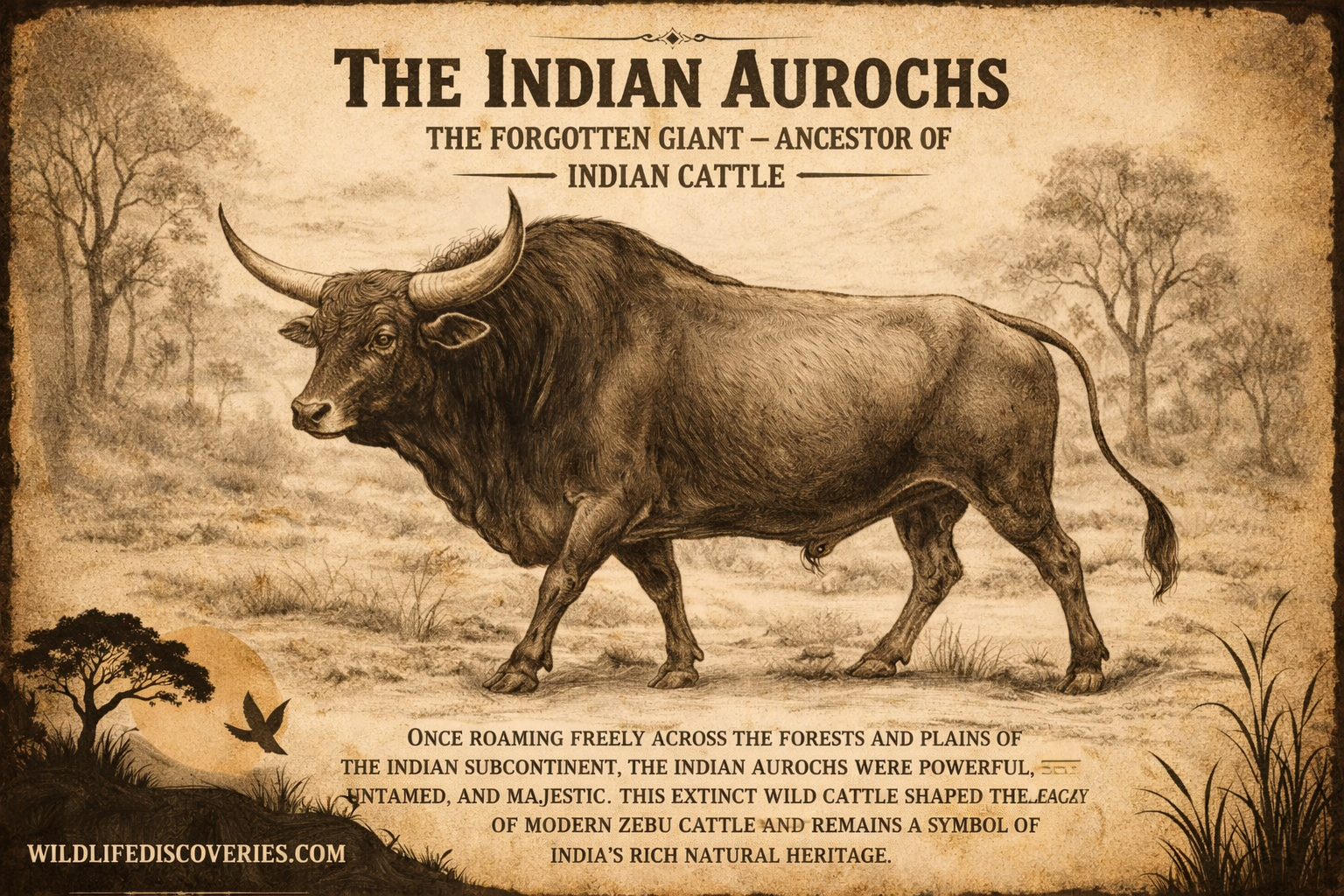
The Indian Aurochs was a wild cattle, a subspecies of the aurochs, which are the ancestors of modern cattle. It resembled a large, hump-shouldered wild zebu (closely related to today’s Brahman-type cattle). Fossils and paintings (e.g. at Bhimbetka) suggest it had robust horns and a humpless body. It inhabited riverine grasslands and woodlands across South Asia.
Historical Range and Ecology: This aurochs roamed most of the Indian subcontinent. It preferred floodplains and mixed grassland-forest edges, likely grazing on grasses and browsing shrubs. It shared the landscape with other megaherbivores like Indian elephants, gaurs, and nilgai. As a large grazer, it would have shaped grassland structure and provided prey for large predators of the time (for example, crocodiles or big cats).
Extinction Timeline: The Indian Aurochs is known only from prehistoric records. According to fossil evidence, it became extinct around 3,800–4,200 years Before Present (roughly 1800–2000 BCE). In other words, it survived into the late Stone Age (when agriculture was spreading) but left no remains younger than about 3,800 YBP. Remarkably, it was the first of the three aurochs subspecies to disappear – the North African and Eurasian aurochs hung on much longer (Europe’s aurochs died out in 1627 CE).
Causes of Decline: The Indian Aurochs likely dwindled as humans developed farming. The Indus Valley civilization domesticated wild aurochs around 9,000 years ago, yielding indicine (zebu) cattle. Once people had domestic cattle adapted to local climates, wild aurochs lost their niche. Gradual conversion of grasslands to crops and pasture would have shrunk its habitat. In essence, the wild Indian aurochs was “absorbed” through domestication and habitat loss – it didn’t vanish suddenly, but became extinct as a distinct wild population when all survivors were either hunted or interbred with domestic stock.
Records/Specimens: No living memory exists of these wild cattle; we know them through bones and rock art. The most recent fossils (distinctly aurochs) have been found at Mahagara (Uttar Pradesh) dated ~3,800 YBP and at Banahalli (Karnataka) dated ~4,200 YBP. There are intriguing depictions – for example, Bhimbetka rock art (8,000–3,000 BCE) shows humpless cattle that may have been Indian aurochs. There are no skins or living specimens, only skeletal remains that museum exhibits can recreate.
Modern Relevance: Though extinct as wild animals, the genetic legacy of the Indian Aurochs lives on in modern cattle. The indicine or zebu breeds (like Gir, Kankrej) descend from these aurochs. Some conservationists even consider “breeding-back” programs, using feral zebu to approximate the wild form. Ecologically, its absence allowed domesticated cattle to fill its role in ecosystems. The lesson here is that early human impacts – domestication and agriculture – reshaped India’s fauna millennia ago. Protecting wild relatives of domestic animals (like gaur and wild water buffalo) remains important to prevent repeats of this ancient extinction.
Sivatherium
Sivatherium was an enormous prehistoric ungulate, part of the giraffe family. Imagine a moose-sized giraffe: it had a relatively short neck, massive body (1.0–1.3 tons estimated), and ornate horn-like ossicones atop its head. Some species of Sivatherium reached shoulder heights over 2 meters. It lived during the Pliocene and Pleistocene epochs in Africa and South Asia; Sivatherium giganteum is the species known from the Indian subcontinent, especially the Himalaya foothills.
Historical Range and Ecology: Fossils of Sivatherium giganteum have been found in India (e.g. Siwalik Hills) dating to the Plio-Pleistocene. It likely browsed on trees and shrubs in savanna or open woodland environments. Its robust build suggests it could knock down vegetation and likely provided a food source for large predators. Notably, the ultrarobust limbs imply it was very heavy, and it might have been one of the largest ruminants ever. (An academic reconstruction estimates ~1246 kg body mass.) It is sometimes called “Shiva’s beast” because the multiple ossicones looked almost like a crown or antler. Interestingly, some Saharan rock art and ancient legends may depict Sivatherium-like creatures, hinting at their presence until very late prehistory.
Extinction Timeline: Sivatherium’s extinction is ancient – it disappeared well before historic times. It originated ~7 million years ago and survived until roughly the end of the Pleistocene. ThoughtCo reports that “the last Sivatherium populations went extinct at the close of the last Ice Age, about 10,000 years ago”. There is debate: some paleontologists argue Sivatherium was gone by 0.8 million years ago, while others suggest isolated survivors until about 8–10,000 years ago (e.g. rock art from ~5,000 BCE might portray one). In any case, there were no Sivatherium alive when recorded human history began in India.
Causes of Decline: Being a Pleistocene megaherbivore, Sivatherium was likely affected by the same changes that killed off woolly mammoths and other megafauna. Climate warming after the Ice Age would have transformed its habitat, shrinking open woodlands. Human hunting may have contributed too: crude stone tools have been found alongside Sivatherium remains in Africa, implying early humans butchered them. Thus the combination of climate change and anthropogenic pressure led to its extinction by Holocene times.
Records/Specimens: Sivatherium fossils are known from the Siwalik Hills of northern India/Pakistan (recovered in the 1830s) and parts of Africa. The best descriptions come from fragmentary bones; no complete skeleton has ever been found. Its appearance is known from reconstructions and rare photos of museum mounts. Notably, a modern scientific model estimates its body shape and size (Basu et al. 2016). There are no preserved local Indian Sivatherium bones in live memory, only these ancient fossils.
Modern Relevance: As an extinct Pleistocene megafauna, Sivatherium’s direct ecological lessons are limited, but it holds fascination. It reminds us that India once had bizarre giants beyond living memory, and that even creatures weighing over a ton were not immune to extinction. It also illustrates how climate shifts can wipe out species unprotected by human awareness. Today, Sivatherium lives on in Indian paleontology textbooks, inspiring interest in prehistory and the evolution of giraffes. The idea of “Shiva’s beast” adds cultural mystique, highlighting how extinct animals can enter mythology (ancient legends of multi-horned beasts may be based on Sivatherium imagery).
Comparative Summary Table
| Species | Status in India | Last Confirmed (India) | Primary Extinction Cause(s) | Key Ecological Role / Impact |
|---|---|---|---|---|
| Sumatran Rhinoceros | Extinct (locally) | No confirmed in India after ~early 1900s | Poaching (horn trade), habitat loss/fragmentation | Large browser; seed dispersal, ecosystem health support |
| Pink-headed Duck | Critically Endangered (likely extinct) | Last indisputable sighting 1949 (India) | Wetland drainage; hunting/collecting | Wetland seed disperser; part of aquatic foodweb |
| Asiatic (Indian) Cheetah | Extinct (declared 1952) | Last wild killed 1947 (declared extinct 1952) | Sport hunting; loss of prey & grasslands | Apex predator in grasslands; controlled herbivore (antelope) numbers |
| Indian Aurochs | Extinct (prehistoric) | No remains <~3,800 YBP | Domestication into zebu cattle; habitat conversion | Wild grazer; ancestor of domestic zebu cattle (genetic legacy) |
| Sivatherium | Extinct (prehistoric) | Extinct ~Pleistocene/Holocene end (~10,000 BC) | Climate change; human hunting (late Pleist.) | Mega-herbivore browser; early humans’ large prey |
Key Takeaways
- Lost diversity: India’s 5 extinct animals range from recent (20th century extirpations) to ancient (Ice Age losses). They show that extinctions have been happening in India throughout history, from human prehistory to modern times.
- Human-driven: In every case, human activities were decisive: indiscriminate hunting (rhino, cheetah, duck), habitat destruction (wetlands for ducks, forests for rhinos, grasslands for cheetahs), and even domestication (aurochs lost to early agriculture). Climate change played a role only for Sivatherium.
- Ecosystem impacts: Each species played a unique role – predators, large herbivores, or wetland birds – and their absence likely shifted ecological balances. For example, losing the cheetah removed a top predator in savannas, while the rhino’s loss may have altered forest dynamics.
- Cultural memory: These animals also had cultural significance: the cheetah was a royal symbol, the rhino featured in tribal folklore, and the pink-headed duck adorned collectors’ art. Their stories reflect India’s changing values and land use.
- Conservation lessons: The fates of these 5 Extinct Animals of India emphasize urgent lessons: protect habitats, curb hunting, and consider long-term ecological impacts of human actions. The cheetah’s reintroduction effort shows hope but also the complexity of reversing past losses. Similarly, efforts to conserve remaining biodiversity (like the Javan and Indian rhinos) have been galvanized by remembering past extinctions.
FAQs
1. Are these the only species extinct in India?
No, this list highlights five notable cases, but other species have been lost (e.g., the Barbary lion subspecies) or are extinct in India but survive elsewhere. These five were chosen for their distinct stories and national significance. All five have vanished from India, even if some survive in small numbers globally (like the Sumatran rhino, or Indian cheetah reintroduced from Africa).
2. What does “extinct” mean for these animals?
- For the rhino, cheetah, and duck, “extinct” means gone from India – no wild individuals remain. The cheetah is regionally extinct but exists in Iran/Africa.
- The Pink-headed Duck and Indian Cheetah are generally presumed globally extinct (no confirmed wild individuals anywhere).
- The Sumatran Rhino is extinct in India but not globally (only about 40 remain in Indonesia).
- The Aurochs and Sivatherium are globally extinct (no surviving populations anywhere, known only from fossils).
3. What caused each extinction?
Summaries above (and the table) list the main drivers: hunting (often for sport or trade) and habitat destruction were common. For example, rhinos and cheetahs were hunted, duck was shot for trade, aurochs became extinct through domestication and land use change, and Sivatherium disappeared as Ice Age climates warmed and humans spread.
4. When were these species last seen alive?
- Sumatran Rhino: No confirmed sightings in India since the early 1900s.
- Pink-headed Duck: Last confirmed in 1949 (India) (and only a few post-1910 records in Myanmar).
- Indian Cheetah: Last wild Indian cheetahs shot in 1947.
- Indian Aurochs: Only prehistoric remains; last fossils ~3800–4200 years ago.
- Sivatherium: Extinct in prehistoric times, roughly by 10,000 BC.
5. How do we know about the pink-headed duck if it’s “lost”?
Through historical records and museum specimens. Over 80 duck specimens were collected before extinction. Observations and even photos from the 19th/early 20th century document the species. Searches (including the Re:wild expeditions) have confirmed no recent live sightings.