Stanley’s Dwarf Shrew: One of the Smallest Mammals on Earth
Stanley's Dwarf Shrew: Newly Discovered 3-Gram Mammal of Ethiopian Highlands

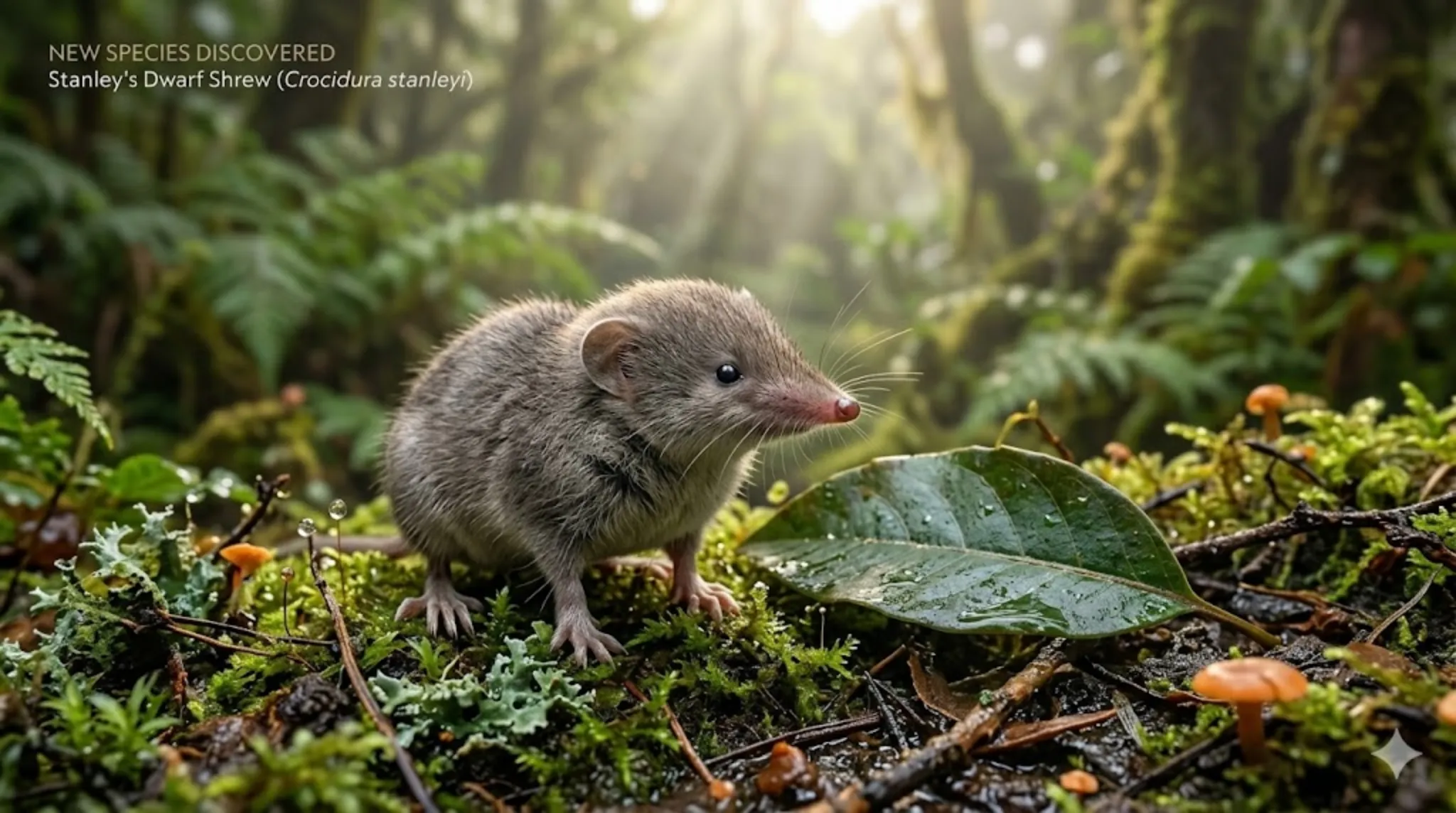
Hidden deep within the rugged landscapes of the Ethiopian Highlands, a creature so small it weighs no more than a sugar cube has captured the attention of scientists worldwide. Stanley’s Dwarf Shrew (Crocidura stanleyi), officially described in 2026, is one of the tiniest mammals ever recorded—yet its discovery tells a story far bigger than its size.
This remarkable species not only highlights the incredible biodiversity of our planet but also reveals how much of Earth’s wildlife remains undiscovered. Found in high-altitude environments where survival is a constant challenge, this tiny mammal represents both the mystery and fragility of nature.
In this guide, we explore what makes Stanley’s Dwarf Shrew so unique, how it was discovered after years of research, and why its existence plays a crucial role in wildlife conservation. Whether you are a nature enthusiast, student, or researcher, this fascinating discovery will change the way you see the smallest creatures on Earth.
Quick Facts: Stanley’s Dwarf Shrew at a Glance
| Feature | Detail |
|---|---|
| Scientific Name | Crocidura stanleyi |
| Common Name | Stanley’s Dwarf Shrew |
| Weight | ~3 grams (like a sugar cube) |
| Body Length | ~50.4 mm (5 cm) |
| Tail Length | ~32.6 mm |
| Discovered | 2026 (confirmed) |
| Discovery Location | Ethiopian Highlands |
| Habitat | Montane grasslands, 2,600–3,597 m elevation |
| Named After | William “Bill” T. Stanley, mammalogist |
| Published In | Journal of Vertebrate Biology |
Imagine holding an entire mammal in the palm of your hand — one that weighs no more than a sugar cube. That is exactly what researcher Yonas Meheretu experienced on a crisp morning in 2023, when he peered into a pitfall trap on Mount Damota in southern Ethiopia and found something extraordinary staring back at him. That tiny creature — now officially named Stanley’s Dwarf Shrew (Crocidura stanleyi) — turned out to be a species completely unknown to science.
Formally described in 2026, Stanley’s Dwarf Shrew is one of the smallest mammals ever recorded on Earth. Its discovery is not just a scientific milestone — it is a story of dedication, loss, and a decade-long journey to name a creature that had been hiding in plain sight.
What Is Stanley’s Dwarf Shrew?
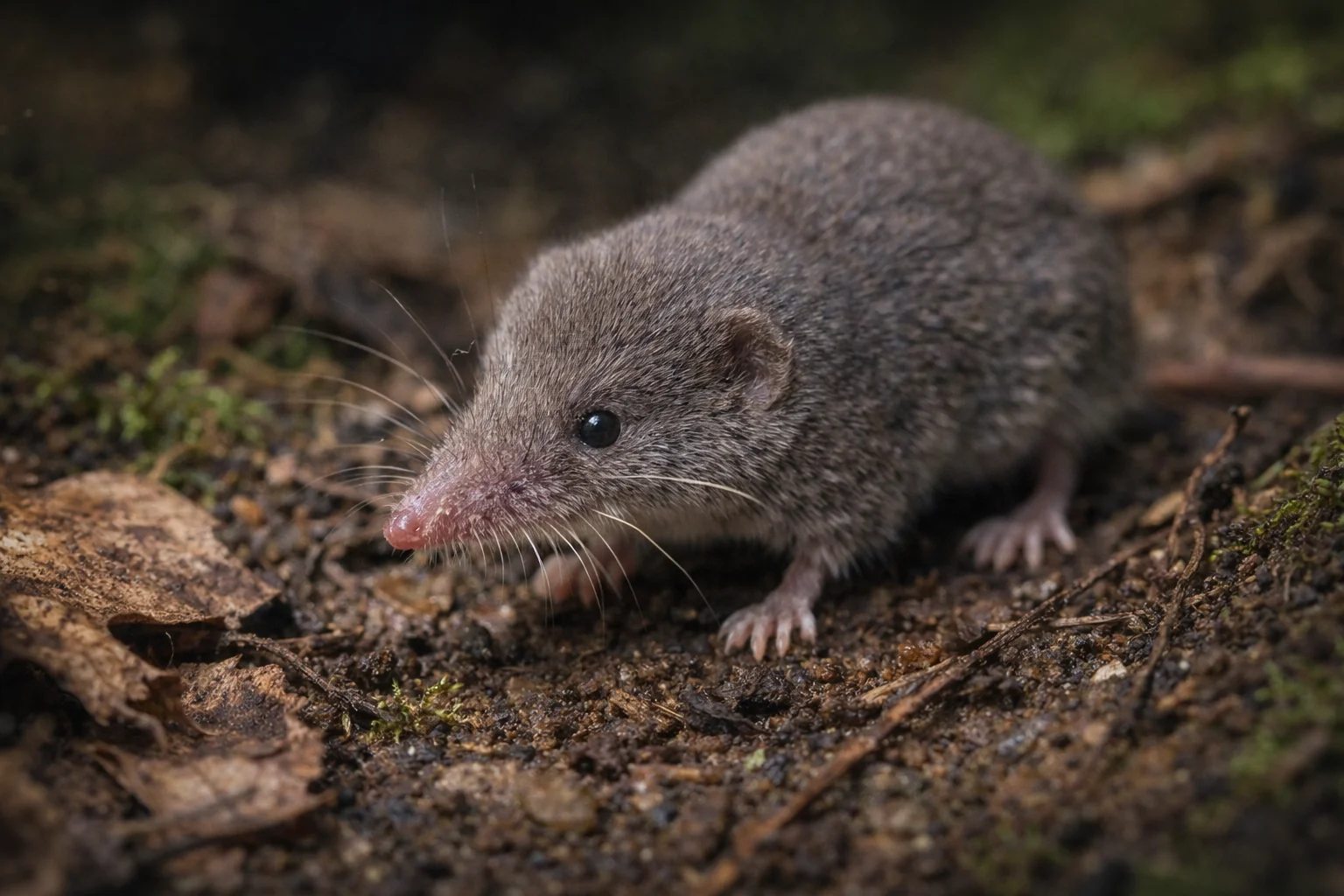
Stanley’s Dwarf Shrew is a newly described species belonging to the genus Crocidura, a large group of white-toothed shrews found across Africa, Asia, and Europe. The genus Crocidura contains hundreds of species, many of which are so small and physically similar that they are notoriously difficult to identify — even for trained scientists.
Crocidura stanleyi is classified within what researchers call the “Afromontane clade” — a group of minute shrews uniquely adapted to the high-altitude environments of the Ethiopian Highlands. This is a region of remarkable biodiversity, home to species found nowhere else on Earth.
What makes Stanley’s Dwarf Shrew distinct from its closest relatives is a combination of physical traits that do not appear together in any other known species: a noticeably flattened head, an unusually short and densely hairy tail, and a brownish-gray ticked coat with a bicoloured underside. These features, combined with definitive genetic evidence, confirmed it as an entirely new species.
Physical Description: How Small Is Stanley’s Dwarf Shrew?
To truly appreciate how tiny Stanley’s Dwarf Shrew is, consider this: it weighs approximately 3 grams — the same as a single sugar cube or a small paperclip. Its body stretches just 50.4 mm (about 5 centimetres), with a tail adding roughly 32.6 mm more.
The dorsal (top) fur is a ticked brownish-gray, with roots of slate gray and brown tips. The ventral (belly) side is slate gray with lighter tips, giving the shrew a two-toned appearance. The transition between the two colours along the flanks is notably abrupt — a feature scientists use to distinguish it from closely related species.
While Stanley’s Dwarf Shrew is extraordinarily small, it is not quite the world’s smallest mammal. That title belongs to the Etruscan Shrew (Suncus etruscus), which is marginally lighter. Nevertheless, Crocidura stanleyi ranks among the tiniest mammals ever formally documented.
The Discovery Story: A Decade in the Making
The story of Stanley’s Dwarf Shrew begins not in 2026, but in September 2015, in the rugged Simien Mountains of northern Ethiopia.
Veteran mammalogist William “Bill” T. Stanley of the Field Museum of Natural History in Chicago was conducting fieldwork when he captured an unusually small, distinctly featured shrew near Chennek Camp in Simien Mountains National Park, at an elevation of 3,597 metres above sea level. Stanley — a scientist renowned for his passion for African mammals — immediately sensed the specimen might be something special.
Tragically, just nine days after capturing that shrew, Bill Stanley suffered a sudden cardiac arrest and passed away in the field at the age of 58. He never had the chance to know what he had found.
The holotype specimen Stanley collected was carefully archived at the Field Museum. For years, it remained a clue without a conclusion — until a new generation of researchers took up the work.
In 2023, researcher Yonas Meheretu, working with the Swedish University of Agricultural Sciences (SLU), captured a second specimen at Mount Damota in southern Ethiopia, at approximately 2,600 metres elevation. The discovery of this second shrew provided the comparison needed to move forward.
Lead author Dr. Evan Craig of the University of Massachusetts Boston assembled a team that examined over 100 dwarf shrew specimens from institutions across the world — including the Natural History Museum in London, the Zoological Museum of Moscow State University, the World Museum in Liverpool, and the Institute of Vertebrate Biology of the Czech Academy of Sciences. Using advanced genetic analyses — including genome skimming, Illumina sequencing, and cytb phylogenetics — alongside detailed morphological study, the team confirmed that both the 2015 and 2023 specimens belonged to the same distinct, previously unnamed species.
The findings were published in the Journal of Vertebrate Biology in 2026, with Stanley’s Dwarf Shrew formally named Crocidura stanleyi in honour of the man whose final field catch made it all possible.
Where Does Stanley’s Dwarf Shrew Live?
Stanley’s Dwarf Shrew is found exclusively in the Ethiopian Highlands — one of the most biodiverse regions on the African continent. The confirmed localities include the western slopes of the Simien Mountains in northern Ethiopia and Mount Damota in the south, with records suggesting the species may tolerate a wide range of montane habitats across the highlands.
The elevation range observed — from approximately 2,600 to 3,597 metres above sea level — places this shrew in cool, high-altitude grasslands and montane forests. These environments are characterised by significant temperature swings, sparse vegetation, and extreme conditions that most small mammals would struggle to survive.
Ethiopia is exceptionally rich in endemic wildlife: the country hosts around 104 rodent species, 43 of which are found nowhere else but its highlands. Dozens of shrew species are likewise endemic to this region — yet many remain poorly documented because of how difficult they are to trap and study.
How Was It Trapped? The Pitfall Method
One reason tiny shrews like Crocidura stanleyi remain undiscovered for so long is that standard rodent traps are simply too large. A 3-gram shrew can walk right past a conventional live trap without triggering it.
The breakthrough came through pitfall trapping — a technique that involves sinking buckets or cylinders flush with the ground in areas of dense leaf litter and grass. Small animals moving through the undergrowth tumble in naturally. This method does not rely on bait or trigger mechanisms, making it far more effective for capturing the world’s tiniest mammals.
It was this technique that Yonas Meheretu specifically introduced during the 2023 fieldwork at Mount Damota — and it was responsible for delivering the decisive second specimen of Stanley’s Dwarf Shrew.
Diet and Behaviour
No confirmed dietary study has been conducted specifically on Stanley’s Dwarf Shrew yet. However, based on the well-documented feeding behaviour of other Crocidura species, scientists believe it preys primarily on small invertebrates — including arthropods, insect larvae, and worms.
Shrews as a group are famously metabolically intense. Their small body size means they lose heat rapidly, requiring near-constant feeding to maintain energy. For Stanley’s Dwarf Shrew, surviving at altitudes near 3,600 metres — where temperatures are low and prey may be seasonally scarce — likely demands remarkable physiological efficiency.
Why Does This Discovery Matter for Conservation?
The formal description of Stanley’s Dwarf Shrew is far more than a taxonomic exercise. It carries significant conservation implications.
Ethiopia’s highland biodiversity is under increasing pressure from habitat loss, agricultural expansion, and climate change. Species that are not officially named and documented cannot be legally protected — they simply do not exist on conservation registers.
By naming and describing Crocidura stanleyi, researchers have taken the first critical step toward mapping its distribution, understanding its population status, and ultimately advocating for targeted habitat protection in the Ethiopian Highlands.
As lead author Dr. Evan Craig put it: finding a three-gram mammal that evaded detection for years underscores how much biodiversity remains undocumented — even in regions that scientists believed were well-studied. Small, overlooked species can reach the brink of extinction before researchers even recognise them as distinct.
Frequently Asked Questions (FAQs)
What is Stanley’s Dwarf Shrew? Stanley’s Dwarf Shrew (Crocidura stanleyi) is a newly discovered species of tiny mammal found in the Ethiopian Highlands. It was formally described in 2026 and weighs approximately 3 grams, making it one of the smallest mammals on Earth.
Where was Stanley’s Dwarf Shrew discovered? It was first captured in 2015 in the Simien Mountains of northern Ethiopia and confirmed as a new species following a second capture at Mount Damota in southern Ethiopia in 2023. Both sites are in the Ethiopian Highlands at elevations between 2,600 and 3,597 metres.
Why is it called Stanley’s Dwarf Shrew? The species is named in honour of William “Bill” T. Stanley, a mammalogist at the Field Museum of Natural History in Chicago who caught the first specimen in 2015. Tragically, Stanley died of a cardiac arrest just nine days after his discovery, never knowing he had found a new species.
How small is Stanley’s Dwarf Shrew? It weighs approximately 3 grams — about the same as a sugar cube — and measures roughly 5 centimetres in body length. Its tail adds about 3.2 centimetres more.
Is Stanley’s Dwarf Shrew the world’s smallest mammal? No. While it is among the smallest mammals ever recorded, the Etruscan Shrew (Suncus etruscus) is slightly smaller. However, Crocidura stanleyi ranks among the tiniest mammals formally described by science.
What does Stanley’s Dwarf Shrew eat? Based on the feeding habits of related Crocidura species, it is presumed to eat small invertebrates such as insects, worms, and arthropods.
Is Stanley’s Dwarf Shrew endangered? Its conservation status has not yet been formally assessed. Scientists are currently building a map of its known distribution as a first step toward evaluating its conservation needs.
A Tribute Written in Nature
In the conclusion of their paper, the research team wrote that the name Crocidura stanleyi “not only commemorates his last fieldwork but also celebrates his enduring legacy and the indelible mark he left on mammalogy, conservation, and the many lives he touched with his mentorship and collaborative spirit.”
In his lifetime, Bill Stanley saw two other species named in his honour — a mouse and a frog. Stanley’s Dwarf Shrew is the third, and perhaps the most poignant: found in the very mountains where he drew his last breath, a three-gram creature that carries his name across the high, cold grasslands of Ethiopia for as long as it roams them.
Sources: Journal of Vertebrate Biology (Craig et al., 2025/2026); Swedish University of Agricultural Sciences (SLU); Discover Wildlife; Field Museum of Natural History, Chicago.
Related reads: Raimona Bent-toed Gecko: New Species Found in Assam, India , 9100-Meter Mystery Mollusc: New Deep-Sea Discovery Endangered Species Guide 2026