Why Is Wildlife Conservation Important? | Complete Guide
Understanding how wildlife conservation supports biodiversity, climate stability, and human life

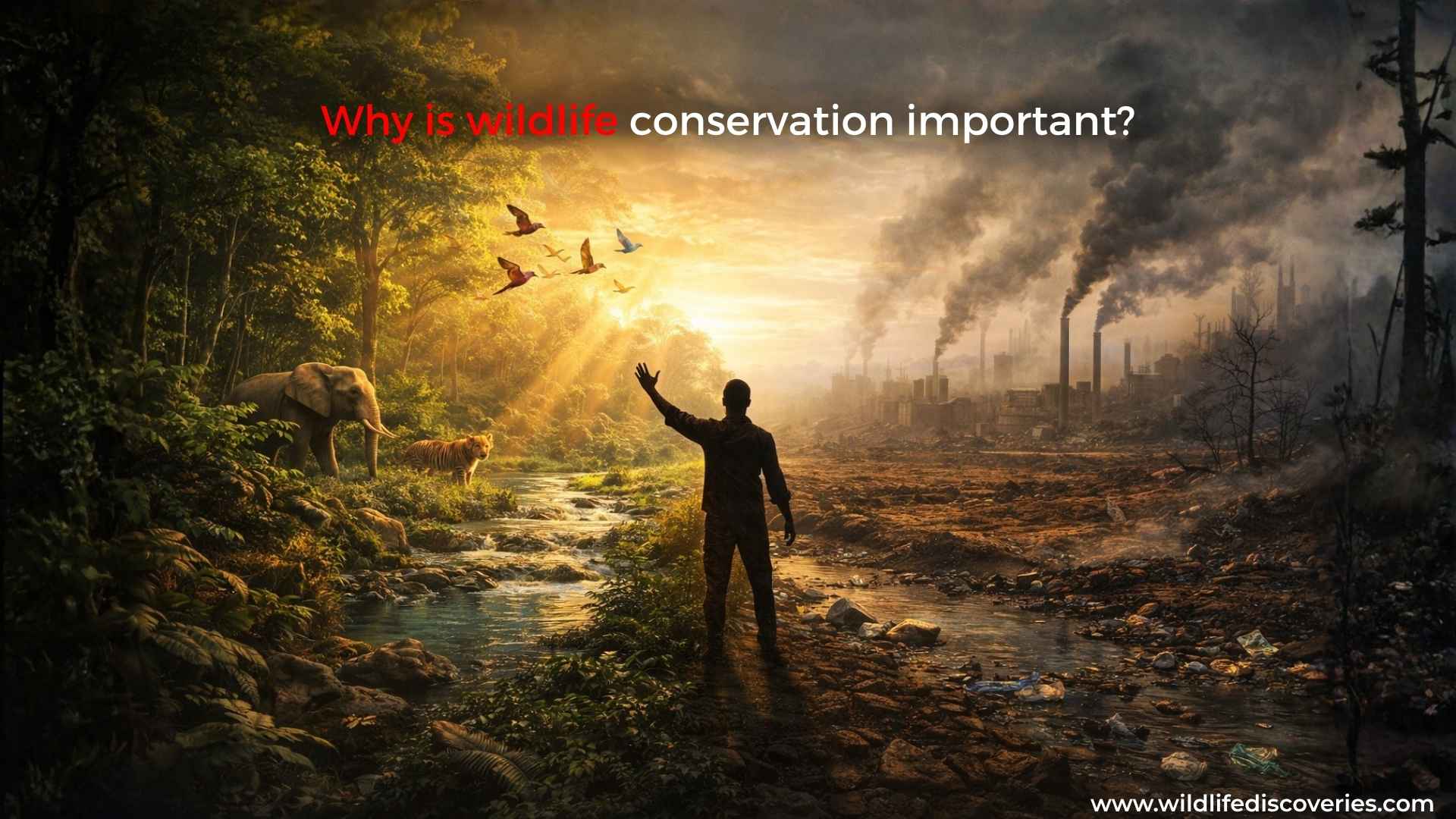
Every 24 hours, scientists estimate that dozens of species disappear from our planet — forever. That staggering reality sits at the heart of one of the most urgent questions of our time: why is wildlife conservation important?
The answer is not simply about saving tigers or protecting rainforests for aesthetic reasons. It runs far deeper — into the food we eat, the air we breathe, the medicines that heal us, and the stability of the very climate systems that sustain human civilization. Wildlife and wild places are not separate from human life. They are the foundation of it.
This guide breaks down the science, the stakes, and the solutions — in plain language, backed by real-world examples and expert insights — so you can fully understand why the conservation of animals and their habitats matters more today than at any point in human history.
Why Is Wildlife Conservation Important ?
Wildlife conservation is the practice of protecting wild animal and plant species along with their natural habitats. But to truly grasp its significance, we need to zoom out and look at the big picture.
Life on Earth exists as a deeply interconnected web. Every organism — from the smallest soil bacterium to the largest blue whale — plays a functional role in maintaining that web. When a single thread is pulled loose, the ripple effects can be catastrophic and irreversible.
The importance of wildlife conservation is not confined to environmental science. It spans economics, medicine, food security, cultural identity, and psychological well-being. Nations with thriving ecosystems tend to have more stable agricultural systems, cleaner water supplies, and even stronger tourism economies. Conversely, countries that have depleted their natural resources often face food insecurity, increased disease risk, and economic decline.
In short, protecting wildlife is not a luxury — it is a long-term survival strategy for the human species.
Key Reasons Why Wildlife Conservation Is Important
1. Preserving Biodiversity
Biodiversity refers to the variety of life on Earth — the millions of species of plants, animals, fungi, and microorganisms that share our planet. It is the biological wealth of the world, and it is disappearing at an alarming rate.
The current rate of species extinction is estimated to be 1,000 times higher than natural background rates, according to research published in Science. This is not a gradual natural process — it is a human-accelerated crisis.
Why does biodiversity matter? Because each species contributes something unique to the ecosystem. Genetic diversity within species provides the raw material for adaptation and resilience. Diverse ecosystems can better withstand environmental shocks like droughts, floods, and disease outbreaks. A world with fewer species is a world that is biologically weaker, less adaptable, and ultimately less capable of sustaining complex life — including us.
2. Ecosystem Balance and Stability
One of the most powerful arguments for conservation is the concept of ecosystem balance — the idea that all living organisms within an environment maintain a natural equilibrium through their interdependent relationships.
Consider the classic example of wolves in Yellowstone National Park. When wolves were reintroduced in 1995 after a 70-year absence, something extraordinary happened. The elk population, which had overgrazed riverbanks, began to regulate itself. Vegetation recovered. Rivers changed course as erosion slowed. Songbirds returned. Beavers came back, creating ponds that supported fish, otters, and ducks. The reintroduction of a single apex predator triggered what ecologists call a trophic cascade — a chain reaction of ecological recovery that transformed an entire landscape.
This example illustrates a fundamental truth: every species, no matter how inconvenient or feared, has a role to play. To better understand how these relationships function across different environments, you can explore our guide on different types of ecosystems and characteristics.
3. Protecting Endangered Species
Today, over 40,000 species are listed as threatened with extinction on the IUCN Red List. Among them are iconic animals like the Amur leopard (fewer than 100 remain in the wild), the Sumatran orangutan, the African elephant, and the vaquita porpoise — of which fewer than 10 individuals are believed to survive.
But endangered species aren’t just symbols of loss. Each one represents a unique evolutionary experiment — millions of years of adaptation encoded in DNA. When a species goes extinct, that genetic library is erased permanently. No technology can recreate it.
Furthermore, many endangered species serve as keystone species — organisms whose impact on the ecosystem is disproportionately large relative to their population. Remove them, and the entire ecosystem can collapse. If you want to learn more about what’s already been lost, our article on [animal extinctions: how many species are extinct] provides a sobering and detailed overview.
Protecting wildlife starts with understanding which species are at risk and why. From habitat destruction to illegal trade, many factors are pushing animals toward extinction at an alarming rate. If you want a deeper understanding of these threats, along with a detailed list of vulnerable animals and conservation efforts, you can explore our Endangered Species Guide 2026, which breaks down everything you need to know in a simple and informative way.
4. Climate Change Mitigation
Wildlife and wild habitats are among Earth’s most powerful tools against climate change. Forests, wetlands, and oceans act as massive carbon sinks, absorbing billions of tonnes of CO₂ each year and preventing runaway warming.
The Amazon rainforest alone stores an estimated 150–200 billion tonnes of carbon. When forests are cleared and wildlife displaced, that carbon is released into the atmosphere. Deforestation currently accounts for roughly 10–15% of annual global greenhouse gas emissions — more than the entire global transport sector.
Healthy oceans, supported by thriving marine wildlife, absorb around 30% of all CO₂ emitted by humans. Phytoplankton — microscopic marine organisms — are responsible for roughly half of all oxygen production on Earth. Their health depends on the health of the broader marine ecosystem.
Conservation is therefore not separate from the climate agenda — it is one of its most cost-effective pillars.
Importance of Wildlife Conservation for Humans
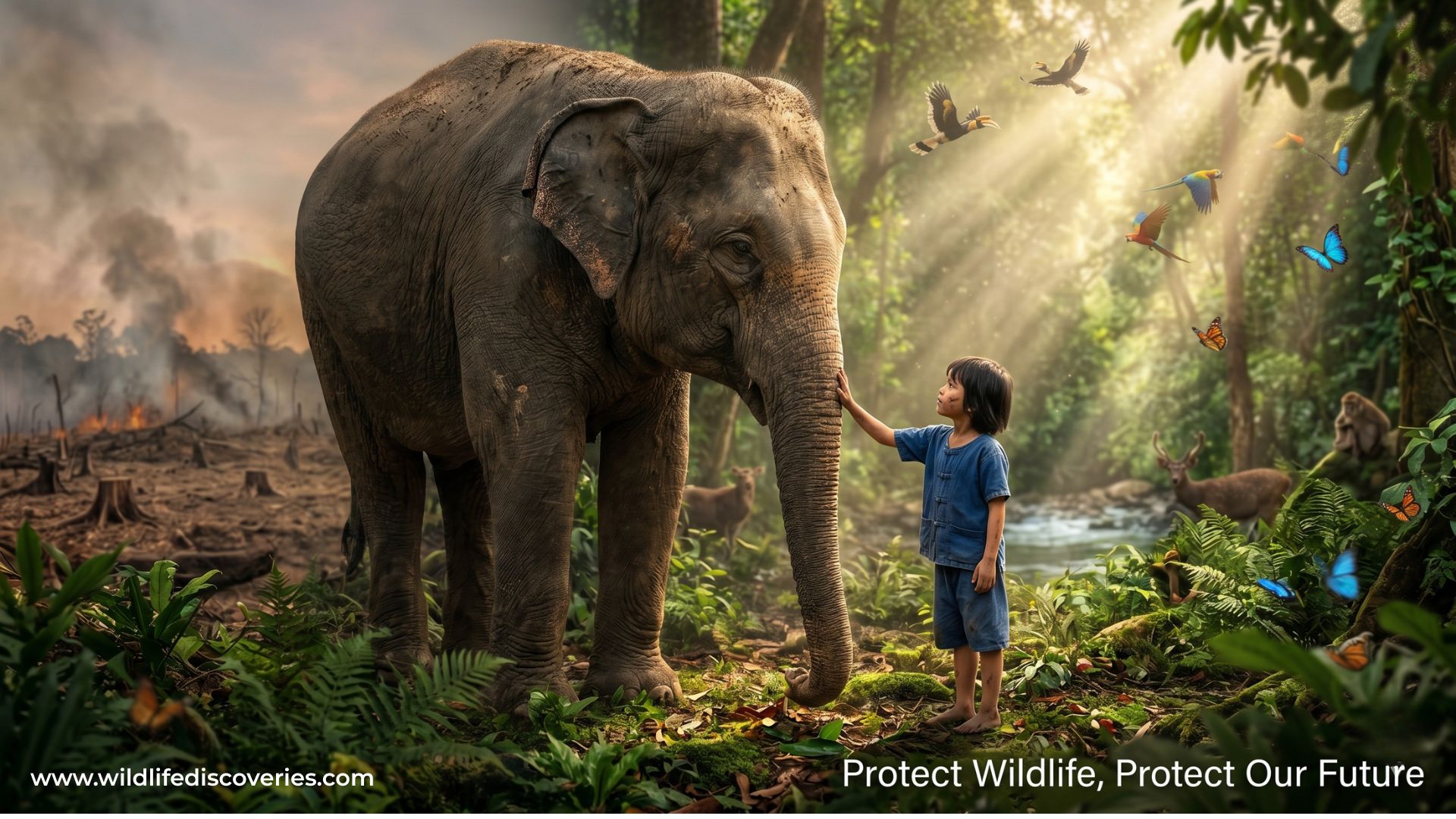
It may seem counterintuitive, but protecting wildlife is fundamentally an act of self-preservation for humanity. Here is how wild species directly support human life:
Medicine and Pharmaceuticals
An estimated 50% of modern medicines have their origins in natural compounds derived from plants, animals, fungi, or microorganisms. The cancer drug Taxol comes from the Pacific yew tree. Aspirin’s active compound was originally derived from willow bark. Certain cone snail venoms are being studied for powerful painkiller applications. The anticoagulant heparin is extracted from animal tissue.
Every species that goes extinct potentially takes with it compounds we have not yet discovered — future cures for diseases we haven’t yet named.
Food Security and Agriculture
Wild bees and other pollinators are responsible for fertilizing about 75% of the world’s major food crops — including fruits, vegetables, nuts, and seeds. Without these wild species, global agricultural output would collapse. Yet bee populations worldwide are in dramatic decline due to pesticide use, habitat loss, and disease.
Wild genetic diversity in plants also serves as a biological insurance policy for agriculture. When crop diseases emerge, scientists often turn to wild relatives of domesticated plants to find disease-resistant genes. Without wild populations, that genetic reservoir disappears.
Clean Water and Air
Forests and wetlands act as natural water filters and regulators. Trees intercept rainfall, recharge groundwater, and reduce flooding. Wetlands filter pollutants before they enter rivers and lakes. When wildlife habitats are destroyed, water quality deteriorates, flooding increases, and human communities bear the cost.
Mental and Cultural Well-being
Research consistently shows that exposure to nature reduces stress, anxiety, and depression. Wild landscapes and wildlife hold immense cultural, spiritual, and recreational value for billions of people worldwide. Indigenous communities, in particular, maintain deep and millennia-old relationships with the natural world — relationships that are inseparable from their identity and knowledge systems.
Role in Ecosystem Balance
Ecosystems function like finely tuned machines. Each part has a job. Remove or damage enough parts, and the whole system can fail in ways that are difficult — or impossible — to reverse.
Apex predators like lions, sharks, and wolves regulate prey populations, preventing overgrazing and maintaining vegetation cover. Decomposers like fungi and bacteria recycle nutrients, making soil fertile. Pollinators enable plant reproduction. Seed dispersers like elephants and fruit bats spread plant species across landscapes, maintaining forest diversity.
This balance doesn’t just benefit wildlife. It provides the ecosystem services upon which all human economies ultimately depend: clean air, clean water, fertile soils, stable climate, flood regulation, and disease control. The World Bank estimates the value of ecosystem services at $125–145 trillion per year — roughly double global GDP.
Threats to Wildlife
Understanding why conservation is important requires understanding what endangers wildlife in the first place. The main drivers of wildlife loss include:
- Habitat destruction: Deforestation, wetland drainage, urban sprawl, and agricultural expansion destroy the homes of countless species. Habitat loss is the single greatest driver of biodiversity decline globally.
- Poaching and illegal wildlife trade: The illegal wildlife trade is worth an estimated $23 billion annually, making it one of the world’s most lucrative criminal enterprises. It has pushed species like rhinos, pangolins, and tigers to the brink.
- Climate change: Shifting temperatures and precipitation patterns alter habitats faster than many species can adapt. Coral bleaching events, driven by ocean warming, have devastated reef ecosystems worldwide.
- Pollution: Plastic waste, agricultural chemicals, and industrial pollutants poison wildlife and degrade habitats from the deep ocean to the high mountain.
- Invasive species: Non-native species introduced to new environments can outcompete, predate upon, or transmit disease to native wildlife, causing local extinctions.
Did You Know? Key Facts About Wildlife Conservation
Key Facts Box
- Over 1 million species face extinction in the coming decades, according to the UN’s IPBES report.
- Pollinators contribute to the production of food worth $577 billion annually worldwide.
- Marine ecosystems cover 70% of Earth’s surface and produce more than 50% of its oxygen.
- Elephants are known as “ecosystem engineers” — their movements create waterholes used by dozens of other species.
- A single tropical tree can support hundreds of species of insects, birds, and epiphytic plants.
- Nature-derived compounds are present in approximately 50% of approved drugs over the past 30 years.
- The Bald Eagle — once nearly extinct due to DDT — recovered to over 300,000 individuals thanks to conservation efforts.
Benefits of Wildlife Conservation
When conservation efforts succeed, the benefits multiply across society:
1. Economic returns: Ecotourism generates hundreds of billions of dollars annually. Kenya’s wildlife tourism supports hundreds of thousands of jobs. The Galapagos Islands generate over $400 million per year primarily from wildlife-based tourism.
2. Scientific discovery: Wild species and ecosystems are laboratories for biology, medicine, and material science. Biomimicry — the engineering practice of copying natural designs — has given us Velcro (inspired by burrs), radar improvements (inspired by bats), and self-cleaning surfaces (inspired by lotus leaves).
3. Climate resilience: Conserved forests and wetlands buffer communities against the extreme weather events driven by climate change — floods, droughts, and heatwaves.
4. Cultural continuity: Protecting wildlife means protecting landscapes that hold deep cultural and spiritual significance for billions of people around the world.
How We Can Protect Wildlife
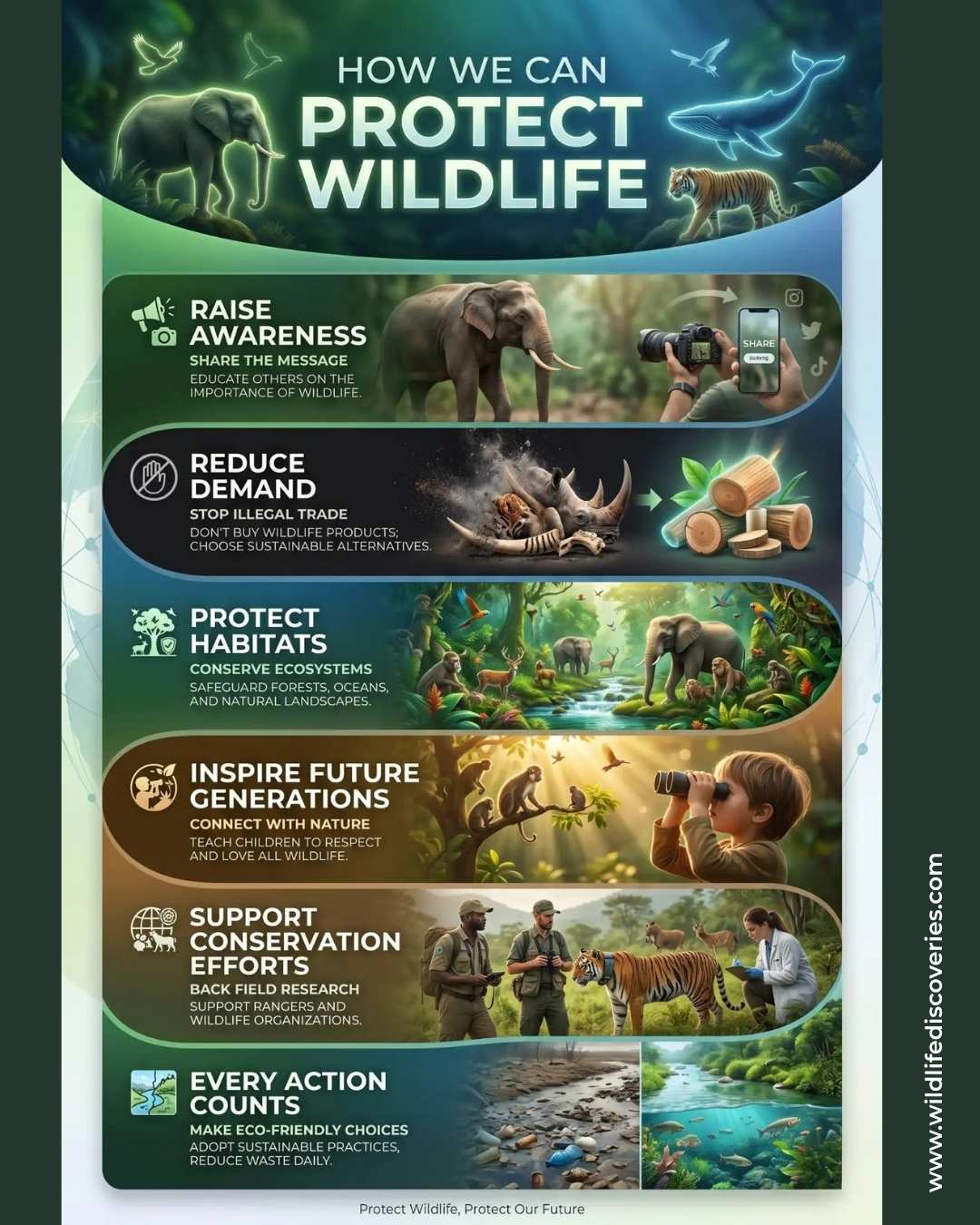
Conservation is not only the domain of governments and scientists. Every person, community, and organization has a role to play. Here are evidence-based strategies that work:
Policy and Legal Frameworks
Strong legal protections — like the Endangered Species Act in the US and CITES internationally — create the scaffolding for conservation. Expanding protected area networks and enforcing anti-poaching laws are foundational steps.
Community-Based Conservation
When local communities benefit economically from wildlife — through tourism, sustainable harvesting, and stewardship payments — they become powerful conservation allies. Community conservancies in Namibia have helped recover populations of black rhino and desert-adapted elephants.
Habitat Restoration
Rewilding projects across Europe, North America, and Asia are restoring degraded landscapes and reintroducing lost species. These projects show that extinction is not inevitable — recovery is possible with sustained effort.
Individual Action
Reducing consumption of products linked to deforestation (like unsustainable palm oil and beef), supporting conservation organizations, choosing wildlife-friendly tourism, and reducing plastic use all make a measurable difference at scale. Our article on [what can we do to protect endangered animals] offers a comprehensive and practical action plan.
Understanding the difference between protecting individual animals and broader species conservation is also important. If you’re curious about how these ethical frameworks compare, our guide on the [difference between animal rights and animal welfare] explores this nuanced topic in depth.
Ultimately, each of us has the power to contribute. If you’re wondering [how you can take care of animals] in your daily life — from wildlife-friendly gardening to responsible pet ownership — small actions, taken collectively, have a profound impact.
Frequently Asked Questions (FAQs)
1. Why is wildlife conservation important for the environment?
Wildlife conservation maintains biodiversity and ecosystem balance, which are the foundations of clean air, clean water, fertile soils, and a stable climate. Without healthy wild species populations, ecosystems degrade and lose their ability to provide the services that all life — including humans — depends upon.
2. How does wildlife conservation help humans?
Wild species provide raw materials for medicine, support agriculture through pollination, regulate climate through carbon sequestration, filter water through natural processes, and underpin multi-billion-dollar tourism and recreation industries. Conservation of animals is, in a very real sense, conservation of human welfare.
3. What are the biggest threats to wildlife today?
The primary threats are habitat destruction, climate change, poaching and illegal trade, pollution, and invasive species. Of these, habitat loss is considered the most significant driver of biodiversity decline globally.
4. What is the relationship between wildlife conservation and climate change?
Wild habitats — forests, wetlands, and oceans — are critical carbon sinks that absorb CO₂ and slow global warming. Losing wildlife habitats releases stored carbon, accelerates climate change, and creates a feedback loop that further damages biodiversity. Conservation and climate action are therefore deeply interdependent strategies.
5. Which animals are most at risk of extinction?
According to the IUCN Red List, the most critically endangered animals include the Amur leopard, Sumatran orangutan, vaquita porpoise, Javan rhino, Cross River gorilla, and Hawksbill sea turtle. Freshwater species and insects are also experiencing alarming decline that often goes underreported.
6. Can extinct species come back through technology like de-extinction?
De-extinction technologies — such as cloning and gene editing — are advancing, but they remain highly experimental and are not viable conservation tools at present. Reviving a species without a functioning habitat would also be impossible. Prevention through conservation remains far more effective, realistic, and ethical than attempting technological resurrection.
7. How effective are protected areas in conserving wildlife?
Research shows that well-managed protected areas are among the most effective tools available. A 2019 study published in Science Advances found that protected areas contain significantly higher biodiversity than unprotected land. However, protection must be paired with enforcement, community engagement, and connectivity between habitats to be most effective.
8. What role do ordinary people play in wildlife conservation?
Individuals can support conservation through sustainable consumption choices, supporting reputable wildlife charities, engaging in citizen science, advocating for conservation policy, and reducing their environmental footprint. Collective individual action shapes markets, policies, and cultural norms — all of which have significant wildlife impacts.
Conclusion
The question of why wildlife conservation is important ultimately resolves to this: we cannot afford to treat the natural world as expendable. Every species lost is a thread removed from the web of life — and every thread that breaks makes the whole web weaker, including the part that holds us.
The good news is that conservation works. When protected, species recover. When rewilded, landscapes regenerate. When communities are engaged, wildlife and people can thrive together. The science is clear, the tools exist, and the examples of success are real.
What remains is the collective will to act — in the corridors of power, in the choices of the marketplace, and in the daily decisions of billions of individuals who share this remarkable planet.
The wildlife of Earth does not need our charity. It needs our understanding — and our action.
This article was written with contributions from environmental science research, IUCN Red List data, peer-reviewed conservation biology literature, and real-world conservation case studies.