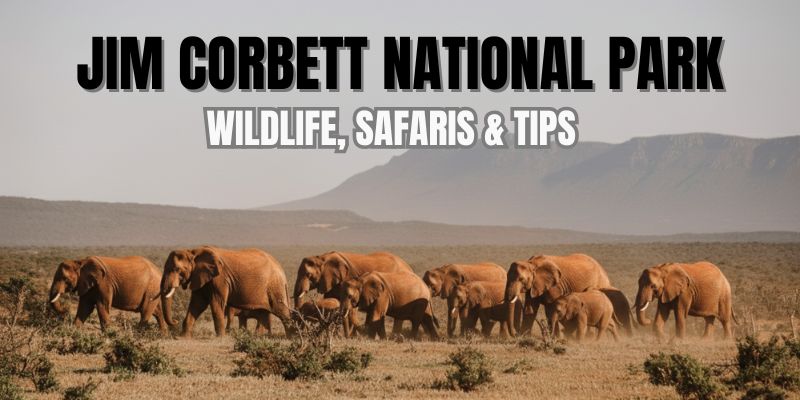
Jim Corbett National Park, 87 years old, stands proudly as India’s first national park with 350 tigers that roam its expansive terrain. This historical sanctuary lies in Uttarakhand’s Nainital district and spans 1,318 square kilometers of varied landscapes, including dense forests and scenic river banks.
The park’s incredible biodiversity never fails to amaze visitors. Its rich ecosystem supports 50 mammal species, 580 bird species, and 25 reptile species. Recent studies suggest even higher numbers, with reports indicating 52 mammal species and 600 bird varieties. Nature enthusiasts can plan their visits between mid-September and early June. Tiger sightings become more frequent from March through June, making it an ideal time for a thrilling safari in Corbett.
The park’s booking system requires reservations 45 days ahead for safari permits. This gives visitors enough time to prepare for their wildlife adventure in this remarkable ecosystem. This piece provides all essential details about experiencing this magnificent park’s natural wonders, including the popular jeep safari options.
The origin and legacy of Jim Corbett National Park
The story of Jim Corbett National Park Uttarakhand started well before it became a protected area. The British forest department took control of the land in 1868 and banned cultivation and cattle stations. The forests became a reserve in 1879, which allowed limited tree felling.
How the park was established in 1936
British officials E.R. Stevans and E.A. Smythies first thought about creating a national park in this region during the early 1900s. The British administration didn’t seriously consider the idea of a game reserve until 1907.
The 1930s saw the beginning of formal area marking for the protected zone. The authorities established a reserve area of 323.75 km² (125 square miles) in 1936, naming it Hailey National Park. This became Asia’s first national park. Sir Malcolm Hailey, who served as the Governor of United Provinces at that time, gave his name to the park.
The new rules banned killing and capturing mammals, reptiles, and birds within the park’s boundaries. The authorities allowed timber cutting only for household needs in the area.
Why it was named after Jim Corbett
The park’s name changed several times after India became independent. The authorities called it Ramganga National Park briefly in 1954-55. The park got its current name – Jim Corbett National Park – in 1955-56 to honor the legendary British hunter-turned-conservationist.
Jim Corbett’s deep knowledge of the region and groundbreaking conservation work played a crucial role in creating the park. His love for Indian wilderness and its creatures made him lead vital conservation projects. His well-known book “Man-Eaters of Kumaon“, published in 1944, helped people understand why India’s wildlife needed protection.
Role in Project Tiger and conservation history
The park reached its most important milestone in 1973 when authorities chose it to launch Project Tiger. This bold program wanted to save Bengal tigers from extinction. Jim Corbett National Park became India’s first Tiger Reserve under this initiative.
The park’s selection as Project Tiger’s starting point showed its ecological value and made it the life-blood of India’s wildlife conservation movement. The park now has about 164 tigers, one of the highest tiger populations in India, thanks to dedicated conservation work.
Jim Corbett National Park protects more than 600 elephants and many other species today. The park covers 520.8 km² (201.1 square miles) and is part of the larger Corbett Tiger Reserve, which spans 1,288 square kilometers including nearby protected areas.
Jim Corbett National Park Uttarakhand has transformed from a hunting ground into a globally recognized wildlife sanctuary. It sets an inspiring example for conservation efforts in Asia, offering visitors a chance to experience a true wildlife adventure through its various safari zones.
Geography and climate of the park
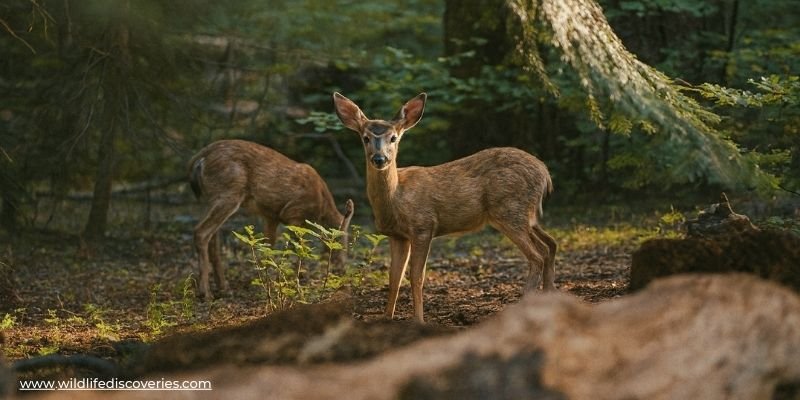
Jim Corbett National Park lies at the foot of the Himalayas with a remarkable landscape that makes it perfect for biodiversity. The park’s unique terrain and climate create ideal conditions that help diverse flora and fauna thrive year-round.
Location in Uttarakhand and terrain features
Jim Corbett National Park Uttarakhand spans across Nainital district and extends into Pauri Garhwal district. The park’s area splits between Pauri Garhwal (312.86 sq. km) and Nainital (208.14 sq. km). The beautiful Patli Dun valley, shaped by the Ramganga River, creates a varied topographical landscape.
The park’s elevation changes by a lot from 360 meters (1,180 ft) to 1,040 meters (3,410 ft) above sea level. These height variations help create the park’s unique micro-habitats. Jim Corbett National Park sits in a sub-Himalayan belt, right between the Lesser Himalaya to the north and the Siwalik Hills to the south.
Jim Corbett National Park Uttarakhand’s charm comes from its diverse terrain. The land features many ravines, ridges, small streams, and plateaus with different aspects and slopes. The park covers 1,288.31 sq. km total, with an 822 sq. km core zone and a 466.31 sq. km buffer area. Dense moist deciduous vegetation fills the forest, where sal, haldu, peepal, rohini, and mango trees dominate the scenery.
Seasonal weather patterns
Jim Corbett National Park’s climate stays more temperate than most Indian protected areas. The park experiences three distinct seasons – summer, monsoon, and winter – each bringing its own weather patterns.
Winter months from October to February see temperatures between 5°C and 30°C. Mornings bring fog but afternoons turn pleasant and warm. Animals love to come out and bask in the winter sun, making it an excellent time for a Jim Corbett safari.
Temperatures climb up to 40°C during summer (March to June). Hot winds sweep through the region in May-June and create dust clouds until thunderstorms clear the air. The park receives about 1133mm of rain yearly.
Monsoon season hits from mid-June to September with heavy rainfall. The humidity rises to 60-70%, making the air heavy and sultry. These rains cool down the scorching summer heat.
Best time to visit based on climate
Your wildlife viewing goals should determine when you visit Jim Corbett National Park. The park welcomes visitors between mid-November and June, and different safari zones follow specific schedules:
| Zone | Opening Period |
| Dhikala | November 15 to June 15 |
| Bijrani | October 15 to June 30 |
| Jhirna | Year-round |
| Sonanadi | October 15 to June 30 |
Tiger spotting works best between April and mid-June. Animals visit water holes more often during these hot months, which increases your chances of seeing them. Birdwatchers should come during winter (November to February) when migratory birds flock to the park.
The monsoon brings heavy rain and partial closures, especially in Bijrani and Dhikala zones where roads wash away. The Jhirna zone stays available all year. Visitors should watch out for landslides and soil erosion during this time.
Temperature plays a big role in planning your trip to Jim Corbett National Park Uttarakhand. December-January mornings feel quite cold and you’ll want warm clothes, while April-May afternoons call for protection from the heat.
Flora and fauna diversity
Jim Corbett National Park stands as one of India’s most precious ecological treasures. The park’s rich biodiversity supports countless plant and animal species in its extraordinary natural habitat that has evolved through centuries in Uttarakhand.
Major tree species and forest types
Dense moist deciduous forests cover about 75% of Jim Corbett National Park Uttarakhand. The Botanical Survey of India reports nearly 600 plant species in the park, from trees and shrubs to ferns, grasses, climbers, herbs, and bamboo.
Sal trees (Shorea robusta) have altered the map of the park. You’ll find them growing among other notable species like Khair and Sissoo. Chir Pine, the park’s only conifer, grows on ridge-tops and at lower elevations in places like Gajar Sot. The park has distinct sections of bamboo forests where Male Bamboo (Dendrocalamus strictus) shows off its stout stems and shining papery sheaths.
Mammals found in the park
Jim Corbett National Park has become a premier wildlife destination with more than 50 mammal species. The Royal Bengal Tiger rules as the park’s flagship species. Recent surveys show about 260 tigers, creating one of India’s densest tiger populations at 20 per 100 square kilometers.
The park’s wildlife diversity amazes visitors with roughly 1,100 elephants that migrate between Corbett and Rajaji National Park. Wildlife enthusiasts can spot big cats like leopards, jungle cats, fishing cats, and leopard cats. Herbivores such as barking deer, sambar deer, hog deer, chital (spotted deer), and wild boar are also common sights during a jungle safari. Other notable species include sloth bears, Asiatic black bears, Indian gray mongoose, otters, yellow-throated martens, Himalayan goral, Indian pangolins, langur, and rhesus macaques.
Birds, reptiles, and aquatic life
Jim Corbett National Park Uttarakhand boasts an impressive collection of about 600 bird species, both resident and migratory. Birdwatchers can spot the great pied hornbill, white-backed vulture, Hodgson’s bushchat, Pallas fish eagle, and tawny fish owl. The park is also home to colorful species like paradise flycatchers, crested serpent eagles, and peacocks.
The park’s reptilian residents include 33 species such as the Indian python, king cobra, common cobra, Russell’s viper, mugger crocodile, and critically endangered gharial. The rivers—Ramganga, Palain, Sonanadi, Kosi, and Mandal—teem with freshwater fish. The golden mahseer (Tor putitora) stands out with its sap-green body and bright orange scales, drawing anglers from around the world.
Rare and endangered species
Jim Corbett National Park serves as a vital sanctuary for endangered species. The Ramganga River shelters about 400 gharials, one of the world’s largest and most endangered crocodilians. The Bengal tiger population thrives here despite facing threats elsewhere.
The park protects several other endangered species including the white-rumped vulture, red-headed vulture, and black-bellied tern, plus the majestic Asiatic elephant. The golden mahseer finds one of its best-preserved habitats in the park’s Ramganga River, especially important as dam construction threatens its breeding grounds elsewhere.
Safari experience in Jim Corbett National Park
Learning about wildlife in Jim Corbett National Park turns into an exciting adventure with its hosted safari system. Visitors get amazing chances to see tigers, elephants, and other magnificent creatures in their natural habitat across the park’s varied landscape.
Types of safaris: Jeep, Canter
Jim Corbett National Park Uttarakhand has two main safari options. Jeep safaris can take up to 6 adults and you’ll find them in most zones like Bijrani, Jhirna, Dhela, and Durgadevi. These open 4×4 vehicles let you reach narrow trails and hidden spots where you’re more likely to spot wildlife. A skilled safari driver and knowledgeable forest guide accompany each jeep, enhancing your wildlife adventure.
The Dhikala Zone features Canter safaris with 16-seater open vehicles. Indian nationals pay around ₹2600 while foreigners pay ₹5000 for this shared safari experience. These safaris run twice each day at 6:00 AM and 12:00 PM and last about five hours.
Popular zones: Dhikala, Bijrani, Jhirna, Dhela
The Dhikala Zone is the crown jewel of Jim Corbett National Park. This zone boasts dense wildlife populations and features wide grasslands called Chaurs, thick Sal forests, and the Ramganga River’s various channels. Visitors come here mainly to spot Royal Bengal tigers and Asiatic elephants.
Bijrani Zone’s mixed landscape of thick forests and open meadows creates stunning natural views. This zone welcomes 30 jeeps per change and tops the list for day safari visitors. The Bijrani gate serves as the main entry point for this popular zone.
Unlike other zones that close during monsoon, Jhirna Zone stays open year-round. Dhela Zone also welcomes visitors throughout the year, making both perfect for off-season trips. The Dhangadi gate provides access to the Dhela zone.
Safari timings and permit process
The park adjusts safari timings with seasons. Winter safaris (November-February) usually start at 6:30 AM, while summer ones (March-June) begin earlier at 5:30-6:00 AM. You can book your safari 45 days before your visit.
Every safari needs entry permits, authorized vehicles, and registered guides. The park doesn’t allow private vehicles inside. Morning safari and afternoon safari options are available in most zones, with specific timings varying by season.
Tips for better wildlife sightings
Here’s how to make the most of your wildlife viewing during a Jim Corbett safari:
- Pick experienced local guides who understand animal patterns and can spot pug marks
- Choose clothes in neutral colors that match the surroundings
- Keep quiet because animals react quickly to human voices
- Plan your visit between February and May when fallen leaves improve visibility
- Skip perfumes or scented products that might alert animals
- Look for territory markings and other signs of animal presence
- Be patient and observant, especially near water bodies where animals gather
- Respect park rules and maintain a safe distance from wildlife
A safari in Jim Corbett National Park Uttarakhand gives you a rare chance to see India’s magnificent wildlife up close while respecting their home in the core areas of this protected wilderness.
Conservation efforts and challenges
Jim Corbett National Park faces significant challenges that threaten its delicate ecosystem, despite its conservation achievements. The park’s struggle to balance protection with mounting pressures becomes evident to visitors.
Human-wildlife conflict and encroachment
The park’s surrounding human settlements create unavoidable tension. Tiger and leopard attacks claimed 16 lives in just two months. Tigers killed 59 people and injured 128 between 2000-2022. The number of human casualties, cattle attacks, and crop damage has decreased over time. This improvement stems from awareness programs, electric fencing, and alternative ways to earn a living.
Invasive species and habitat loss
Native biodiversity faces serious threats from exotic weeds like Lantana, Parthenium and Cassia. Lantana camara shows 100% presence in Jhirna range with 2,820 plants per hectare. These invasive species create dense thickets that stop grass from growing and affect herbivore populations. The park’s team has successfully cleared Lantana from 1,600 hectares, which helped restore grasslands.
Ecological value and economic effect
Jim Corbett National Park Uttarakhand generates substantial economic benefits of ₹14.7 billion each year. The park’s ecosystem services include gene-pool protection (₹10.65 billion), water supply (₹1.61 billion), and job creation (₹82 million). These numbers highlight the park’s value beyond its role in wildlife conservation.
Conclusion
Jim Corbett National Park is a remarkable sanctuary that shows India’s dedication to wildlife conservation. The park started modestly in 1936 and became the launch site for Project Tiger in 1973. Today, it serves as the life-blood of tiger conservation efforts across the nation.
Visitors to Jim Corbett National Park in Uttarakhand have a chance to see wildlife in their natural habitat. The park’s dense forests are home to about 260 tigers and 1,100 elephants. Many other species thrive here too, making it one of India’s most vibrant ecosystems. The park offers various safari options that help people watch wildlife while protecting nature’s delicate balance.
The park’s ecosystem flourishes with over 600 plant species and 600 bird varieties. Notwithstanding that, several challenges exist. Human-wildlife conflict and invasive species pose threats to native habitats. Yet the park continues to bring ecological and economic benefits to the region.
Jim Corbett National Park offers memorable experiences in every season. Winter attracts birdwatchers while summer brings tiger enthusiasts. The park’s landscape ranges from dense sal forests to sprawling grasslands. These distinct microhabitats support its rich biodiversity.
The park stands as more than just a wildlife sanctuary – it’s a living symbol of conservation history. Our time here reminds us that these natural treasures need constant protection. Through awareness and responsible tourism, future generations will also experience the park’s wonders.
Key Takeaways
Jim Corbett National Park offers an incredible wildlife experience as India’s first national park, established in 1936 and home to one of the world’s highest tiger densities. Here are the essential insights for planning your visit:
• Book safaris 45 days in advance – Popular zones like Dhikala fill up quickly, especially during peak tiger viewing season from March to June.
• Visit between November-June for optimal wildlife viewing – Summer months offer best tiger sightings at water holes, while winter provides excellent bird watching opportunities.
• Choose your safari zone strategically – Dhikala offers the richest wildlife experience, while Jhirna and Dhela zones remain open year-round including monsoon season.
• Hire experienced local guides and maintain silence – Expert guides know animal movement patterns, and quiet behavior significantly increases your chances of wildlife encounters.
• The park supports crucial conservation efforts – With 260 tigers and 1,100 elephants, Corbett generates ₹14.7 billion annually in ecosystem services while facing ongoing challenges from human-wildlife conflict.
This remarkable sanctuary continues to balance wildlife protection with sustainable tourism, making it a must-visit destination for nature enthusiasts seeking authentic Indian wilderness experiences.
FAQs
Q1. Which safari zone in Jim Corbett National Park offers the best wildlife viewing experience? The Dhikala Zone is widely considered the best for wildlife viewing. It features vast grasslands, breathtaking landscapes, and offers the highest chances of spotting Bengal tigers and other diverse wildlife.
Q2. What should I wear for a safari in Jim Corbett National Park? Wear comfortable, lightweight clothing in neutral colors. Long-sleeved shirts and pants are recommended for protection from sun and insects. Layer your clothing as temperatures can vary throughout the day.
Q3. When is the ideal time to visit Jim Corbett National Park for a safari? The best time for safaris is from October to February. This period offers pleasant weather and excellent visibility of birds and animals. For tiger sightings specifically, March to June is recommended as animals frequently visit water holes during these hotter months.
Q4. How can I increase my chances of spotting a tiger in Jim Corbett? To improve your chances of tiger sightings, visit during the summer months (March to June), hire an experienced local guide, maintain silence during the safari, and opt for early morning or late afternoon safaris when tigers are more active.
Q5. What conservation challenges does Jim Corbett National Park face? The park faces several conservation challenges, including human-wildlife conflict due to nearby settlements, invasive plant species threatening native biodiversity, and balancing tourism with wildlife protection. Despite these challenges, the park continues to play a crucial role in tiger conservation and provides significant ecological and economic benefits to the region.