Every living creature deserves a life free from cruelty, neglect, and unnecessary suffering. This simple idea sits at the heart of the Animal Welfare Act, a piece of legislation designed to safeguard animals from mistreatment across homes, farms, laboratories, and public spaces. As awareness around animal rights grows, more people are asking what this law actually covers, who it protects, and how it is enforced.
The Animal Welfare Act was introduced to fill a long-standing gap in how animals were treated under the law. Before such legislation existed, there was little legal accountability for cruelty, poor housing conditions, or exploitative commercial practices involving animals. Today, the Act acts as a legal backbone that defines minimum standards of care and lays out consequences for violations.
It is worth remembering that the Animal Welfare Act is not a static document. Lawmakers periodically review and revise it as new welfare concerns emerge, whether from advances in veterinary science, changes in farming practices, or growing pressure from animal rights groups. Understanding the Act, therefore, is not just about memorizing rules; it is about appreciating an evolving relationship between law, ethics, and the animals that share our world.
What the Act Is and Why It Exists?
At its core, the Animal Welfare Act exists because animals cannot advocate for themselves. Without a dedicated law, cases of cruelty often went unpunished, and there was no standardized way to judge what counted as acceptable treatment. The Act gives authorities a legal basis to intervene, inspect facilities, and penalize those who violate basic welfare standards.
Brief History and Background of Animal Welfare Legislation
Animal welfare legislation has evolved over decades, shaped by growing public concern and scientific understanding of animal sentience. Early laws were narrow, often focused only on farm animals or domestic pets. Over time, governments expanded these laws to cover research animals, wildlife in captivity, and commercial breeding operations. Each amendment to the Act generally reflects new evidence about animal cognition, welfare science, and public expectations around ethical treatment.
Key Objectives and Scope of the Act
Understanding the objectives of the Animal Welfare Act helps clarify why certain rules exist and who they are meant to protect.
Animals and Entities Covered Under the Act
The scope of the Act typically includes:
- Domestic pets such as dogs, cats, and other companion animals
- Farm animals raised for food, dairy, or labor
- Animals used in scientific research and testing facilities
- Animals kept in zoos, sanctuaries, or for public exhibition
- Working animals, including those used in transport or security
Core Goals: Preventing Cruelty, Ensuring Humane Treatment
The primary goals of any Animal Welfare Act are straightforward: prevent unnecessary suffering, promote humane handling, and hold violators accountable. This includes setting minimum standards for food, water, shelter, veterinary care, and safe transport.
The Act also aims to discourage practices like overcrowding, abandonment, and physical abuse, whether intentional or due to negligence.
Major Provisions and Legal Requirements
The real strength of the Animal Welfare Act lies in its detailed provisions, which translate broad goals into enforceable rules.
Standards for Care, Housing, and Treatment
The Act specifies baseline requirements for animal care, including adequate space, clean living conditions, proper nutrition, and access to veterinary attention when needed. Facilities that fail to meet these standards can face inspections, warnings, or shutdowns depending on the severity of the violation.
Rules Around Research, Breeding, and Commercial Use of Animals
Organizations that use animals for research, breeding, or commercial purposes are usually required to register, undergo regular inspections, and follow strict ethical guidelines. This includes limiting the use of animals in experiments where alternatives exist, and ensuring breeding operations do not compromise animal health for profit.
Penalties and Enforcement Mechanisms
Violations of the Act can lead to fines, license revocation, confiscation of animals, or even criminal charges in severe cases. Enforcement is typically carried out by designated government bodies, animal welfare boards, or local authorities empowered to investigate complaints and take corrective action.
Quick Overview: Provisions and Their Purpose
| Provision | What It Covers | Why It Matters |
| Care Standards | Food, shelter, hygiene, vet care | Prevents neglect and poor living conditions |
| Research Regulations | Lab testing, breeding facilities | Limits unnecessary use of animals in experiments |
| Transport Rules | Safe handling during movement | Reduces injury and stress during transit |
| Penalties | Fines, license loss, criminal charges | Deters cruelty and non-compliance |
Rights and Responsibilities Under the Act
The Animal Welfare Act does not just set rules; it assigns clear responsibilities to the people and institutions that interact with animals daily.
Obligations of Owners, Breeders, and Institutions
Pet owners are expected to provide basic necessities like food, shelter, and medical care. Breeders must follow ethical guidelines that prevent overbreeding and genetic health issues. Institutions such as zoos, shelters, and research labs must maintain detailed records and comply with routine inspections.
If you are a pet owner looking to go beyond legal minimums, learning how to take care of animals properly can make a meaningful difference in their quality of life.
Role of Government Bodies and Inspection Authorities
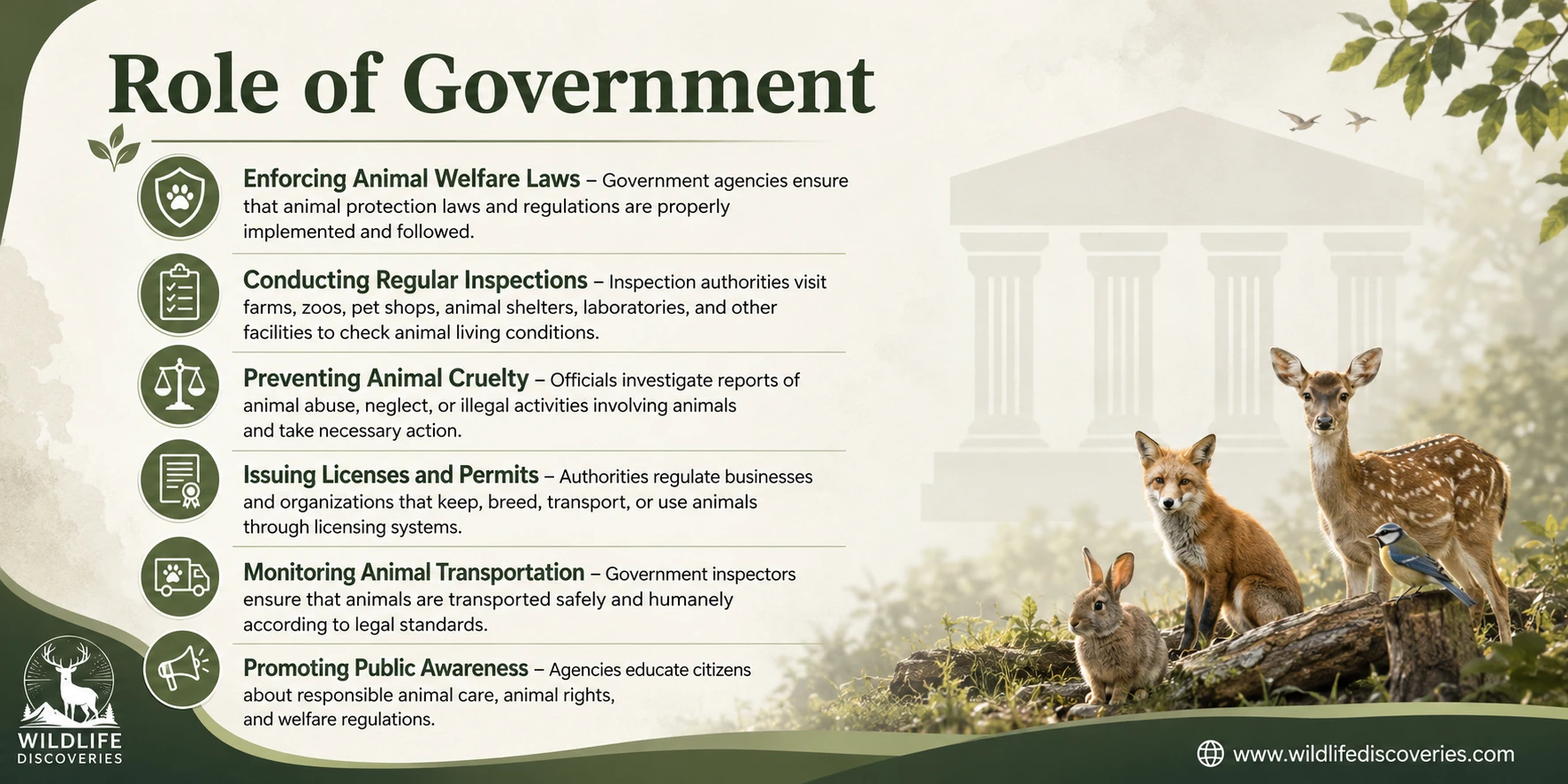
Government departments and animal welfare boards play a central role in enforcing the Act. Their responsibilities include conducting inspections, investigating complaints, issuing licenses, and taking legal action against repeat offenders. In many regions, these bodies also work alongside non-profit organizations to rescue and rehabilitate animals affected by abuse or neglect.
Impact and Effectiveness of the Act
No law is perfect, and the Animal Welfare Act is no exception. It has produced measurable benefits, but it also faces real challenges in implementation.
Success Stories or Measurable Outcomes
Since the introduction of structured animal welfare laws, many regions have reported reduced cruelty cases, improved shelter conditions, and stronger accountability for commercial breeders. Public awareness campaigns tied to the Act have also encouraged responsible pet ownership and reporting of suspected abuse.
In several countries, amendments to the Animal Welfare Act have led to better-regulated breeding facilities, stricter import and export controls for exotic pets, and improved standards in slaughterhouses and transport vehicles. These changes show that, while progress can be slow, legal pressure does translate into tangible welfare improvements over time.
Common Criticisms, Loopholes, or Enforcement Challenges
Despite its strengths, critics point out those gaps remain, especially around enforcement in rural or under-resourced areas. Limited staffing, inconsistent inspections, and lenient penalties for first-time offenders are frequently cited as weaknesses. There are also ongoing debates about whether the Act adequately covers wildlife, particularly as conversations around animal extinction and habitat loss become more urgent. Strengthening legal protections is closely tied to broader efforts to protect endangered animals from poaching, illegal trade, and shrinking natural habitats.
Conclusion
The Animal Welfare Act plays a vital role in shaping how society treats animals, from household pets to wildlife. It sets enforceable standards, assigns responsibility across multiple stakeholders, and provides a legal mechanism to address cruelty and neglect.
Moving forward, experts suggest several improvements: increasing funding for enforcement agencies, raising penalties for repeat offenders, and expanding the Act’s scope to better address wildlife protection. Public education also remains essential. Resources like an endangered species guide can help people understand which animals need urgent protection, while broader awareness about extinct animals of India can highlight what is lost when welfare and conservation laws fall short. Ultimately, a stronger, better-enforced Animal Welfare Act benefits not just animals, but society as a whole, by promoting compassion, accountability, and ecological balance.
Key Takeaways
- The Animal Welfare Act sets legal standards for the humane treatment of pets, farm animals, research animals, and animals in captivity.
- It covers care, housing, transport, breeding, and research practices, with clear penalties for violations.
- Owners, breeders, and institutions all carry specific legal responsibilities under the Act.
- Government bodies and inspection authorities are responsible for enforcement and compliance checks.
- Despite measurable progress, enforcement gaps and limited wildlife coverage remain key challenges.
- Strengthening the Act requires better funding, stricter penalties, and greater public awareness.
Frequently Asked Questions (FAQs)
1. What is the main purpose of the Animal Welfare Act?
Its main purpose is to prevent cruelty and ensure humane treatment of animals by setting legal standards for their care, housing, and handling.
2. Who does the Animal Welfare Act apply to?
It applies to pet owners, breeders, farms, research institutions, zoos, and any entity that owns, handles, or commercially uses animals.
3. What happens if someone violates the Animal Welfare Act?
Violators may face fines, license suspension, confiscation of animals, or criminal prosecution, depending on the severity of the offense.
4. Does the Animal Welfare Act cover wildlife?
Coverage varies by region. Some versions of the Act extend protections to wildlife in captivity, while broader wildlife and habitat protection often falls under separate conservation laws.
5. How can individuals help support animal welfare laws?
Individuals can report suspected abuse, support shelters and rescue organizations, practice responsible pet ownership, and stay informed about local animal welfare regulations.