Difference Between Animal Rights and Animal Welfare
Guide to the Differences Between Animal Rights and Animal Welfare

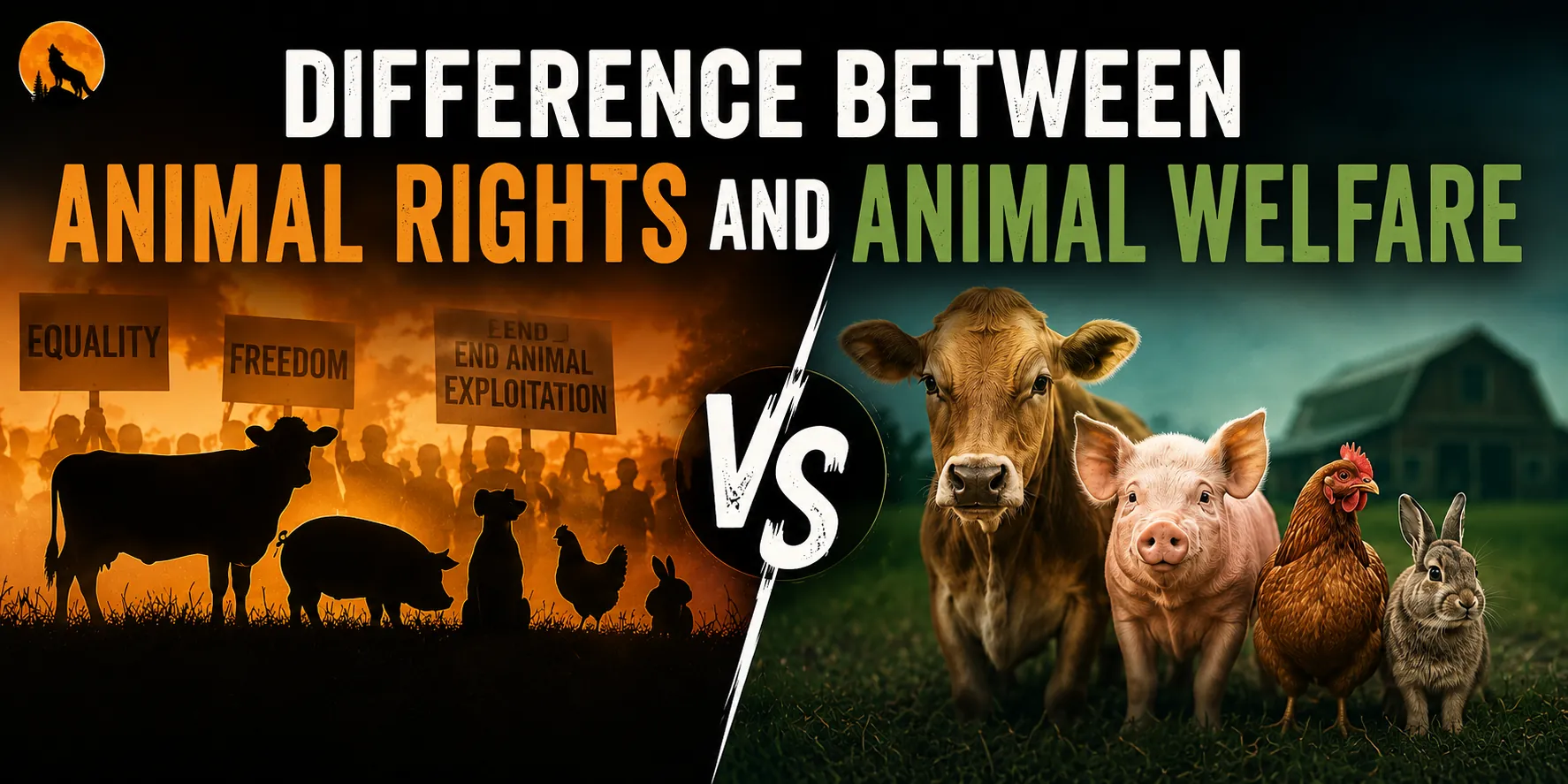
If you care about animals, you have probably heard both terms used almost interchangeably: Animal Rights and Animal Welfare. They sound similar, they both aim to reduce animal suffering, and they are often grouped together in news articles and social media posts. But in reality, they come from two very different schools of thought.
Understanding the difference between animal rights and animal welfare matters because it shapes laws, influences how industries treat animals, and even affects the products we buy every day. Animal welfare focuses on improving the conditions animals live in, while animal rights questions whether humans should be using animals at all. One seeks reform within the current system; the other seeks to change the system itself.
Even animal lovers, volunteers, and donors often use these two terms loosely, without realizing they represent two distinct movements with different histories, goals, and outcomes. Knowing the difference between animal rights and animal welfare helps you understand why some organizations push for “better treatment” while others push for “no use at all“.
What Is Animal Welfare?
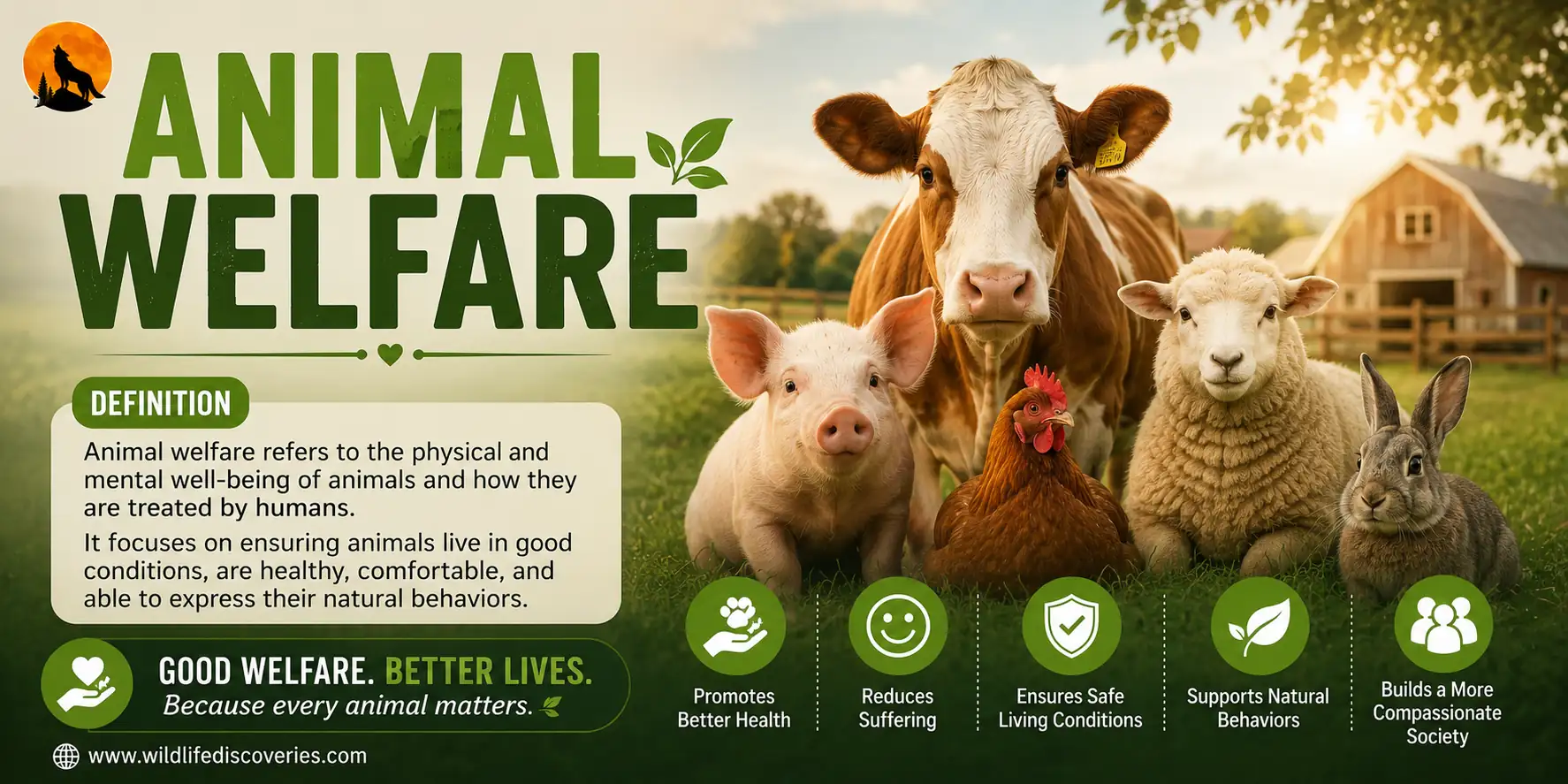
Animal welfare is the idea that animals can be used by humans for food, research, clothing, or entertainment, as long as they are treated humanely and their suffering is minimized. It does not oppose the use of animals; it focuses on how they are used.
Core Principles and Definition
At its heart, animal welfare is about ensuring animals live free from unnecessary pain, fear, and distress. Supporters of this approach believe humans have a moral duty to care for the animals under their control, but they do not believe animals have the same rights as humans. This is one of the clearest starting points when explaining the topic to someone new to it: welfare accepts the relationship between humans and animals, and simply tries to make that relationship kinder.
The Five Freedoms Framework
Animal welfare science is often built around the “Five Freedoms,” a globally recognized framework that outlines what every animal under human care deserves:
| Freedom | What It Means? |
|---|---|
| Freedom from hunger and thirst | Access to fresh water and a proper diet |
| Freedom from discomfort | A suitable environment, including shelter |
| Freedom from pain, injury, or disease | Prevention and rapid treatment |
| Freedom to express normal behavior | Adequate space and company of the animal’s own kind |
| Freedom from fear and distress | Conditions that avoid mental suffering |
Real-World Examples
Animal welfare principles show up in everyday regulations, such as:
- Standards for housing and feeding livestock on farms
- Guidelines for zoos and aquariums regarding enclosure size and enrichment
- Rules governing the use of animals in laboratory research
- Protections outlined under the Animal Welfare Act, which sets the baseline for humane treatment in many countries
What Are Animal Rights?
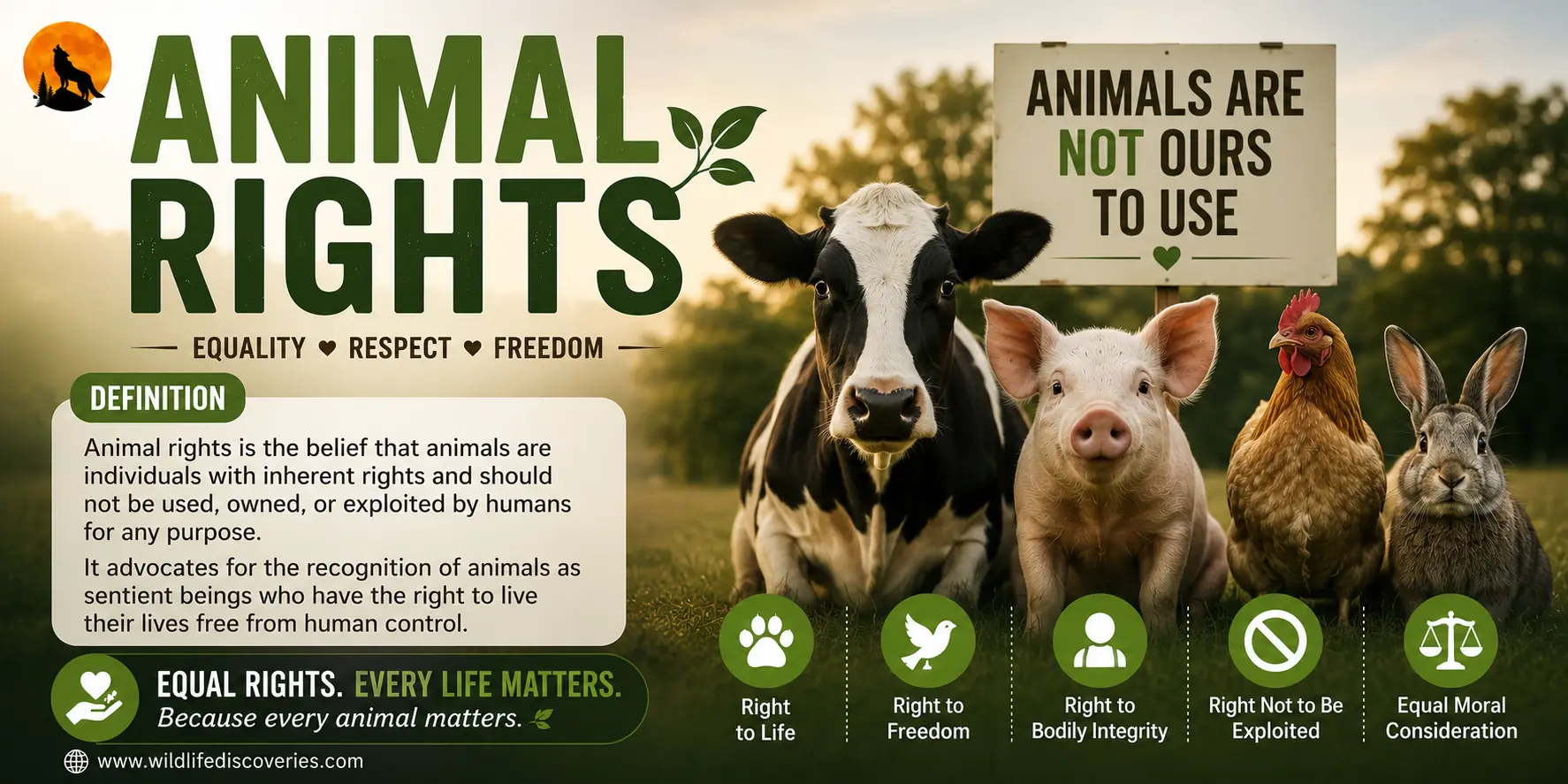
Animal rights takes a more fundamental stance. Instead of asking how animals should be treated, it asks whether humans have the right to use animals at all.
Core Principles and Definition
Animal rights philosophy argues that animals, like humans, have an inherent value and interest in living free from exploitation. Supporters believe animals should not be owned, farmed, hunted, or used in experiments, regardless of how “humane” the conditions are. If you want a deeper look at this philosophy, our detailed post on What Are Animal Rights explores it further.
The Moral Status of Animals
The animal rights movement is rooted in the belief that animals are sentient beings capable of experiencing pain, fear, and even joy, which gives them moral standing similar to humans. Under this view, using an animal purely for human benefit, even kindly, is still a violation of its basic rights.
Key Thinkers and Origins
The modern animal rights movement gained momentum through philosophers like Peter Singer, whose work on utilitarianism questioned the ethics of animal suffering, and Tom Regan, who argued that animals possess inherent rights simply by being living, feeling creatures. Their writings in the 1970s and 80s laid the intellectual groundwork for today’s animal rights organizations.
Key Differences between Animal Rights & Animal Welfare
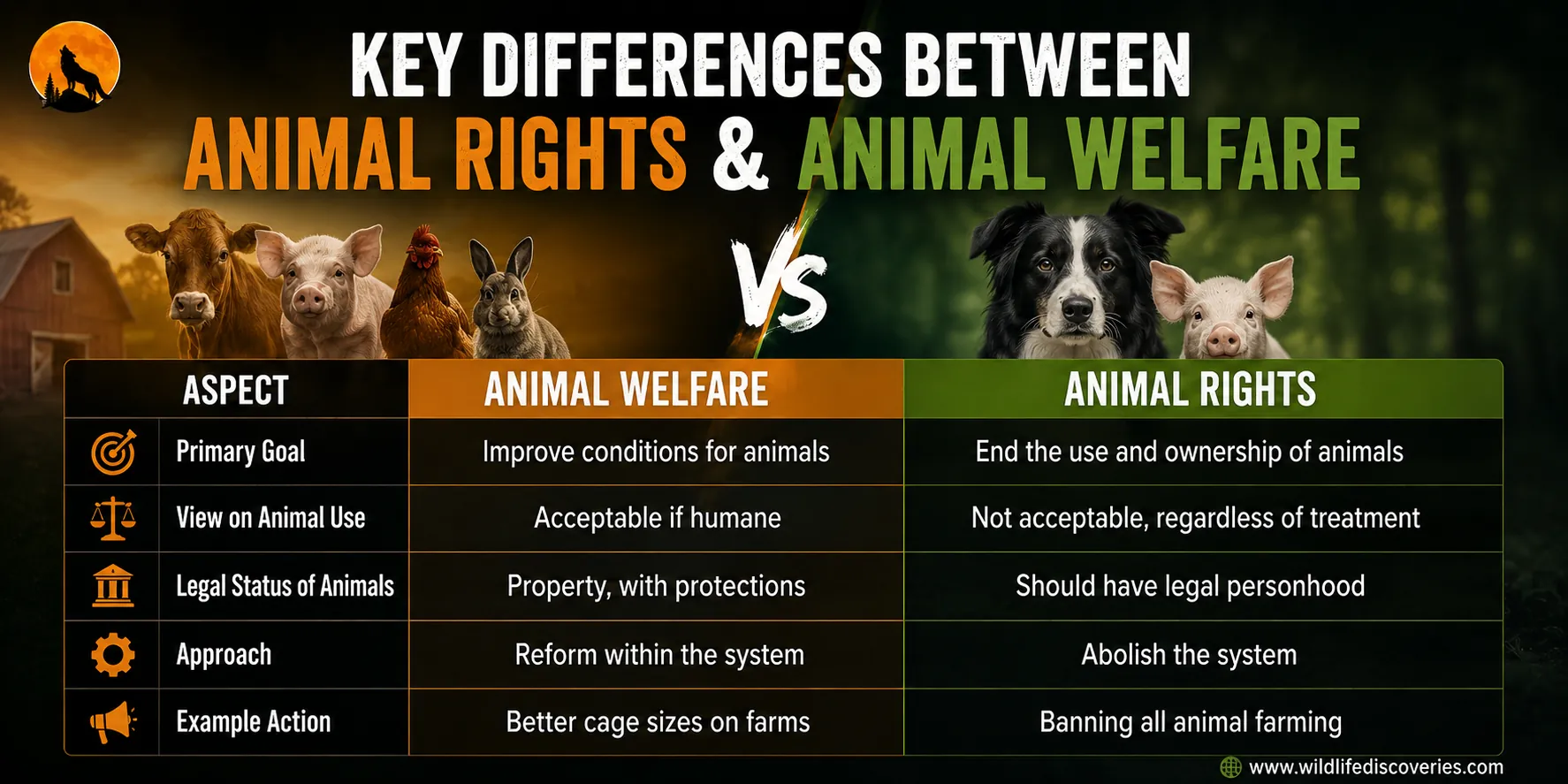
While both movements want to reduce animal suffering, their goals, methods, and underlying beliefs are quite different. Here is a side-by-side comparison:
| Aspect | Animal Welfare | Animal Rights |
|---|---|---|
| Primary Goal | Improve conditions for animals | End the use and ownership of animals |
| View on Animal Use | Acceptable if humane | Not acceptable, regardless of treatment |
| Legal Status of Animals | Property, with protections | Should have legal personhood |
| Approach | Reform within the system | Abolish the system |
| Example Action | Better cage sizes on farms | Banning all animal farming |
Goals: Reform vs. Abolition
Animal welfare organizations typically push for incremental change, such as larger cages or better veterinary care. Animal rights groups push for complete abolition of practices like factory farming, fur trading, and animal testing.
View on Animal Use
A welfare-based approach might support eating meat as long as the animal was raised and slaughtered humanely. A rights-based approach would reject this entirely, arguing that no amount of “humane” treatment justifies taking an animal’s life or freedom for human gain.
Legal Status: Property vs. Personhood
Under most legal systems today, animals are classified as property. Welfare laws operate within that framework, simply adding protections. Animal rights advocates want to change this classification altogether, pushing for animals to be recognized as legal persons with their own interests.
Where They Overlap and Where They Clash?
Despite their differences, animal welfare and animal rights are not always at odds. In fact, they often work side by side.
Shared Concerns
Both movements agree that cruelty is wrong, that suffering should be minimized, and that humans bear some responsibility for the animals they interact with. Many welfare and rights organizations collaborate on shared issues like banning animal testing for cosmetics or stopping illegal wildlife trade, an area closely tied to Wildlife Conservation efforts worldwide.
Points of Tension
- A welfare group might celebrate a new law requiring bigger enclosures for farm animals, viewing it as real progress.
- A rights group might see that same law as reinforcing the idea that confining animals is acceptable in the first place, since the goal is total liberation, not better confinement.
- This tension sits at the core of nearly every modern debate between the two camps, often playing out publicly when organizations respond very differently to the same piece of legislation.
- Activists sometimes describe this split as “reform versus revolution.”
- Welfare-minded reformers argue that incremental wins save real animals right now, even if the system itself remains intact.
- Rights-focused advocates counter that incremental wins can unintentionally make harmful systems look more acceptable to the public, slowing the push for deeper change.
- Neither side is wrong about its own goals they are simply optimizing for different timelines and different definitions of success.
Why This Debate Matters Today?
This is not just a philosophical debate confined to academic papers. It actively shapes legislation, industry standards, and consumer habits across the globe.
Impact on Policy and Legislation
Many countries are revisiting animal protection laws, often blending welfare-based rules with growing rights-based pressure. This has led to stricter farming regulations, bans on certain types of animal testing, and expanded legal protections for endangered species. Lawmakers frequently find themselves caught in the middle of this debate, trying to balance economic interests, public opinion, and genuine ethical concern for animal suffering.
Influence on Consumer Choices and Industry Practices
More consumers today are asking where is food, clothing, and cosmetics come from. This has pushed industries to adopt “cruelty-free” labeling, cage-free standards, and alternative materials to leather and fur. Even everyday pet owners benefit from this awareness, since understanding welfare principles directly improves daily care; our guide on How to Take Care of Animals covers practical steps rooted in these same principles.
This growing consumer awareness has also created new market pressures. Brands that once ignored animal welfare concerns now compete to highlight ethical sourcing, and entire product categories, from plant-based meat to synthetic leather, have emerged largely because shoppers started asking harder questions about how animals are treated before a product ever reaches the shelf.
Conclusion
Neither movement is replacing the other anytime soon. Animal welfare remains the dominant legal framework worldwide because it works within existing economic and social systems. Animal rights, while still a minority position in terms of law, continues to gain cultural traction, especially among younger generations questioning long-standing practices like factory farming and animal testing. Most real-world progress today comes from a blend of both: welfare-driven reforms paving the way for rights-driven conversations.
Key Takeaways
- Animal welfare focuses on humane treatment and reducing suffering while still allowing animal use.
- Animal rights challenges the idea that humans should use animals at all, regardless of treatment.
- The Five Freedoms framework is the backbone of most welfare standards worldwide.
- Animal rights philosophy is rooted in the belief that animals have inherent moral value, not just usefulness to humans.
- Legally, animals are still classified as property; welfare laws add protections, while rights advocates want this status changed entirely.
- Both movements often collaborate on shared goals like ending cruelty and protecting wildlife.
- The real-world impact of this debate is visible in legislation, labeling, and consumer behavior shifts globally.
Frequently Asked Questions (FAQs)?
1. Is animal welfare the same as animal rights?
No. Animal welfare focuses on how animals are treated, while animal rights questions whether animals should be used by humans at all.
2. Can someone support both animal welfare and animal rights?
Yes. Many people support immediate welfare improvements while also believing in the long-term goals of the animal rights movement.
3. Which approach has more legal recognition today?
Animal welfare has far more legal recognition globally, since most laws are built around regulating treatment rather than banning animal use.
4. Does animal rights mean no one can own pets?
This is debated even within the movement. Some animal rights advocates argue companionship with pets can be ethical if based on care and respect rather than exploitation, while others oppose pet ownership entirely.
5. How does this debate affect everyday consumers?
It influences labeling like “cruelty-free” or “cage-free,” shapes which products companies choose to sell, and affects laws around farming, testing, and wildlife trade that consumers encounter regularly.