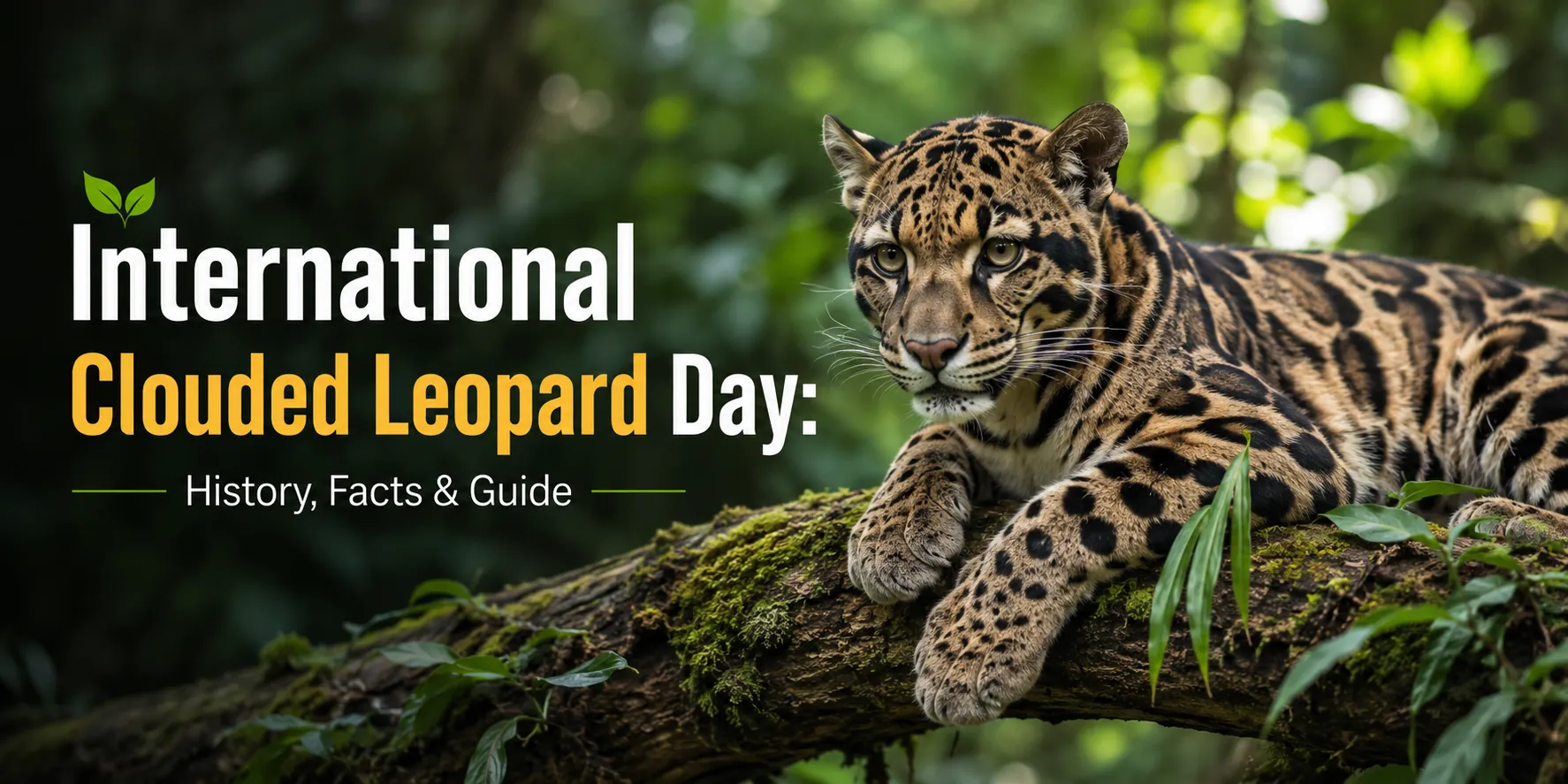
Every August 4th, zoos, conservationists, and wildlife lovers around the world quietly celebrate an animal that almost nobody has ever seen in the wild. Not because it’s rare in the way a unicorn is rare — though its numbers are frighteningly low — but because it has spent millions of years perfecting the art of not being seen. That’s International Clouded Leopard Day, and the animal at the center of it, the clouded leopard, might be the most underrated cat on the planet.
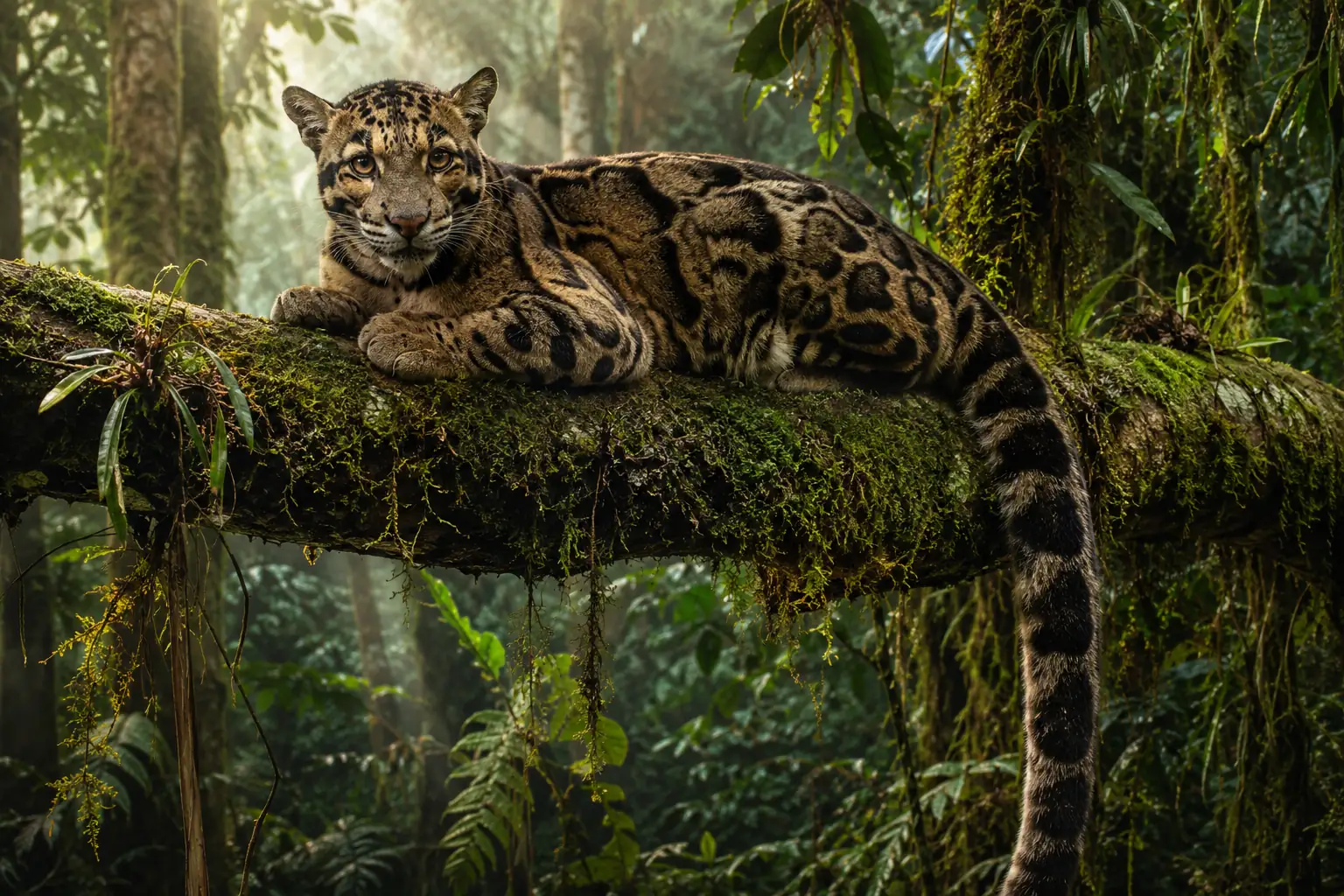
If you’ve only ever encountered this species as a blurry camera-trap photo or a caption under a zoo enclosure, this guide is for you. We’re going deep — biology, behavior, the two (once four) species scientists now recognize, why captive breeding programs keep males and females apart for months at a time, and exactly what August 4th is actually about.
Quick Answer: What is International Clouded Leopard Day?
International Clouded Leopard Day is observed every year on August 4. It was founded in 2018 by Lauren Amos and Dan Kemp of Howletts Wild Animal Park (part of the UK-based Aspinall Foundation) to raise global awareness of the clouded leopard, a Vulnerable wild cat species native to South and Southeast Asia. The day is now marked by zoos, sanctuaries, and conservation groups worldwide through education campaigns, fundraising, and social media outreach.
Quick Facts: The Clouded Leopard at a Glance
| Scientific names | Neofelis nebulosa (mainland) and Neofelis diardi (Sunda) |
| IUCN status | Vulnerable (both species) |
| Wild population | Roughly 3,700–5,580 mature N. nebulosa; fewer than 10,000 mature N. diardi |
| Weight | 11–23 kg (25–50 lb); males noticeably larger than females |
| Body length | 69–108 cm, plus a tail up to 91 cm long |
| Range | Himalayan foothills of Nepal and Bhutan, through Northeast India, Myanmar, southern China, mainland Southeast Asia; Sunda species on Borneo and Sumatra |
| Lifespan | Around 11 years average in captivity; wild lifespan poorly documented |
| Signature trait | Longest canine teeth relative to skull size, and longest tail relative to body size, of any living cat |
How International Clouded Leopard Day Began
Unlike a lot of “awareness days” that get invented by marketing calendars, this one has a fairly specific origin story. In 2018, keepers Lauren Amos and Dan Kemp were working with clouded leopards at Howletts Wild Animal Park in Kent, England — a facility run by the Aspinall Foundation, a British conservation charity with a long track record in big cat breeding and rewilding.
Amos and Kemp had grown attached to the animals in their care and wanted a dedicated day to spotlight the species’ situation. What started as an internal keeper initiative at one UK wildlife park quickly picked up support from other institutions: the Cincinnati Zoo, the Big Cat Sanctuary in Ashford, Point Defiance Zoo & Aquarium in Tacoma, and several wild-cat welfare organizations joined in within the first year.
Since then, August 4th has grown into a genuinely global observance. It isn’t backed by the United Nations or any government body — it’s a grassroots conservation-calendar event, similar in spirit to World Pangolin Day or World Chimpanzee Day, driven by the zoo and conservation community rather than legislation.
Meet the Cat: One Species Became Two
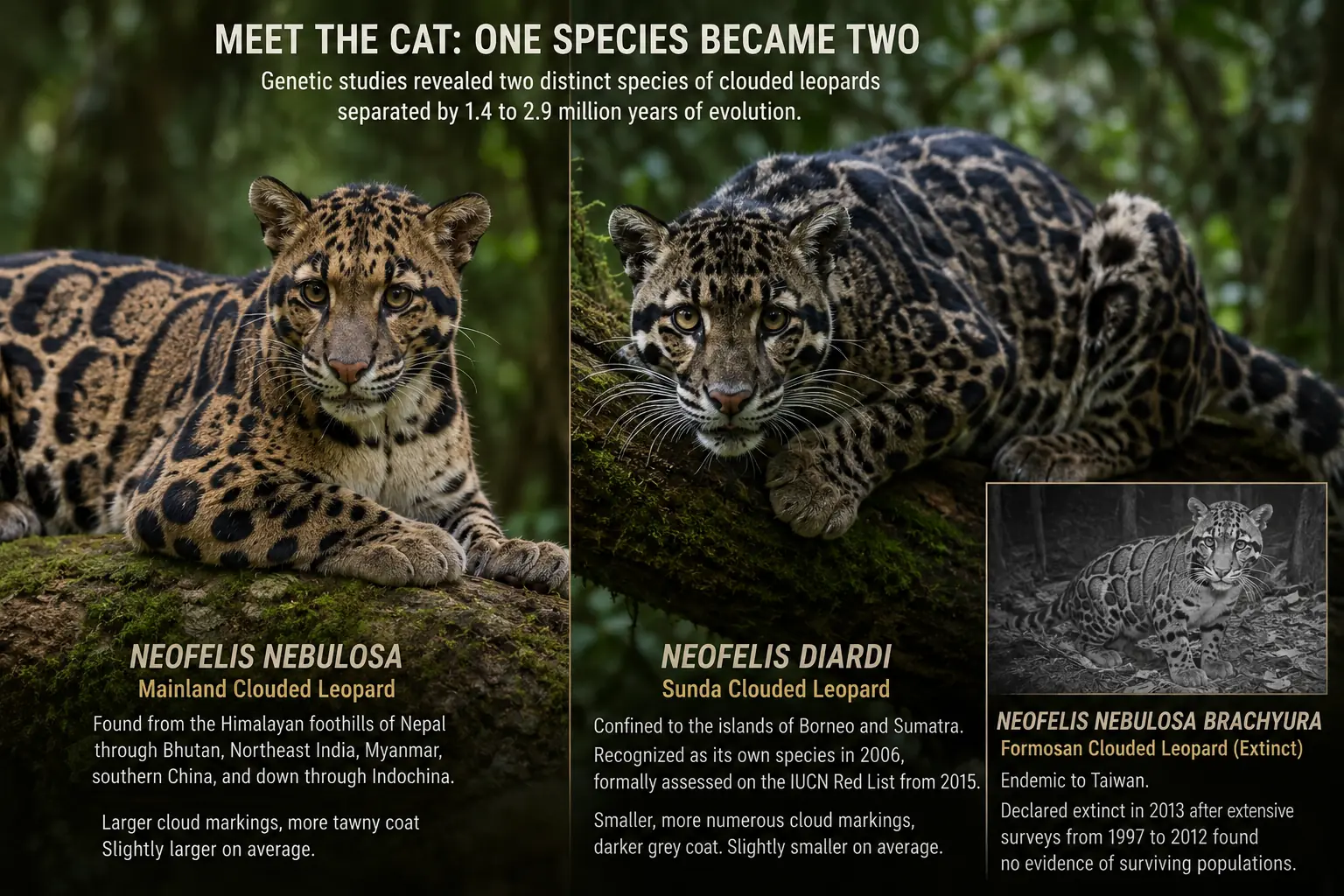
Here’s something most casual articles get wrong, or skip entirely: “the clouded leopard” isn’t a single, uniform species. Until 2006, scientists treated it as one species with four subspecies scattered across Asia. Genetic testing — mitochondrial DNA, microsatellites, and chromosome comparisons — changed that picture. Researchers found that the population living on the Southeast Asian mainland had been genetically isolated from the population on Borneo and Sumatra for somewhere between 1.4 and 2.9 million years. That’s roughly the same evolutionary distance separating a jaguar from a leopard. So in 2006, the single species was split into two:
- Neofelis nebulosa — the mainland clouded leopard, found from the Himalayan foothills of Nepal through Bhutan, Northeast India, Myanmar, southern China, and down through Indochina.
- Neofelis diardi — the Sunda clouded leopard, confined entirely to the Indonesian islands of Borneo and Sumatra, recognized as its own species in 2006, formally assessed on the IUCN Red List from 2015.
There was once a third lineage too. The Formosan clouded leopard, endemic to Taiwan, was formally declared extinct in 2013 after camera-trap surveys across the island’s protected areas between 1997 and 2012 turned up nothing. Unconfirmed sighting reports still surface occasionally, but no verified evidence of a surviving population exists.
Telling the two living species apart isn’t always easy from a photograph, but there are consistent differences: the Sunda clouded leopard tends to have smaller, more numerous cloud markings on a darker grey coat, while the mainland species has larger blotches on a more tawny background. The Sunda species is also, on average, slightly smaller.
Mainland vs. Sunda Clouded Leopard: Key Differences
| Trait | Mainland (N. nebulosa) | Sunda (N. diardi) |
|---|---|---|
| Range | Himalayan foothills to mainland Southeast Asia and southern China | Borneo and Sumatra only |
| Coat pattern | Larger cloud-shaped blotches, lighter background | Smaller, more numerous markings on darker grey coat |
| Body size | Slightly larger on average | Slightly smaller; still the largest felid on Borneo |
| Tail-to-body ratio | Long, used for arboreal balance | 76–88% of head-body length — proportionally even longer |
| Separate species since | — | 2006 (genetic split); independent IUCN listing since 2015 |
Built for the Trees: Anatomy That Shouldn’t Be Possible
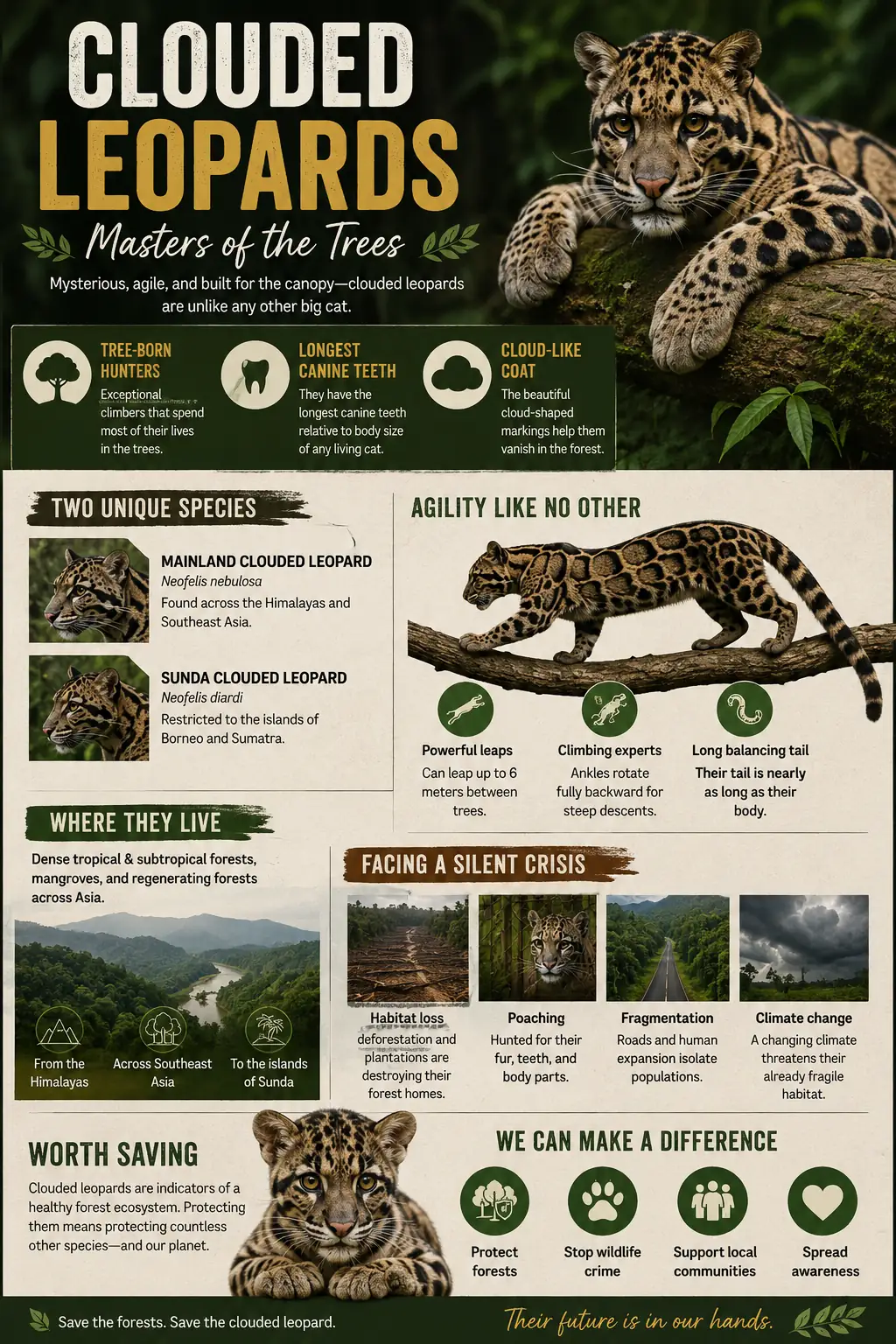
If you had to design a cat purely for vertical living, you’d probably end up with something close to a clouded leopard. Every part of its anatomy is a compromise made in favor of branches rather than open ground.
Start with the legs: short and powerfully muscled, they lower the animal’s center of gravity, the same trick that makes a sprinter’s crouch more stable than standing upright. Then there’s the tail — proportionally the longest of any cat species alive, sometimes nearly matching the length of the head and body combined. It works exactly like a tightrope walker’s pole, shifting the animal’s balance as it moves across narrow, swaying branches thirty feet above the forest floor.
The real party trick, though, is in the ankles. Clouded leopards can rotate their hind ankle joints nearly 180 degrees backward — an adaptation shared with only a handful of other arboreal mammals, like squirrels and binturongs. Practically, this means a clouded leopard can climb down a tree trunk headfirst, without ever needing to turn around and back down the way a domestic cat (famously, badly) does.
In captivity, keepers have filmed them going a step further: hanging completely upside down from a branch by their hind feet alone, gripping with rotated paws that can face almost directly backward toward their own head. Researchers believe this posture is connected to their hunting style — clouded leopards will drape themselves over a branch and drop directly onto prey passing underneath, though most confirmed hunting, even for such a tree-adapted animal, still happens on the ground at night.
Then there are the teeth. Clouded leopards carry the longest canine teeth relative to skull size of any living cat — mainland individuals can have canines around 4.5 cm long relative to a skull barely bigger than a large housecat’s. Proportionally, that ratio rivals extinct saber-toothed cats far more than it resembles a modern lion or tiger, which is why several researchers and outlets have nicknamed it the “modern-day saber-tooth.”
Unlike true big cats such as tigers and lions, clouded leopards can’t roar — their hyoid bone (the structure that supports roaring in Panthera species) is only partially ossified. But they also can’t purr continuously the way small cats do. That places them in a strange evolutionary middle ground: neither a true big cat nor a true small cat, despite belonging to the same subfamily, Pantherinae, as lions, tigers, jaguars, leopards, and snow leopards.
Where They Actually Live — and Why That’s Shrinking
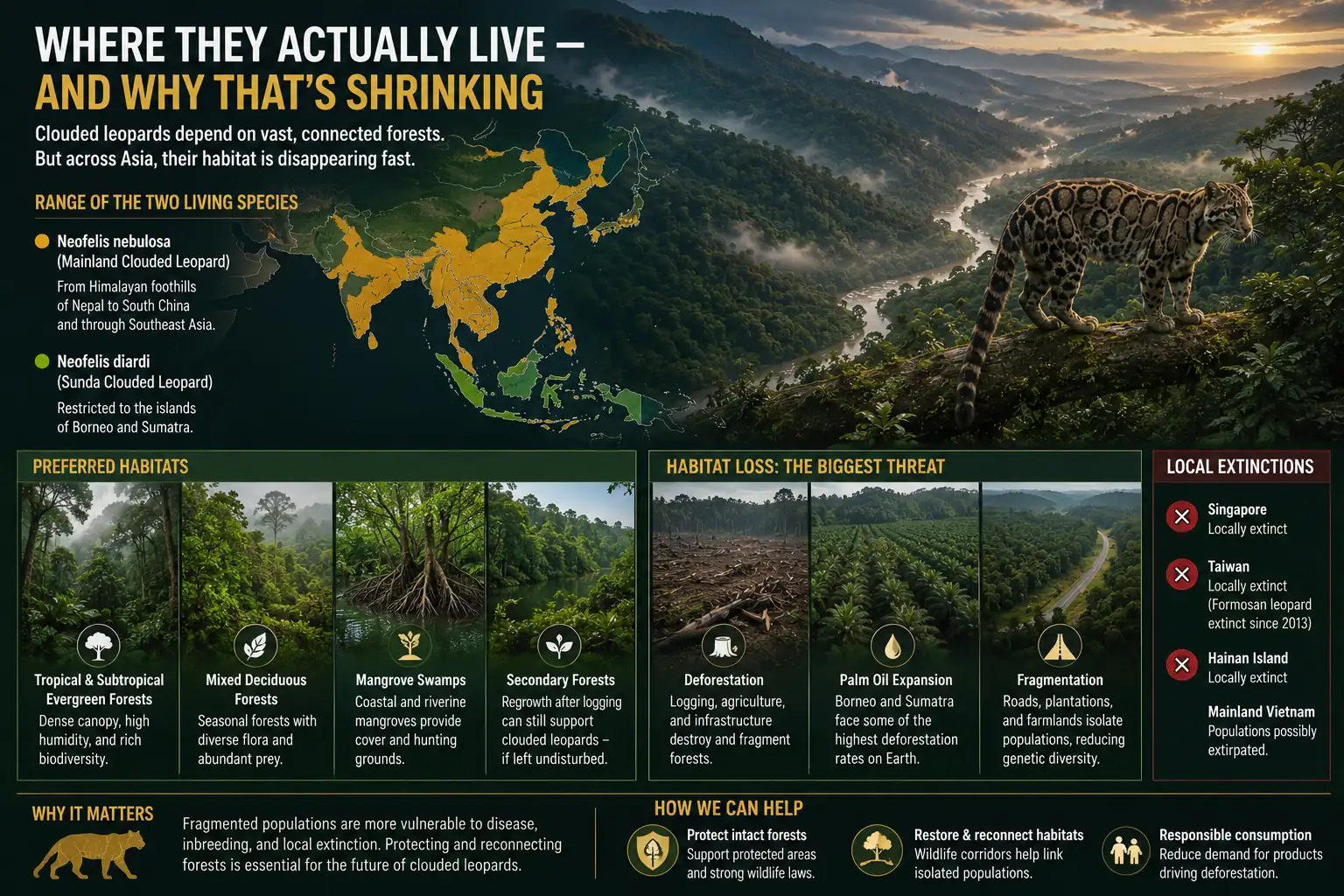
Clouded leopards favor dense, closed-canopy forest: tropical and subtropical evergreen forest, mixed deciduous forest, and in some regions, mangrove swamps and secondary forest that’s regrown after logging. The mainland species’ range stretches from the eastern and southern Himalayan foothills of Nepal, through Bhutan and Northeast India, into Myanmar, southern China, Peninsular Malaysia, and across Indochina — Vietnam, Laos, Thailand, and Cambodia. The Sunda species is restricted entirely to Borneo and Sumatra, two islands under some of the heaviest deforestation pressure on Earth due to palm oil expansion.
The species is already confirmed locally extinct in Singapore, Taiwan, and Vietnam’s neighboring Hainan Island, with populations in mainland Vietnam considered possibly extirpated as well. What’s left is increasingly fragmented — isolated forest patches separated by roads, farmland, and plantations, which cuts off genetic exchange between populations and makes each remaining group more vulnerable to local extinction.
our guide to Tiger Reserves in India — covers Manas National Park, one of the only reserves on Earth sheltering tigers, leopards, snow leopards, and clouded leopards within the same landscape.
What Nobody Tells You About Breeding Them in Captivity
This is the part of the clouded leopard’s story that rarely makes it into a standard species profile, and it’s genuinely one of the more dramatic conservation narratives in modern zoo science.
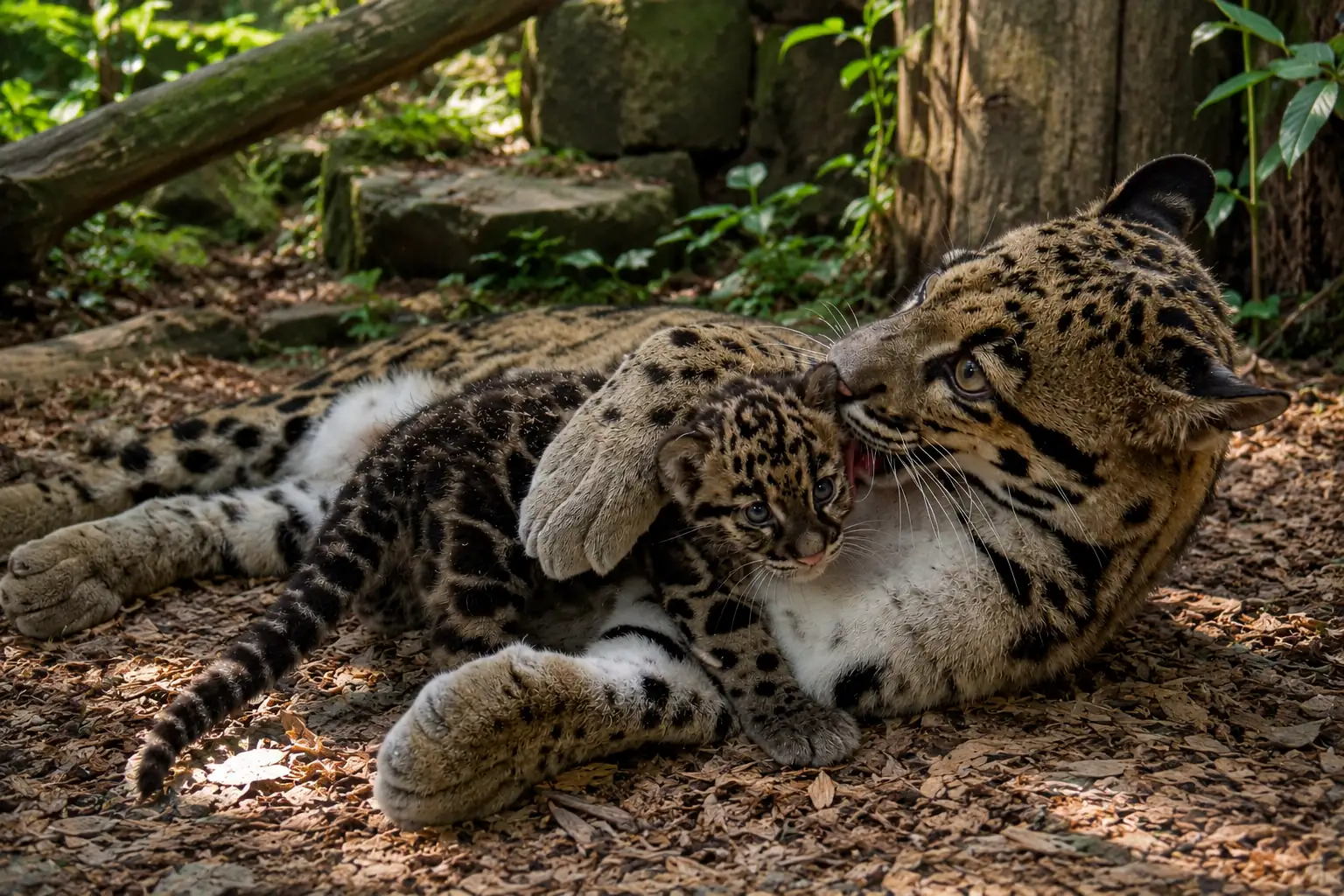
Clouded leopards are notoriously difficult — and dangerous — to breed in managed care. Left to pair up the way most cats do, adult males frequently attack and kill females during introduction. Nashville Zoo, which has run one of the world’s most successful clouded leopard breeding programs since 1991, discovered the reason wasn’t incompatibility so much as timing: introducing unrelated cubs to each other at just a few weeks old, before either has developed adult aggression or territoriality, produces bonded pairs that can breed safely as adults.
This single insight reshaped how the species is managed globally. The Association of Zoos and Aquariums’ Species Survival Plan now recommends hand-rearing for essentially all clouded leopard cubs born in AZA facilities, specifically so cubs can be paired this way.
Nashville Zoo has since become the anchor institution of the Clouded Leopard Consortium, a partnership formed in 2002 with the Smithsonian’s National Zoo, Point Defiance Zoo & Aquarium, and Thailand’s Zoological Parks Organization, based out of Khao Kheow Open Zoo in Thailand.
By 2026, Nashville Zoo alone had produced more than 50 clouded leopard cubs over roughly 35 years — a substantial fraction of the roughly 60-plus clouded leopards held across all AZA-accredited institutions combined. Even with that success, the wider captive population still isn’t self-sustaining without continued assisted reproduction, because the species remains so sensitive to stress, noise, and unfamiliar surroundings that natural breeding alone can’t keep pace with losses.
It’s a useful reminder that “vulnerable” isn’t just a wild-population statistic — it describes an animal that struggles to reproduce even under expert human care, which raises the stakes for protecting the wild populations that remain.
Threats: Why “Vulnerable” Doesn’t Mean Safe
Both clouded leopard species carry the IUCN Red List status of Vulnerable, one step below Endangered. The mainland species has held that status since 2008; the Sunda species since its independent assessment in 2015. Population figures for both are estimates rather than precise counts — the animals are simply too elusive and nocturnal for reliable direct census — but the current scientific consensus puts the mainland population at roughly 3,700 to 5,580 mature individuals, with a wider possible range extending as low as 1,600. The Sunda clouded leopard’s total effective population is thought to sit below 10,000 mature individuals, and both trends point downward.
The threats stacking up against them are familiar to anyone who follows Southeast Asian conservation, but that familiarity doesn’t make them less severe:
- Deforestation and habitat fragmentation — large-scale logging, agricultural conversion, and infrastructure development (including major regional initiatives like the Belt and Road Initiative in Myanmar) continue to shrink and fragment suitable forest.
- Commercial poaching — clouded leopards are hunted for their pelts, teeth, bones, and claws, traded for decoration, clothing, and traditional medicine, despite legal protection across most range countries.
- Palm oil expansion — particularly acute for the Sunda clouded leopard, whose entire range overlaps heavily with palm oil plantation growth.
- Climate change — modeling published in 2024 projects further contraction and fragmentation of viable habitat under future climate scenarios, on top of the deforestation already underway.
Endangered Species Guide — breaks down what IUCN classifications mean; Endangered Animals of the Rainforest — how tropical forest loss reshapes entire ecosystems.
Clouded Leopard vs. Other Big Cats
| Species | IUCN Status | Weight | Signature Trait |
|---|---|---|---|
| Clouded leopard | Vulnerable | 11–23 kg | Rotating ankles; headfirst tree descent |
| Snow leopard | Vulnerable | 22–55 kg | Extreme high-altitude adaptation |
| Tiger | Endangered | 90–310 kg | Largest living cat species |
Snow Leopards: The Ghost Cats of the Himalayas — the other end of the Asian big-cat spectrum, built for altitude instead of canopy.
Myth vs. Fact
| Myth | Fact |
|---|---|
| Clouded leopards are just small leopards | They belong to their own genus, Neofelis, and aren’t closely related to true leopards (Panthera pardus). Considered an evolutionary bridge between big cats and small cats. |
| They mostly hunt in the trees | Despite extraordinary climbing skills, most confirmed hunting happens on the ground at night. Tree behavior is more about resting, escaping threats, and occasional ambush drops. |
| There’s only one species of clouded leopard | Genetic research split it in two in 2006 — mainland and Sunda — now managed as separate conservation priorities. |
| They can roar like tigers and lions | Their hyoid bone isn’t fully ossified, so they can’t roar like Panthera cats — but they also can’t purr continuously like small cats. |
How to Actually Mark International Clouded Leopard Day
- Follow and share verified conservation accounts — the Aspinall Foundation, Panthera’s small cat program, and AZA-accredited zoos with active clouded leopard programs post real updates every August 4th.
- Support certified sustainable palm oil — checking for RSPO certification on household products is one of the few consumer-level actions with a direct link to Sunda clouded leopard habitat.
- Visit or donate to an AZA/EAZA-accredited zoo with a Species Survival Plan — institutions like Nashville Zoo funnel visitor support directly into the Clouded Leopard Consortium’s work.
- Learn before you share — misinformation blending “leopard” species together online actively undermines species-specific conservation funding.
“Clouded Leopard: The Most Beautiful Cat of the Wild”
Frequently Asked Questions
When is International Clouded Leopard Day?
International Clouded Leopard Day is observed every year on August 4.
Who started International Clouded Leopard Day?
It was founded in 2018 by keepers Lauren Amos and Dan Kemp at Howletts Wild Animal Park in Kent, England, part of the Aspinall Foundation.
Are clouded leopards endangered?
Both the mainland clouded leopard (Neofelis nebulosa) and Sunda clouded leopard (Neofelis diardi) are classified as Vulnerable on the IUCN Red List, one category below Endangered.
How many clouded leopards are left in the wild?
Roughly 3,700 to 5,580 mature mainland clouded leopards, alongside fewer than 10,000 mature Sunda clouded leopards, with both populations trending downward.
Is a clouded leopard a big cat or a small cat?
Neither, strictly speaking. It’s in the same subfamily as true big cats (Pantherinae) but can’t roar like lions and tigers, and its size sits between big cats and small cats.
Why are clouded leopards hard to breed in zoos?
Adult males are often aggressive toward unfamiliar females and can fatally injure them during introduction. Zoos now hand-rear cubs and pair them young, before adult aggression develops.