Deep within the shrinking rainforests of Southeast Asia, one of humanity’s closest living relatives is fighting a quiet battle for survival. Sharing nearly 97% of our DNA, orangutans are highly intelligent, solitary great apes known for their remarkable problem-solving skills, gentle nature, and critical role in forest ecosystems. However, due to rampant habitat destruction, the illegal wildlife trade, and human conflict, all three recognized species of these magnificent primates are now standing on the brink of extinction.
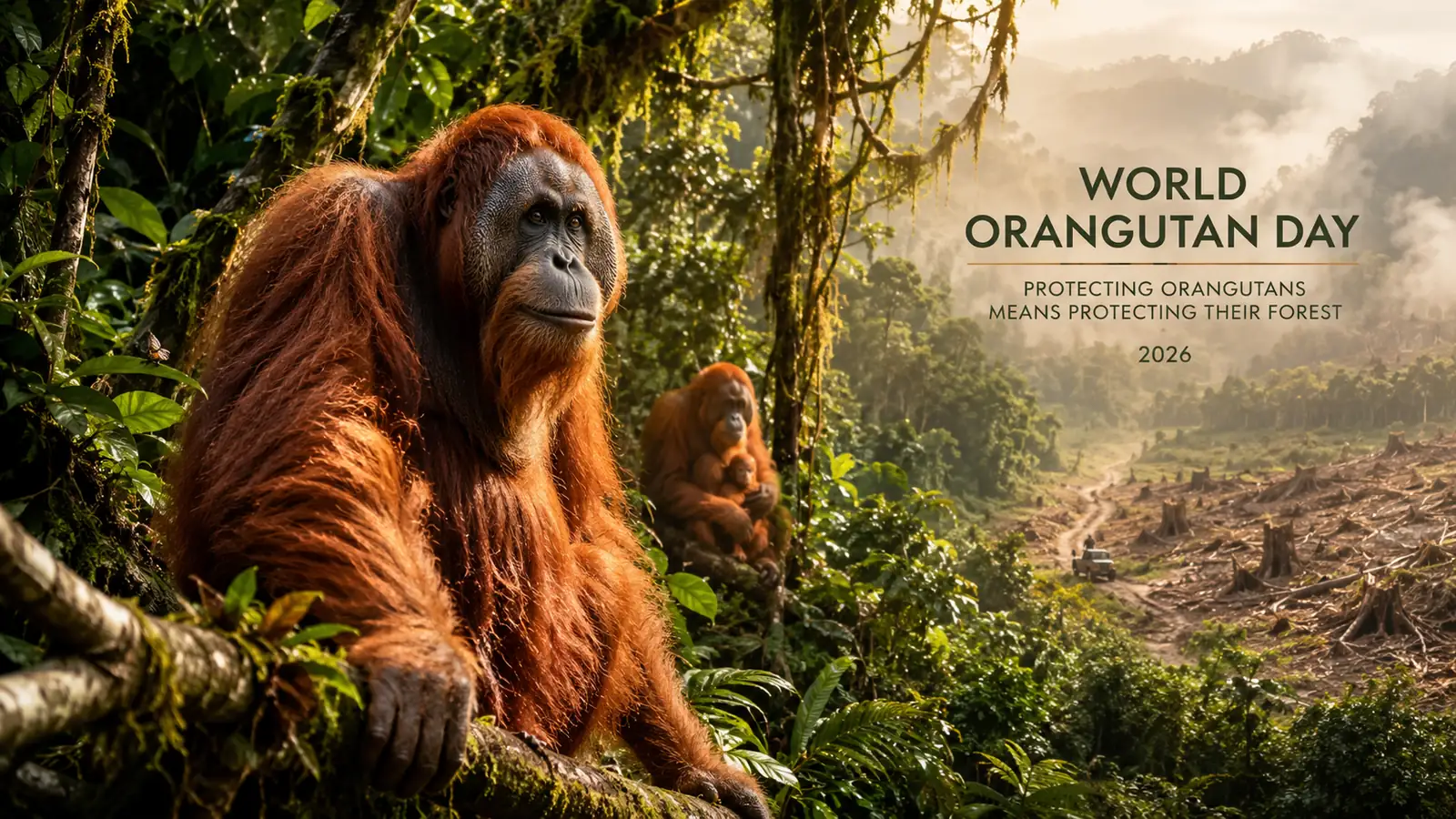
World Orangutan Day serves as a vital global platform to spotlight their plight. This annual observance is not just a celebration of the iconic orange orangutan; it is an urgent call to action. It challenges governments, corporations, and everyday citizens to reevaluate their environmental footprint, support sustainable agricultural practices, and champion the conservation of the ancient rainforests of Borneo and Sumatra. If we do not act to protect endangered orangutans today, the forests they sustain will suffer irreversible ecological collapse.
What is World Orangutan Day?
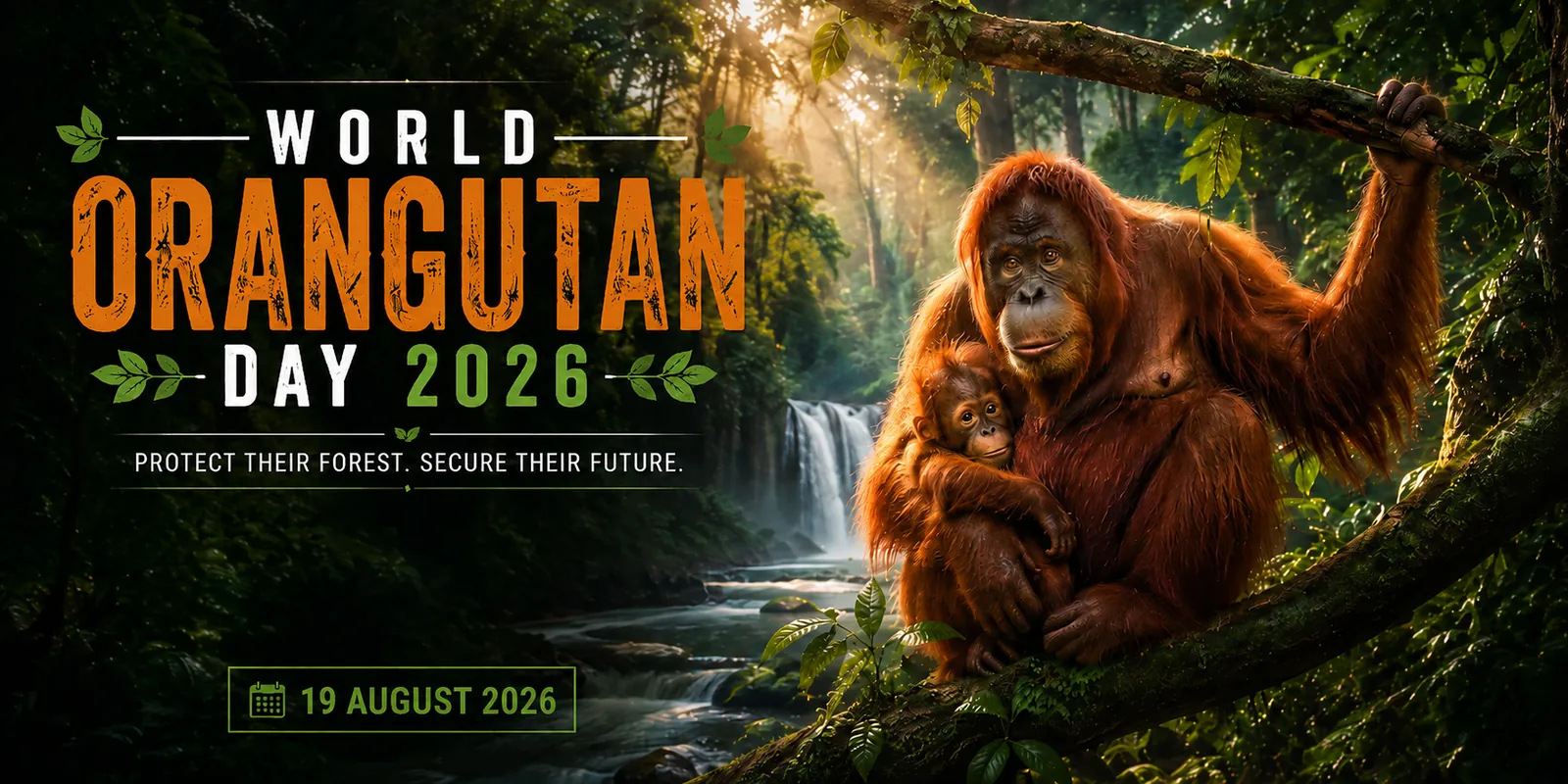
World Orangutan Day is a global awareness event observed annually on August 19. It is dedicated to recognizing the ecological importance of orangutans, highlighting their critically endangered status, and mobilizing public and political action to protect them from threats like deforestation, palm oil expansion, and the illegal wildlife trade.
When Is World Orangutan Day 2026?
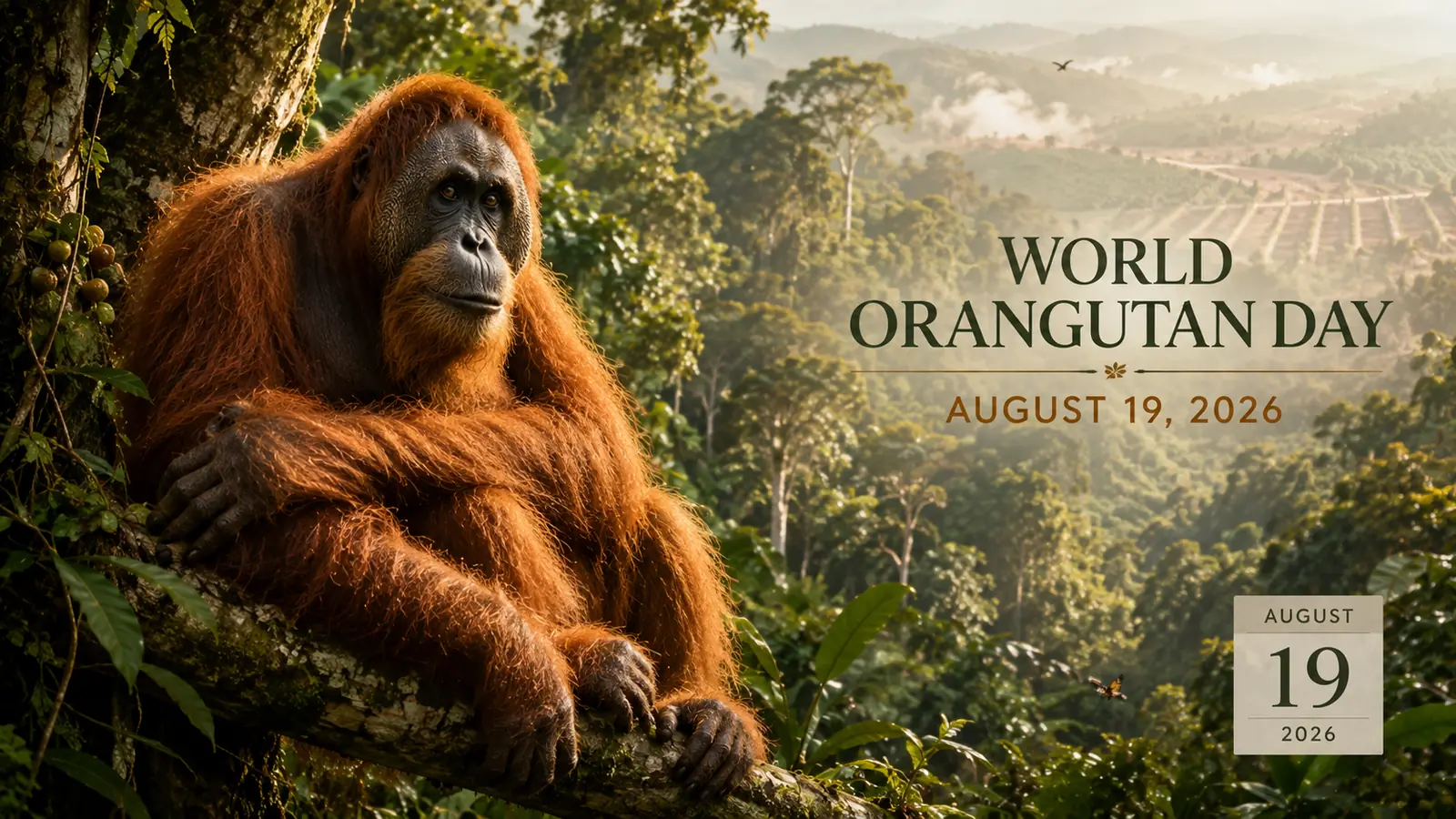
World Orangutan Day 2026 will be observed globally on Wednesday, August 19, 2026.
The date remains the same every year, providing a predictable anchor for conservation organizations, zoos, wildlife sanctuaries, and environmental advocates to launch fundraising campaigns, educational programs, and awareness drives. In 2026, the focus will increasingly center on the urgency of mitigating climate change and enforcing zero-deforestation commitments to ensure these apes have a viable habitat for the future.
Why Is World Orangutan Day Important?
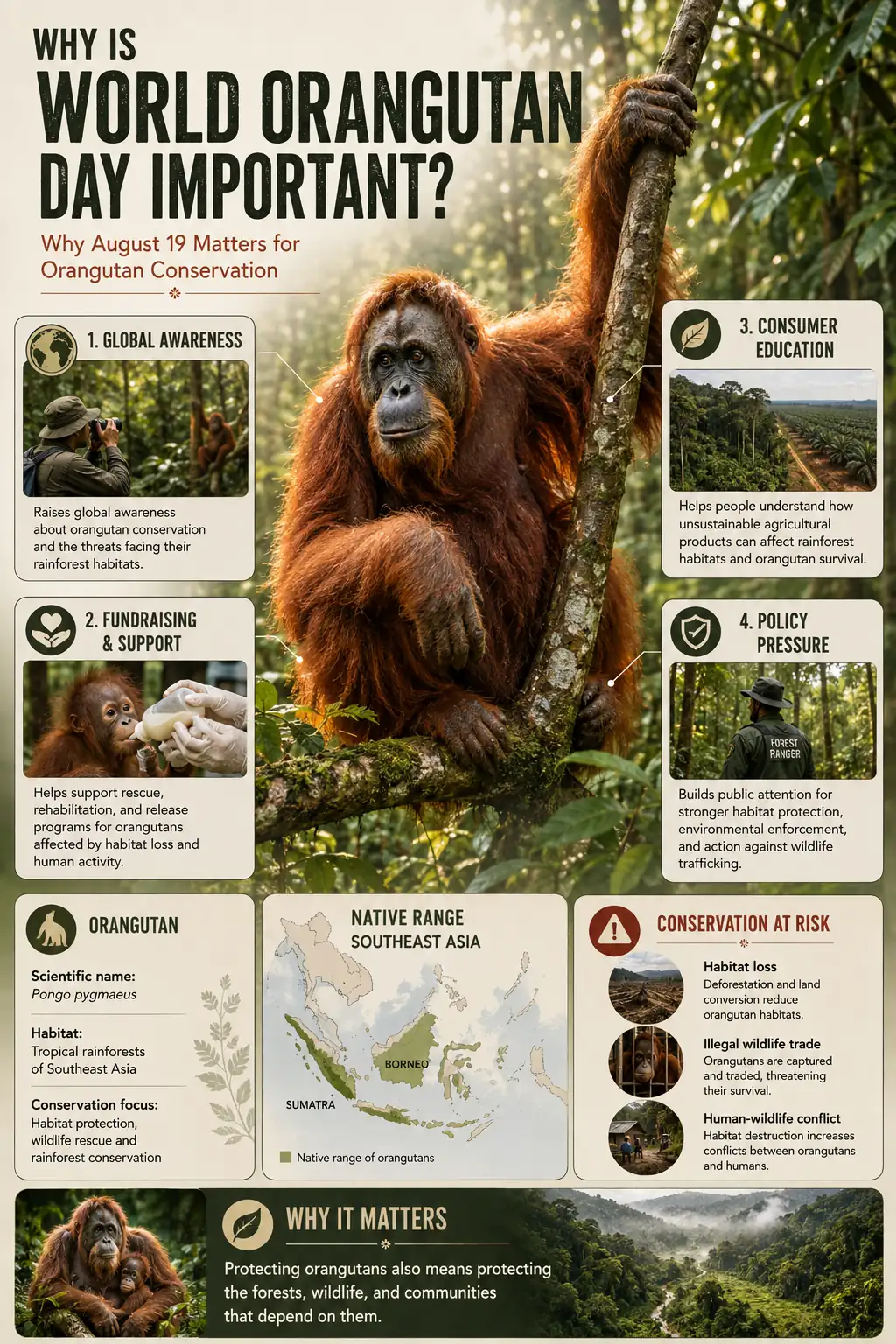
World Orangutan Day is critical for several interwoven reasons:
Global Awareness: The day amplifies the voices of field researchers and conservationists, bringing the complex issues of tropical deforestation to mainstream media and the general public.
Fundraising and Support: It serves as a major fundraising catalyst for frontline organizations that operate rescue, rehabilitation, and release programs for orphaned apes.
Consumer Education: It educates global consumers about the devastating impact of unsustainable agricultural products, empowering them to make ethical purchasing decisions.
Policy Pressure: A unified global focus places pressure on local governments and international bodies to enforce strict environmental protections and crack down on wildlife trafficking.
Are Orangutans Endangered?
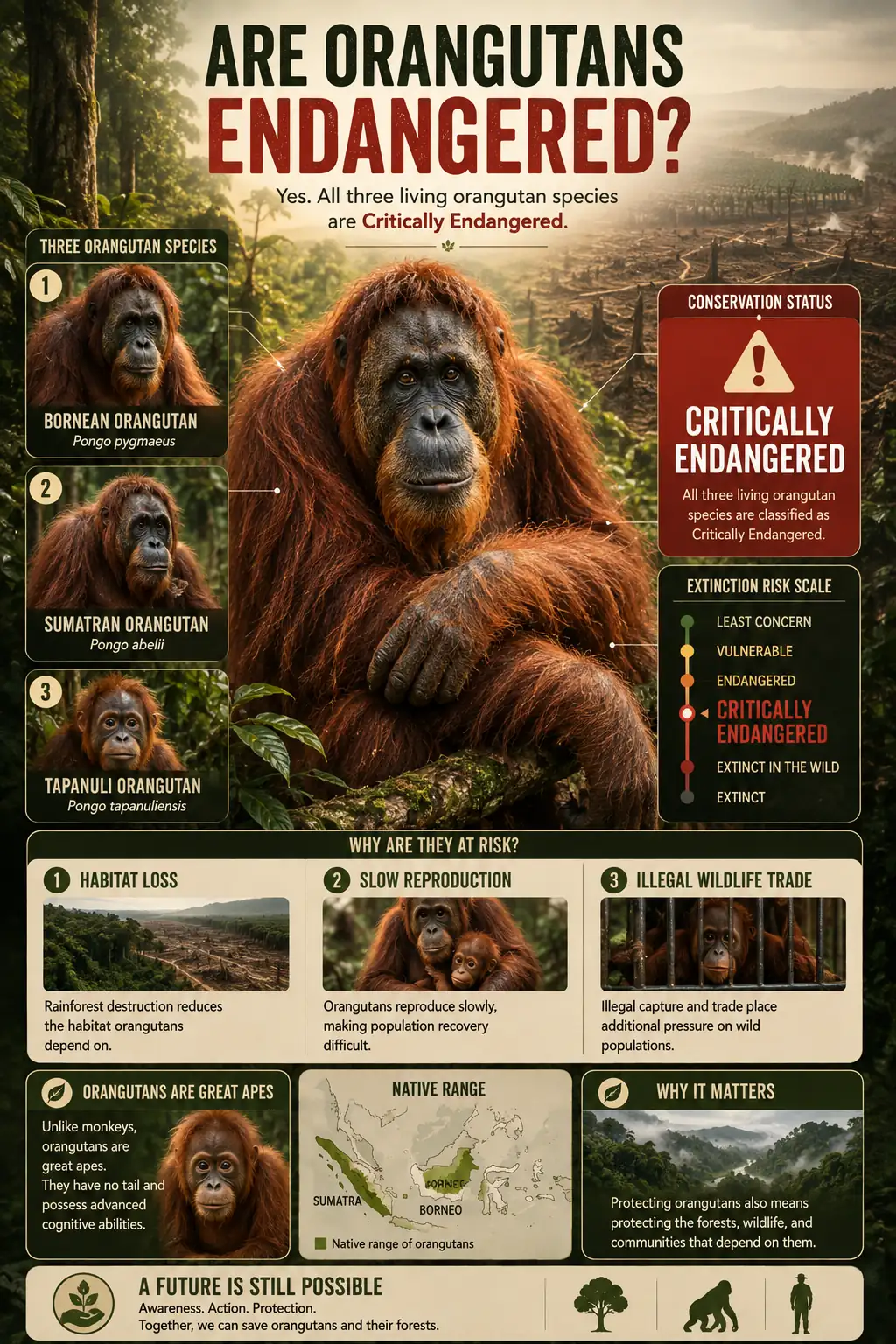
Yes. According to the International Union for Conservation of Nature (IUCN) Red List of Threatened Species, all living species of orangutans are classified as Critically Endangered.
This is just one step away from “Extinct in the Wild.” The classification reflects a drastic, sustained decline in their wild populations over the past few decades, highlighting the broader global crisis of animal extinctions. While sometimes mistakenly searched as an “orang utan monkey,” they are actually great apes (a distinct branch of primates lacking tails and possessing higher cognitive abilities) facing a much higher extinction risk than most monkey species due to their slow reproductive rates and highly specialized habitat requirements.
The Three Living Orangutan Species
Until relatively recently, science recognized only two species of orangutan. However, groundbreaking genetic and morphological research published in 2017 confirmed a third. Today, the orangutan ape family is divided into three distinct, critically endangered species.
Bornean Orangutan (Pongo pygmaeus)
The Bornean orangutan is the most numerous of the three species, though its numbers have plummeted by more than 50% over the last 60 years.
Geographic Range: Endemic to the island of Borneo (spanning Malaysia, Indonesia, and Brunei).
Habitat: Lowland rainforests, peat swamp forests, and lower mountain forests.
Characteristics: They have broader faces, shorter beards, and slightly darker, coarser red hair compared to their Sumatran cousins. Adult males develop prominent cheek pads (flanges) and large throat sacs used for loud “long calls.”
Population Estimate: Approximately 104,700 individuals remaining in the wild.
Sumatran Orangutan (Pongo abelii)
The Sumatran orangutan is rarer and uniquely adapted to its specific island ecosystem.
Geographic Range: Endemic to the northern regions of the Indonesian island of Sumatra.
Habitat: Primarily primary tropical lowland forests.
Characteristics: They possess longer, lighter-colored hair, a more slender build, and prominent facial hair (both males and females often have white “beards”). They are more highly arboreal than Bornean orangutans, rarely coming to the forest floor due to the historical presence of predators like the Sumatran tiger.
Population Estimate: Roughly 13,846 individuals.
Tapanuli Orangutan (Pongo tapanuliensis)
Identified as a distinct species in 2017, the Tapanuli orangutan is the most endangered great ape on the planet.
Geographic Range: Restricted to the Batang Toru ecosystem in North Sumatra, Indonesia.
Habitat: Upland and submontane forests.
Characteristics: Genetically and morphologically distinct, the Tapanuli orang utan features a smaller skull, frizzier hair, and a unique long call that differs in pitch and duration from the other species.
Population Estimate: Fewer than 800 individuals, existing in highly fragmented subpopulations.
Species Comparison Table
| Species | Scientific Name | Main Range | Habitat | Conservation Status | Major Threats |
| Bornean | Pongo pygmaeus | Borneo (Indonesia/Malaysia) | Peat swamps, lowland forests | Critically Endangered | Deforestation, fires, hunting |
| Sumatran | Pongo abelii | Northern Sumatra (Indonesia) | Primary lowland rainforests | Critically Endangered | Agricultural expansion, infrastructure |
| Tapanuli | Pongo tapanuliensis | Batang Toru, North Sumatra | Submontane forests | Critically Endangered | Hydroelectric dams, fragmentation |
Why Are Orangutans Endangered?
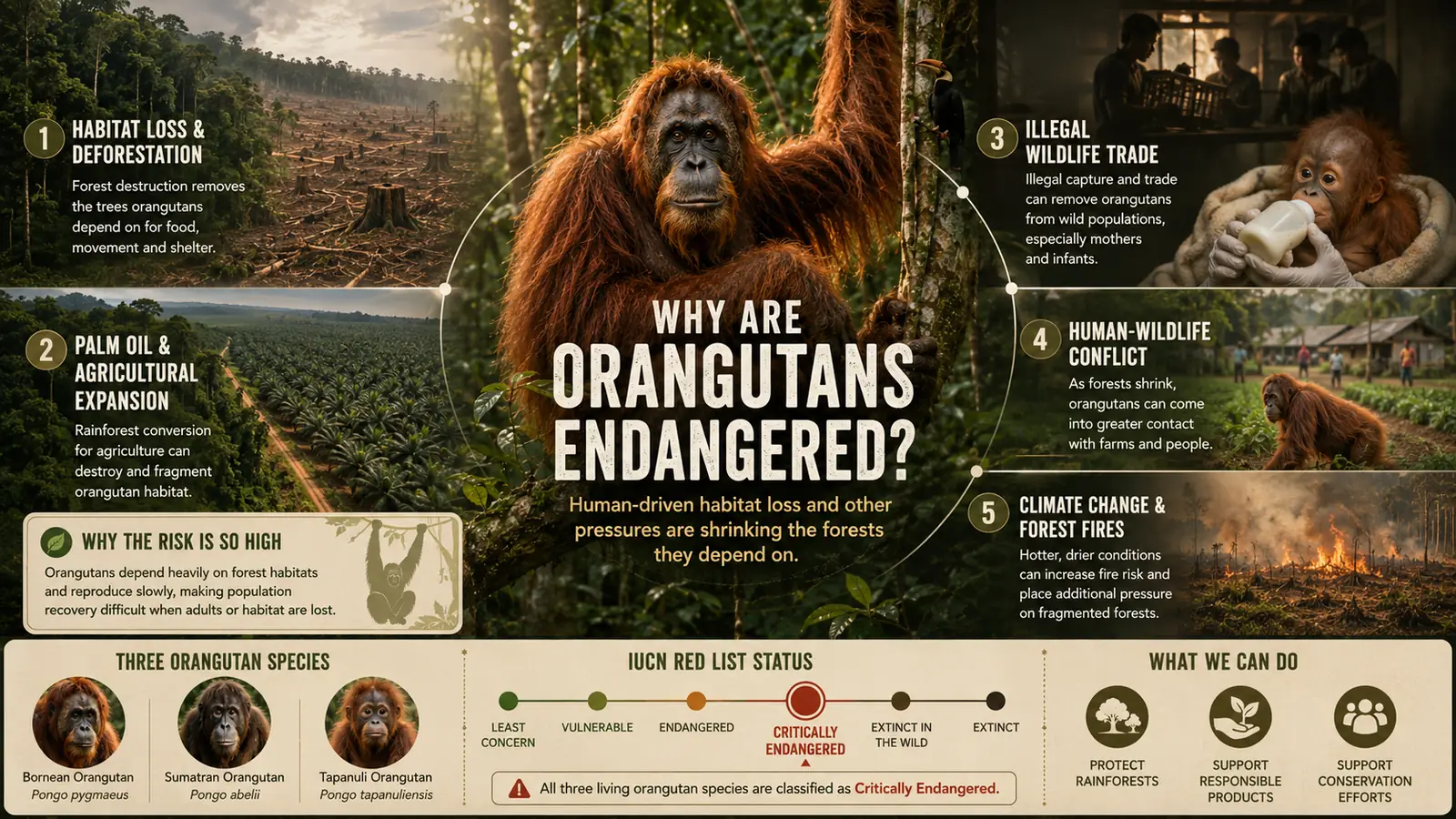
When people ask, why are orangutans endangered, the answer lies in a complex web of human-driven ecological destruction. Understanding why the orangutan is an endangered species requires examining several overlapping, severe threats to their existence.
Habitat Loss and Deforestation
The single greatest threat to all orangutan species is the rapid, systematic destruction of their tropical forest homes. Orangutans are highly arboreal (tree-dwelling) and require vast, continuous stretches of canopy to forage, travel, and mate. Logging—both legal and illegal—strips the forest of the fruit-bearing trees that make up 90% of their diet.
Palm Oil and Agricultural Expansion
Southeast Asia produces the vast majority of the world’s palm oil, a ubiquitous ingredient found in roughly half of all packaged supermarket goods, from cosmetics to instant noodles. The clearing of incredibly biodiverse rainforests to plant vast monoculture oil palm plantations has devastated orangutan habitats. When forests are burned to clear land for agriculture, slow-moving orangutans are frequently caught in the blazes, leading to mass casualties and orphaned infants.
Illegal Wildlife Trade
Despite strict international protections, the illegal wildlife trade remains a lucrative criminal enterprise. Poachers often target mother orangutans, killing them to capture their infants, which are then smuggled and sold into the illegal exotic pet trade. Because orangutans have incredibly slow reproductive rates, the removal of even a few reproducing females can devastate a local population.
Hunting and Human-Wildlife Conflict
As forests shrink, orangutans are forced into closer proximity with human settlements and agricultural zones. Desperate and starving apes frequently wander into oil palm plantations or community farms in search of food. They are often viewed as agricultural pests by local farmers and are shot or violently killed to protect crops.
Climate Change and Other Emerging Threats
Climate change is exacerbating the intensity and frequency of the dry seasons in Southeast Asia. This leads to longer, more severe forest fires, particularly in carbon-rich peat swamp forests. Additionally, habitat fragmentation leaves isolated orangutan populations vulnerable to genetic bottlenecking, diseases (which they can easily catch from humans), and localized extinction.
Why Orangutans Matter to Forest Ecosystems
Orangutans are often referred to as the “gardeners of the forest.” They play an irreplaceable role as a keystone species and an umbrella species within their ecosystems.
As highly frugivorous (fruit-eating) animals, orangutans consume hundreds of different types of seeds. Because they travel across vast distances through the forest canopy, they disperse these seeds through their waste far from the parent trees. Some plant species rely entirely on the digestive tract of the orangutan to weaken their seed coats before they can germinate.
When orangutan populations decline, forest regeneration slows down significantly. Protecting the orangutan automatically protects thousands of other flora and fauna species that share their habitat across different types of ecosystems, ranging from peat swamps to lowland rainforests. Therefore, prioritizing their survival is central to broader global biodiversity goals.
Orangutan Intelligence and Unique Behavior
The profound tragedy of their endangerment is underscored by their extraordinary intelligence and deep emotional capacity. Orangutans are sentient, highly cognitive beings.
Tool Use and Problem Solving: In the wild, orangutans have been observed crafting tools from branches to extract insects from tree bark or seeds from hard-shelled fruits. They use large leaves as makeshift umbrellas during heavy tropical downpours and fashion “gloves” out of foliage to handle thorny branches.
Cultural Transmission: Researchers have discovered that different orangutan populations exhibit unique cultural behaviors, passing down specific tool-making techniques and vocalizations from generation to generation.
Mother-Infant Bond: An orangutan mother invests more time in her offspring than almost any other mammal on Earth. An infant will stay closely with its mother for up to eight years, learning the complex mental maps required to navigate the forest, identify safe foods, and avoid danger.
Slow Reproduction: Females typically only give birth once every 6 to 9 years. This agonizingly slow reproductive rate means that populations simply cannot bounce back quickly from poaching, hunting, or habitat loss.
Orangutans and Their Relationship With Humans
The relationship between humans and orangutans is complicated. The name “orangutan” originates from the Malay and Indonesian words orang (person) and hutan (forest), translating literally to “person of the forest.” Historically, many indigenous communities revered the apes, embedding them in local folklore and viewing them as closely related kin, often strictly forbidding their hunting.
However, modern economic pressures have fractured this relationship. The drive for land, timber, and agricultural expansion has placed rural communities in direct competition with wildlife for resources. Today, conservationists recognize that saving the orangutan is impossible without empowering local human populations. Sustainable community forestry, eco-tourism, and providing alternative livelihoods are critical to ending human-wildlife conflict.
Responsible wildlife tourism, when managed ethically, can provide immense economic value to local communities, proving that a live orangutan in a healthy forest is economically far more valuable than the land cleared for agriculture.
What Is Being Done to Protect Orangutans?
Despite the grim statistics, there is hope. A massive, coordinated global effort is underway to halt the decline of these great apes.
Rescue and Rehabilitation: Organizations like the Borneo Orangutan Survival Foundation (BOSF) and the Sumatran Orangutan Conservation Programme (SOCP) work tirelessly to rescue orphaned or injured orangutans. These apes undergo years of “forest school” rehabilitation to learn survival skills before being reintroduced into safe, protected wilderness areas.
Habitat Protection and Restoration: Conservation groups are purchasing land, restoring degraded peat swamps, and planting millions of trees to reconnect fragmented forest patches via wildlife corridors.
Anti-Poaching Patrols: Specialized wildlife protection units patrol critical habitats, dismantling snares, deterring illegal loggers, and responding to human-wildlife conflicts before they turn lethal.
Sustainable Supply Chains: The Roundtable on Sustainable Palm Oil (RSPO) is working to establish and enforce environmental and social standards for palm oil production, ensuring that certified products do not contribute to deforestation.
How Can You Help Orangutans?
You do not need to be a field biologist in Borneo to make a tangible difference. Here is how you can support orangutan conservation:
Demand Sustainable Palm Oil: You do not have to boycott palm oil entirely (which can push demand to even more land-intensive oils like soy). Instead, look for the RSPO trademark on products and urge your favorite brands to commit to 100% certified sustainable, zero-deforestation palm oil.
Support Credible Conservation Organizations: Donate to, or “adopt” an orangutan through reputable organizations working on the frontlines of habitat protection and rehabilitation.
Choose Ethical Wood and Paper: Look for products certified by the Forest Stewardship Council (FSC), which ensures that timber and paper are sourced from responsibly managed forests, not virgin orangutan habitats.
Practice Responsible Tourism: If you travel to Indonesia or Malaysia to see orangutans, choose certified eco-tours that respect strict distancing rules, do not feed wild apes, and directly support local conservation economies.
Amplify the Message: Use your digital footprint to share scientifically accurate information about biodiversity collapse and the importance of forest protection.
World Orangutan Day 2026: How You Can Take Part

To actively participate in World Orangutan Day 2026, consider organizing a community documentary screening, hosting a fundraiser for an ape sanctuary, or conducting an audit of the household products you buy to check their palm oil sourcing. Educational institutions can utilize this day to teach students about the classification of animals, tropical ecology, and the ethics of conservation.
World Orangutan Day Facts
Longest Childhood: Orangutans have the longest childhood dependence on their mothers of any non-human animal on Earth.
Arm Span: An adult male orangutan can have an arm span of over 7 feet (2 meters), perfectly adapted for a life suspended in the canopy.
Nesting: Orangutans build a brand new, intricate sleeping nest out of branches and foliage high in the trees every single evening.
DNA Overlap: Orangutans share 96.4% of their genetic makeup with humans, making them susceptible to many of the same respiratory diseases we experience.
Solitary Nature: Unlike chimpanzees and gorillas, orangutans are semi-solitary. The dense rainforest does not produce enough concentrated fruit to support large, roaming social groups.
Frequently Asked Questions
1. When is World Orangutan Day 2026?
World Orangutan Day 2026 falls on Wednesday, August 19. It is observed on this exact date every year to raise continuous global awareness for orangutan conservation.
2. What is World Orangutan Day?
It is an international day of action dedicated to highlighting the critically endangered status of orangutans, celebrating their ecological importance, and mobilizing efforts to protect their rainforest habitats in Southeast Asia.
3. Why is World Orangutan Day celebrated?
It is celebrated to combat the severe decline in wild populations. The day generates crucial funding for rehabilitation centers, educates consumers about sustainable products, and pressures policymakers to halt illegal logging and the wildlife trade.
4. Why are orangutans endangered?
Orangutans are critically endangered primarily due to catastrophic habitat loss driven by deforestation, illegal logging, and agricultural expansion (specifically for palm oil). They also suffer heavily from illegal poaching, the exotic pet trade, and human-wildlife conflict.
5. Are orangutans endangered?
Yes. All three existing species of orangutans are classified as Critically Endangered on the IUCN Red List, meaning they face an extremely high risk of extinction in the wild in the immediate future.
6. How many species of orangutan are there?
There are three recognized species of orangutans: the Bornean orangutan (Pongo pygmaeus), the Sumatran orangutan (Pongo abelii), and the recently discovered Tapanuli orangutan (Pongo tapanuliensis).
7. What is the Tapanuli orangutan?
The Tapanuli orang utan is a distinct species of great ape discovered in 2017. Restricted to a single, fragmented ecosystem in North Sumatra, it is the rarest and most endangered great ape species in the world, with fewer than 800 individuals left.
8. Where do orangutans live?
In the wild, orangutans are found only on two islands in Southeast Asia: Borneo (shared by Indonesia, Malaysia, and Brunei) and Sumatra (part of Indonesia). They reside in tropical lowland and peat swamp rainforests.
9. What is the biggest threat to orangutans?
The absolute biggest threat to orangutans is the destruction of their forest habitat. Large-scale agricultural expansion, particularly the clearing of rainforests for monocrop oil palm plantations, systematically eliminates their food sources and living space.
10. How can people help orangutans?
People can help by purchasing products containing certified sustainable palm oil (RSPO), buying FSC-certified paper and wood products, supporting reputable conservation and rehabilitation charities, and advocating for strict environmental protection policies.
Sources & Further Reading
IUCN Red List of Threatened Species: https://www.iucnredlist.org (For definitive, scientific conservation status and population estimates of Pongo pygmaeus, Pongo abelii, and Pongo tapanuliensis).
World Wildlife Fund (WWF) – Orangutans: https://www.worldwildlife.org/species/orangutan
Borneo Orangutan Survival Foundation (BOSF): https://www.orangutan.or.id
Sumatran Orangutan Conservation Programme (SOCP): https://www.sumatranorangutan.org
Roundtable on Sustainable Palm Oil (RSPO): https://rspo.org