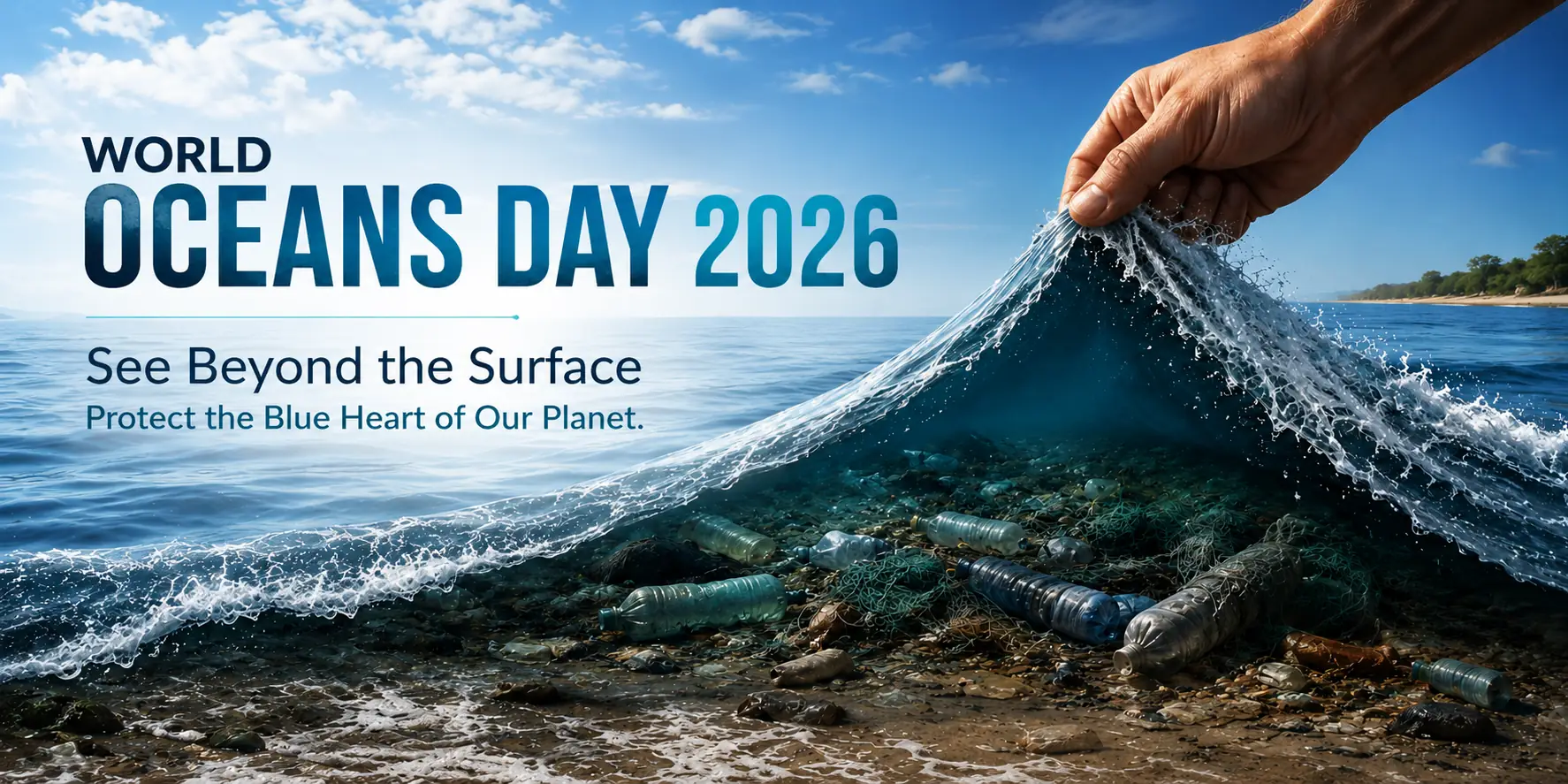
Oceans cover 71% of Earth’s surface [NOAA, 2024] — yet less than 8% of them are protected. As we approach World Ocean Day 2026, the urgency to safeguard our marine ecosystems has never been greater. This annual event serves as a critical reminder of the ocean’s vital role in sustaining life on Earth.
World Ocean Day 2026 brings global attention to marine conservation, rallying governments, organizations, and individuals toward a sustainable future. Whether you are a marine biology enthusiast or a concerned citizen, understanding this observance is the first step toward meaningful change.
World Ocean Day 2026 — Quick Facts:
Date: June 8, 2026
Official theme: Reimagine: Beyond the World We Know, a New Relationship with Our Ocean
Action theme: Strong Marine Protected Areas for Our Blue Planet
Founded: 1992, Rio de Janeiro Earth Summit
UN recognition: 2008 (Resolution 63/111)
Celebrated in: 150+ countries
What Is World Ocean Day?
World Ocean Day is an annual global observance held every year on June 8 to raise awareness about the importance of oceans and promote their conservation. It serves as a dedicated date to honor, protect, and restore our shared marine environments. The United Nations and the official World Ocean Day website lead global celebrations, engaging millions of people across more than 150 countries. Participating in World Ocean Day 2026 means joining a worldwide movement to defend our blue planet.
When Is World Ocean Day 2026?
World Ocean Day 2026 will be observed on Monday, June 8, 2026. Communities worldwide will host local events, beach cleanups, and educational summits on this exact date to maximize global impact. Planning for World Ocean Day 2026 events typically begins months in advance.
Why is World Ocean Day celebrated on June 8?
World Ocean Day is celebrated on June 8 because it aligns with the date it was originally proposed at the Earth Summit in 1992. Establishing a unified date ensures coordinated global action, allowing international organizations and local communities to focus their conservation efforts simultaneously.
World Ocean Day 2026 Theme — “Reimagine”
The official theme of World Ocean Day 2026 is “Reimagine: Beyond the World We Know, a New Relationship with Our Ocean,” declared by the United Nations. This theme challenges humanity to rethink how we interact with marine environments and to develop innovative solutions for sustainable co-existence.
What Does the 2026 Theme Mean?
The 2026 theme emphasizes looking beyond traditional conservation methods and forging a deeper, more sustainable connection with the ocean. It urges us to prioritize the ocean’s health in every sector, from global trade to local fisheries. By reimagining this relationship during World Ocean Day 2026, we ensure we do not deplete the resources that sustain us.
Action Theme — Strong Marine Protected Areas for Our Blue Planet
The primary action theme for World Ocean Day 2026 focuses on establishing and enforcing strong protective zones for marine ecosystems. This actionable goal provides a clear target for policymakers and conservationists to focus their resources on tangible, measurable protection efforts.
What Are Marine Protected Areas?
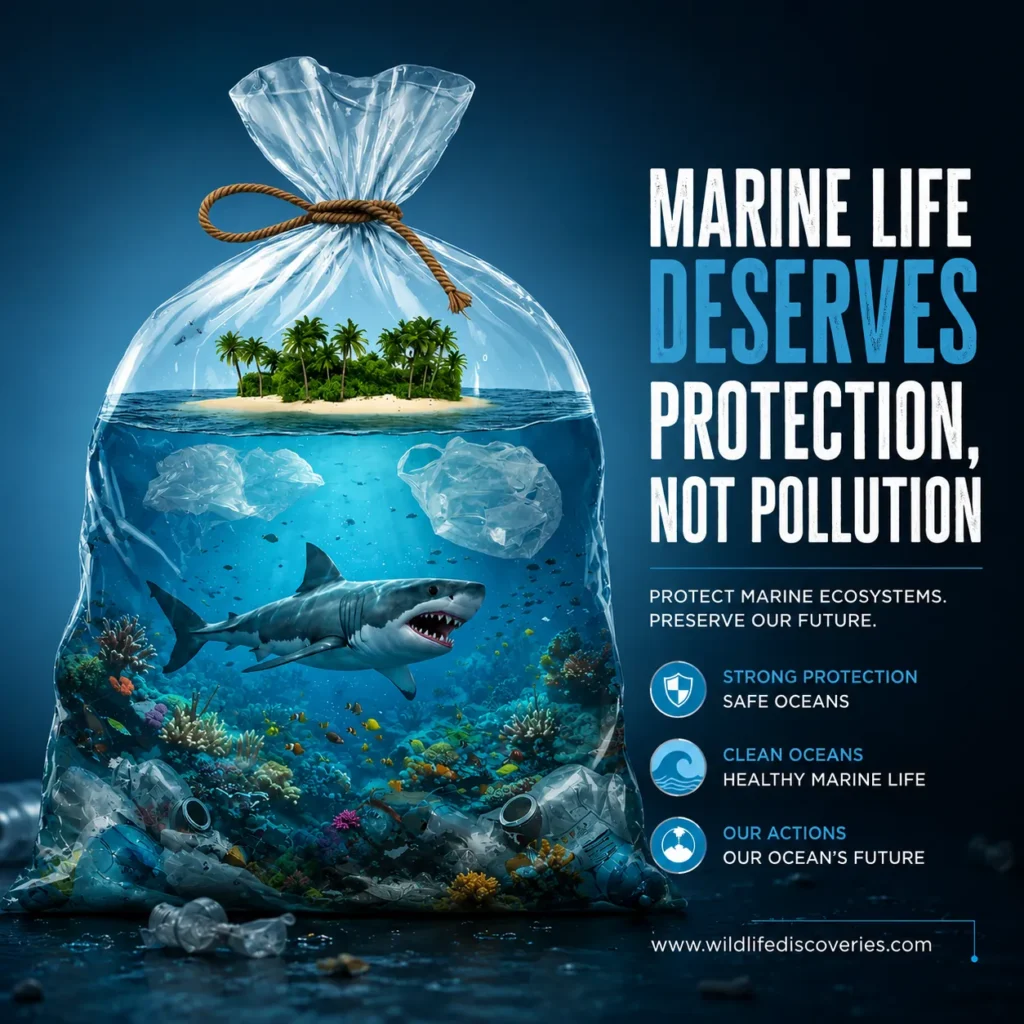
Marine Protected Areas (MPAs) are designated regions of the ocean where human activities are heavily restricted to protect natural resources and biodiversity. These zones limit commercial fishing, drilling, and other extractive activities, allowing damaged ecosystems to recover and thrive. Expanding these areas is the core mission of World Ocean Day 2026.
History of World Ocean Day — 1992 to 2026
World Ocean Day was first proposed in 1992 by Canada at the Earth Summit in Rio de Janeiro and officially recognized by the UN in 2008 through Resolution 63/111. The journey from a simple proposal to a globally recognized UN observance spans decades of persistent advocacy by environmental groups and oceanographers.
How Did World Ocean Day Start?
The concept started as an initiative by the Canadian government to create a global day of ocean appreciation during the United Nations Conference on Environment and Development. Organizations then began actively promoting it globally in 2002 to build momentum.
When Did the UN Officially Recognize World Ocean Day?
The United Nations General Assembly officially recognized World Ocean Day in December 2008 by passing Resolution 63/111. This official recognition brought crucial institutional support and funding to ocean conservation campaigns worldwide, setting the stage for major milestones like World Ocean Day 2026.
Timeline of World Ocean Day:
1992: Canada proposes the concept at the Earth Summit in Rio de Janeiro.
2002: Global coordination for the event officially launches.
2008: The United Nations officially recognizes the day.
2016: Global focus heavily shifts toward mitigating plastic pollution and climate change.
2026: World Ocean Day 2026 champions the “Reimagine” theme and MPA expansion.
Why Is World Ocean Day Important?
Oceans produce approximately 50% of Earth’s oxygen, making their survival inextricably linked to our own. Without healthy oceans, our planet would face catastrophic climate destabilization and a massive collapse of global food chains. World Ocean Day 2026 is critical because it highlights these exact survival metrics.
Role of Oceans in Our Ecosystem
Our oceans act as the planet’s largest carbon sink, absorbing roughly 25% of all carbon dioxide emissions. Over 3 billion people depend on marine biodiversity for their livelihoods. Additionally, the ocean drives global weather patterns and regulates temperature, acting as Earth’s critical life support system. Read more NOAA ocean facts to understand their vast impact.
Threats Facing Our Oceans in 2026
In 2026, our oceans face unprecedented threats from plastic pollution, industrial overfishing, and habitat destruction. Furthermore, rising sea temperatures are causing widespread coral bleaching, while excess carbon dioxide absorption leads to severe ocean acidification. Ocean acidification works through a chemical reaction that occurs when the ocean absorbs excess anthropogenic carbon dioxide from the atmosphere, fundamentally altering the water’s chemistry: CO₂ + H₂O ⇌ H₂CO₃. These rapidly changing conditions severely threaten fish and marine mammals living in the open pelagic zone.
Marine Protected Areas and the 30×30 Goal
Marine Protected Areas currently cover only 8% of the global ocean [IUCN, 2025], highlighting the urgent need for expansion during World Ocean Day 2026. The global 30×30 Goal is an ambitious international commitment to protect 30% of the world’s oceans and lands by the year 2030. To support this, the historic High Seas Treaty entered into force on January 17, 2026 [UN DOALOS]. This treaty, officially known as the agreement on Biodiversity Beyond National Jurisdiction (BBNJ), finally provides a legal framework to establish MPAs in international waters. These historic frameworks align perfectly with the broader ocean conservation components of the Paris Agreement.
How to Celebrate World Ocean Day 2026 ?
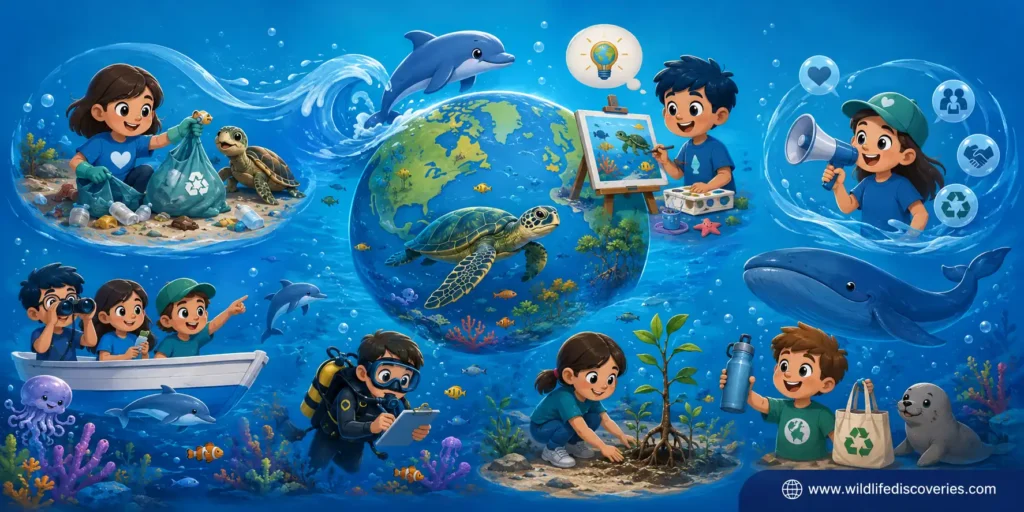
You can make a tangible difference on World Ocean Day 2026 by taking actionable steps in your local community.
Join a Beach Cleanup: Remove plastic waste from local shorelines to prevent it from entering the marine ecosystem.
Reduce Single-Use Plastics: Switch to reusable bags, bottles, and straws to minimize plastic pollution in our waters.
Choose Sustainable Seafood: Look for the Marine Stewardship Council label when purchasing fish to support responsible fishing practices.
Support Conservation Organizations: Donate to global groups that actively fight for marine protection and policy changes.
Watch a Marine Documentary: Educate yourself and your family about the deep sea and delicate marine habitats.
Attend a Local Event: Participate in educational seminars, rallies, or workshops hosted on June 8.
Advocate for MPAs: Write to your local representatives demanding active legislative support for the 30×30 Goal.
Conserve Water: Use less water at home to reduce excess runoff and wastewater flowing into the ocean.
Lower Your Carbon Footprint: Ride a bike or use public transport to help slow ocean acidification and global warming.
Spread Awareness Online: Share facts, articles, and resources on social media using the hashtag #WorldOceansDay.
World Ocean Day 2025 vs 2026 — Theme Comparison
Understanding the evolution of World Ocean Day themes helps track our global conservation progress.
| 2025 | 2026 | |
| Theme | Awaken New Depths | Reimagine |
| Focus | Deepening understanding of the ocean | Marine Protected Areas |
| Key action | Exploring uncharted marine territories | 30×30 Goal |
To see last year’s full breakdown and activities, revisit our guide on World Ocean Day 2025.
Deep Sea Life at Risk — Why Ocean Protection Matters?
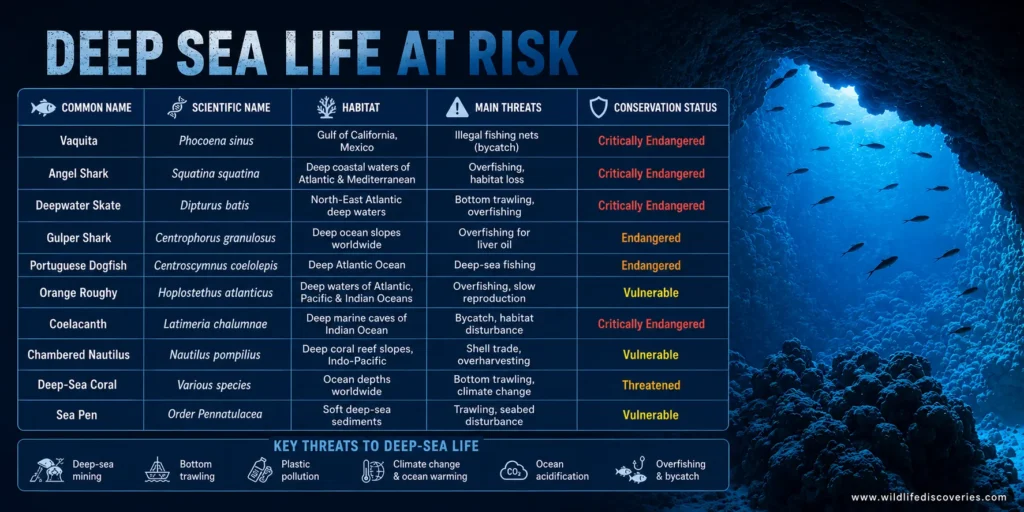
Protecting our oceans is directly tied to the survival of countless specialized species that live in the abyss. Without strong MPAs, commercial deep-sea mining and industrial fishing threaten to destroy fragile ecosystems that we are only just beginning to understand. Protecting the surface directly impacts these deep sea creatures, as the ocean operates as one interconnected web. Furthermore, as the waters warm, we see a tragic increase in animals affected by climate change across all depths. Our wildlife conservation efforts during World Ocean Day 2026 must prioritize these highly vulnerable zones.
What Can You Do for Ocean Conservation?
Individual responsibility combined with collective action is the most powerful tool we have for ocean conservation ahead of World Ocean Day 2026.
Individual Daily Actions
You can integrate ocean-friendly habits into your daily routine by properly disposing of hazardous waste, reducing your energy consumption, and avoiding products that contain microplastics. Additionally, staying informed about endangered marine species helps you make better, more ethical consumer choices at the grocery store.
Organizations You Can Support
Leading scientific and intergovernmental bodies work continuously to protect our oceans. Financial and volunteer support for established organizations drastically accelerates marine conservation. The table below outlines the primary organizations driving sustainability, policy, and marine wildlife protection:
| Organization | Core Focus & Function | Key Contribution to Marine Survival |
| United Nations (UN) | Global governance and international environmental treaties. | Hosts World Ocean Day and champions the historic high-seas BBNJ Agreement. |
| UNEP | The UN Environment Programme coordinates global environmental policies. | Leads international treaties to end plastic pollution and monitors coastal degradation. |
| UNESCO | Educational, scientific, and cultural advancement. | Promotes ocean literacy and coordinates the UN Decade of Ocean Science (2021-2030). |
| WWF | The World Wildlife Fund focuses on global wilderness preservation. | Combats overfishing, advocates for sustainable seafood, and protects vulnerable species. |
| IUCN | The International Union for Conservation of Nature tracks extinction risks. | Maintains the Red List of Threatened Species to guide immediate wildlife protection. |
| NOAA | The National Oceanic and Atmospheric Administration (USA). | Provides world-class climate data, tracks severe storms, and leads coral reef monitoring. |
These organizations lead the charge in establishing MPAs and fighting industrial pollution on a global scale. You can also research the top endangered species and endangered animals to understand where these critical groups are focusing their conservation funding.
Frequently Asked Questions About World Ocean Day 2026
Q: What is the theme of World Ocean Day 2026?
A: The official theme of World Ocean Day 2026 is “Reimagine: Beyond the World We Know, a New Relationship with Our Ocean,” set by the United Nations. The action theme is “Strong Marine Protected Areas for Our Blue Planet.”
Q: When is World Ocean Day 2026?
A: World Ocean Day 2026 is observed on Monday, June 8, 2026. It is celebrated annually on June 8 every year.
Q: Who started World Ocean Day?
A: World Ocean Day was first proposed by Canada at the 1992 Earth Summit in Rio de Janeiro. The United Nations officially recognized it in 2008.
Q: What are Marine Protected Areas?
A: Marine Protected Areas (MPAs) are designated regions of ocean where human activity is restricted to protect marine ecosystems, biodiversity, and resources. The global 30×30 goal aims to protect 30% of the ocean by 2030.
Q: How can I celebrate World Ocean Day 2026?
A: You can celebrate World Ocean Day 2026 by participating in beach cleanups, reducing plastic use, supporting sustainable seafood, donating to ocean conservation organizations, and spreading awareness on social media using #WorldOceansDay.
Q: Why is the ocean important?
A: Oceans cover 71% of Earth’s surface, produce 50% of Earth’s oxygen, regulate climate, support over 3 billion people’s livelihoods, and are home to more than 230,000 known species [NOAA, UN].
Q: Why is the ocean salty?
A: The ocean is salty primarily due to dissolved minerals, particularly sodium and chloride, which have been washed from land into the sea by rain and rivers over millions of years.
Q: How much plastic is in the ocean?
A: An estimated 8 million tons of plastic enter the sea annually. At the current trajectory, plastics are projected to physically outweigh fish in the ocean by the year 2050, introducing millions of tons of toxic chemicals into vulnerable marine habitats.
Q: What is the BBNJ Agreement?
A: The Biodiversity Beyond National Jurisdiction (BBNJ) Agreement is a historic UN treaty designed to protect marine life and establish highly regulated Marine Protected Areas in the high seas, which belong to no single country.
Q: How does plastic pollution affect marine life?
A: Plastic debris causes fatal physical entanglement, starvation through ingestion as animals mistake plastic for food, and chemical poisoning as microplastics break down and infiltrate the marine food web.
Conclusion
The official theme “Reimagine: Beyond the World We Know, a New Relationship with Our Ocean” calls upon us to fundamentally change how we treat our blue planet. By supporting strong Marine Protected Areas and the 30×30 Goal, we ensure that marine biodiversity thrives for generations to come. Share this guide, join a local event, or simply make one ocean-friendly choice today. Every single action matters when it comes to defending our seas. Mark your calendar for June 8, and let’s work together to make World Ocean Day 2026 the most impactful and transformative year for global ocean conservation yet.